
What Way Should The Ceiling Fan Turn In Summer

Okay, let's talk ceiling fans. We've all been there. It's a sweltering summer day, you're feeling like a mozzarella stick left out in the sun, and you stare up at that spinning contraption above you, wondering, "Am I even feeling a breeze? Or is this just some elaborate, expensive torture device?"
The million-dollar question, the one that's probably sparked more family debates than which pizza topping reigns supreme: Which way should the ceiling fan turn in the summer?
Think of it like this: your ceiling fan is basically your personal, miniature weather system. And just like a real meteorologist, you need to understand the forces at play to get the best result.
Must Read
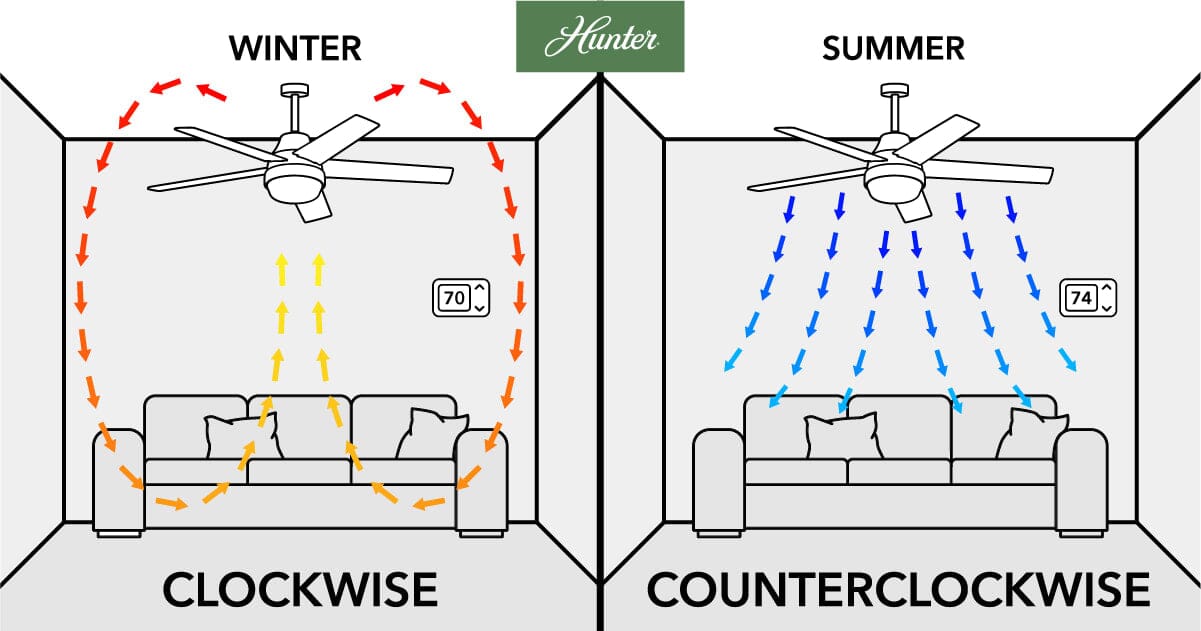
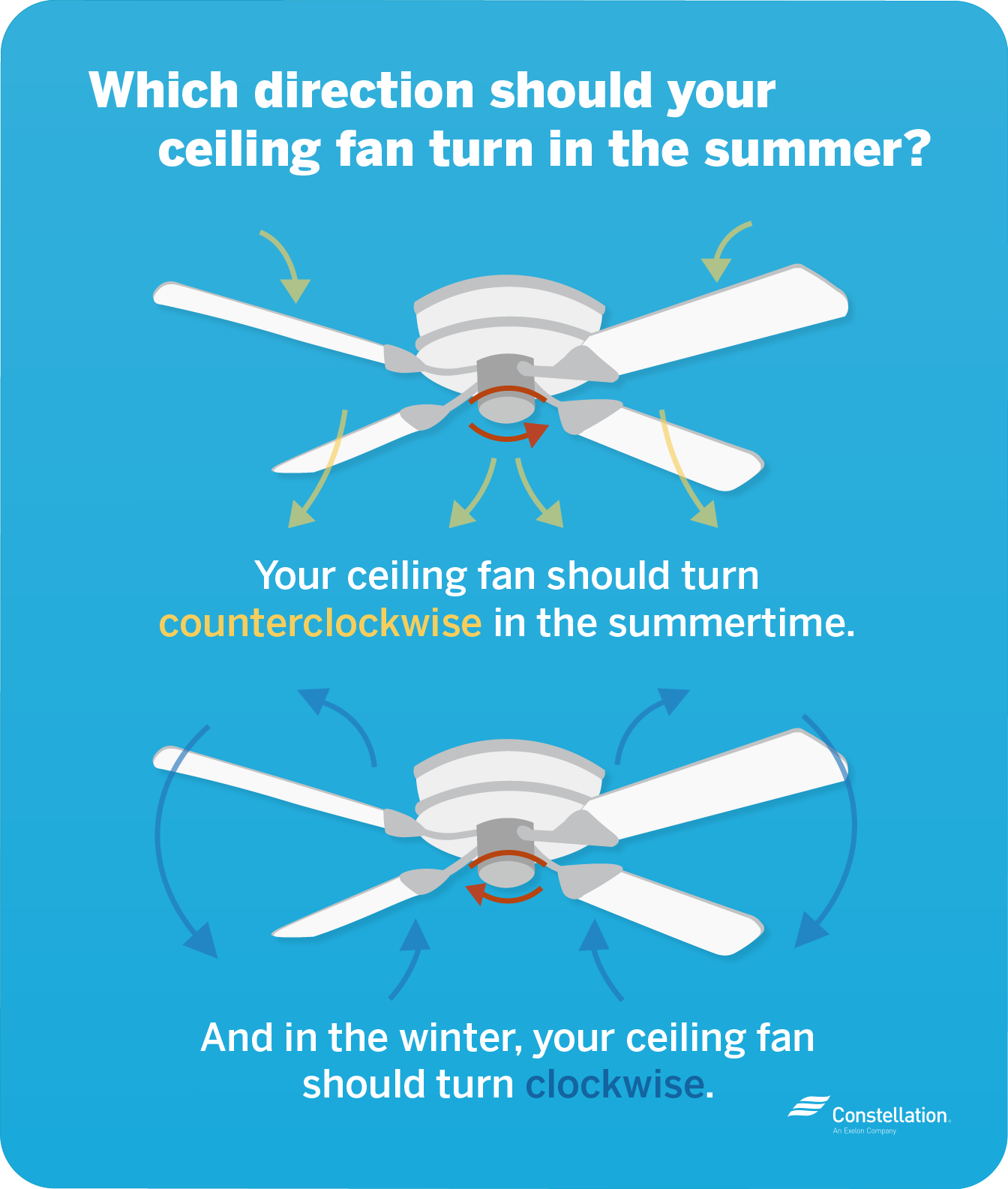
Here's the skinny: In the summer, you want your ceiling fan to spin counter-clockwise when you're looking up at it. Why? Because that creates a downdraft. Imagine it's like the fan is gently pushing the cool air down onto you, making you feel like you're standing in front of an open refrigerator (which, let's be honest, we've all done).
Now, I know what you're thinking. "Counter-clockwise? Clockwise? My brain is already melting! Is there an easier way to remember this?"
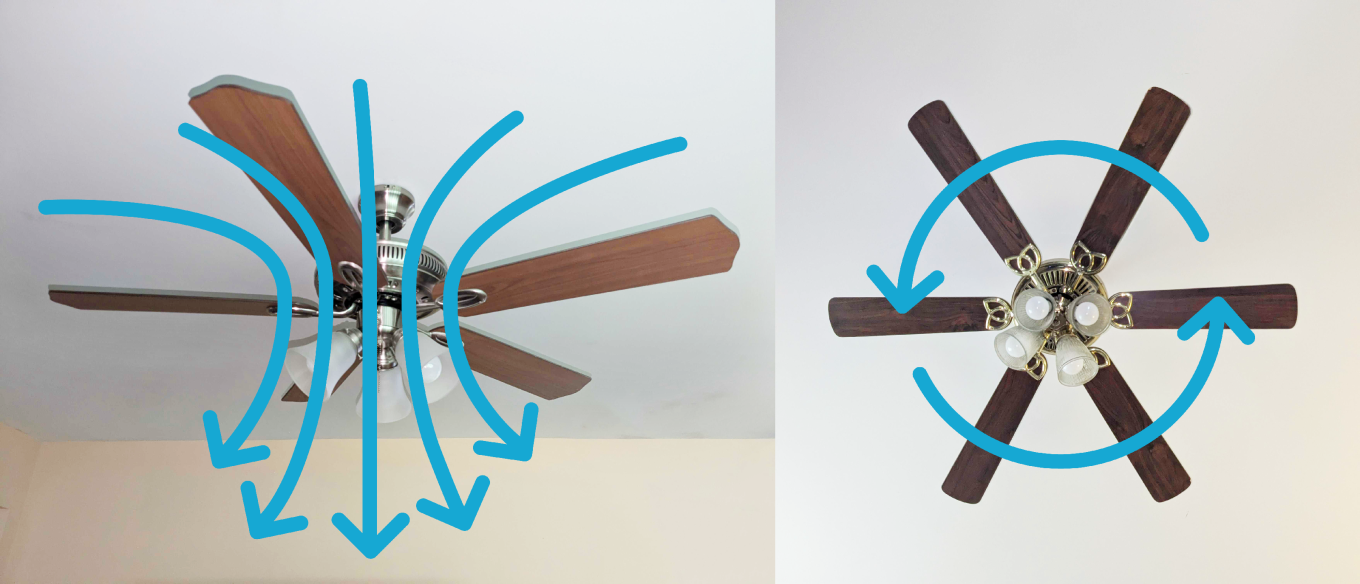
Absolutely! Picture this: You're sitting under the fan, sipping a cool drink. You want the air to come down and give you a refreshing hug. Counter-clockwise is the key to that hug.
Conversely, if your fan is spinning clockwise in the summer, it's essentially pulling air up. This is great for winter, as it helps distribute warm air that rises to the ceiling. But in summer? It's about as helpful as a wool sweater in a sauna. You're just circulating hot air, creating a whirlwind of misery.
How To Change The Fan Direction
So, how do you actually change the direction? Most ceiling fans have a little switch on the motor housing. It's usually a small slider switch that's labeled with arrows. Make sure the fan is completely stopped before you flip the switch! We don't want any "fan blade meets finger" incidents. Safety first, people!
I remember one summer, I was absolutely convinced my ceiling fan was broken. It was spinning, but I wasn't feeling a thing. Turns out, it was spinning clockwise, mocking me with its inefficiency. The moment I flipped that little switch, it was like the heavens opened up and a cool breeze descended upon my sweaty brow. A true revelation!
Why Does It Matter Anyway?
You might be wondering, "Does this really make a difference? Or is this just some elaborate placebo effect?"
It absolutely makes a difference! A properly spinning ceiling fan can make a room feel significantly cooler, even if the temperature is the same. This means you can crank up the thermostat a few degrees and save some serious money on your energy bill. Think of all the extra ice cream you can buy!

Plus, it's just more comfortable. Who wants to sit in a stuffy room, feeling like they're marinating in their own sweat? Not me! Give me that counter-clockwise breeze any day.
Still Not Feeling The Breeze?
If you've flipped the switch and you're still not feeling the cool vibes, there are a few other things to consider:
- Fan Size: Is your fan big enough for the room? A tiny fan in a large room isn't going to do much.
- Fan Speed: Is the fan set to high enough speed? Sometimes, you need to crank it up to feel the full effect.
- Room Ventilation: Is the room properly ventilated? A closed-up room will eventually just circulate the same hot air.
In conclusion, knowing which way your ceiling fan should turn in the summer is a simple but effective way to beat the heat, save money, and avoid that "mozzarella stick in the sun" feeling. So, go forth, flip that switch, and enjoy the cool, refreshing breeze of a counter-clockwise spinning fan. You deserve it!