What Way Do Fans Go In Summer

Ah, summer! The sun is shining, the ice cream is melting faster than you can lick it, and we're all on a universal quest for that perfect, breezy escape from the heat. You probably reach for your trusty fan, right? Whether it’s a majestic ceiling fan humming above or a plucky little stand-up model, these whirling wonders are our instant go-to for a bit of relief. But have you ever stopped to think about how they truly do their magic?
It sounds super simple: turn it on, feel the breeze. Easy-peasy. But what if I told you there's a little secret hidden in those spinning blades, a subtle tweak that can make a surprisingly big difference in your comfort? We're talking about the direction they spin! Yes, it's a thing, and once you know the trick, you'll feel like you've unlocked a secret level of summer comfort. It's surprisingly cool (pun intended).
The Great Fan Mystery: Up or Down?
Let's focus on ceiling fans for a moment, since they're the ones with the most obvious "directional" puzzle. If you look up at a ceiling fan, you'll notice it can spin one of two ways: clockwise or counter-clockwise. One way makes air swoosh down directly on you, creating a delightful draft like a personal cloud machine. The other way pulls air up towards the ceiling, which might seem... well, a bit counter-intuitive on a sweltering day, right? Why would you want air to go up when you're roasting?
Must Read
But wait, there's a method to this madness! Understanding which way your fan should go is like unlocking a hidden superpower for your home's comfort. It’s not just about moving air; it’s about moving it smartly to make you feel significantly cooler, or even warmer, depending on the season. A simple flick of a switch can transform your room's entire vibe.
The Down Draft Delight: Summer's Best Friend
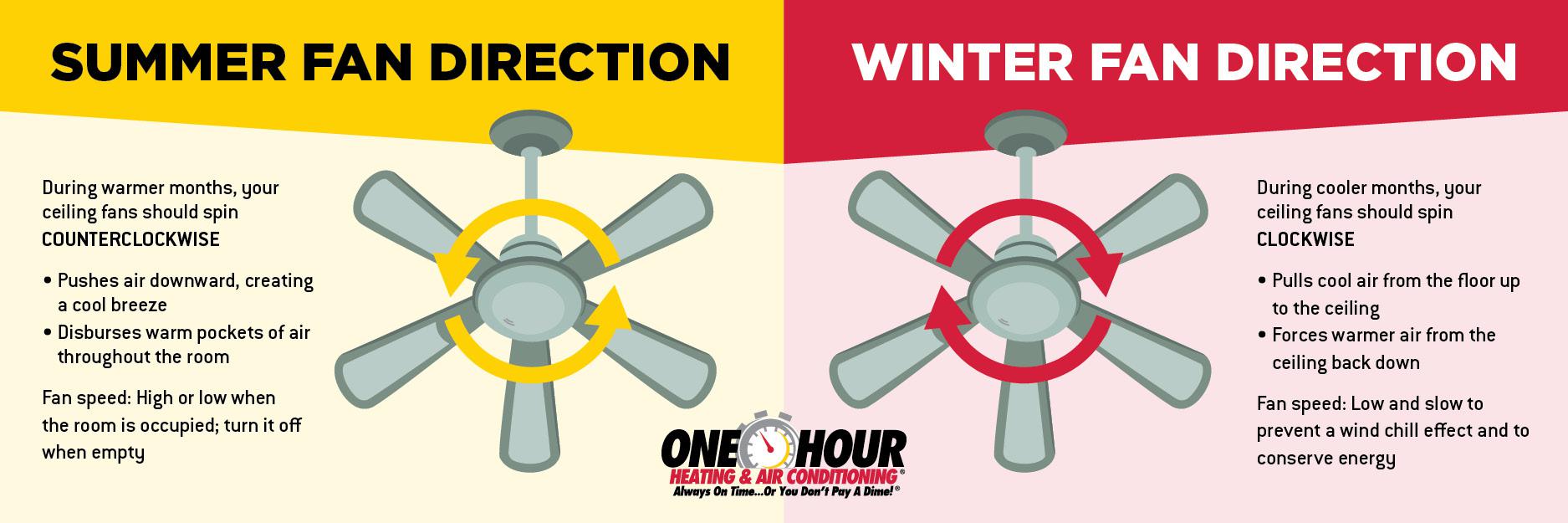
When summer rolls around and you're dreaming of a crisp, cool breeze, you want your ceiling fan to spin counter-clockwise (when looking up at it from below). What does this do? It vigorously pushes air directly downward, creating a lovely, refreshing breeze right where you need it most. Think of it like a natural air conditioner for your personal space, but without the hefty energy bill or complex machinery!

This direct breeze helps you feel cooler through something called the "wind chill effect". It’s not actually lowering the room's temperature, but it's working wonders on your skin! Imagine your body as its own tiny cooling system, constantly producing sweat to regulate temperature. This downward breeze acts like a gentle helper, speeding up the evaporation of that sweat. And when sweat evaporates, it takes heat with it, making you feel significantly cooler. It's the same delightful principle as stepping out of a refreshing shower and feeling that instant chill – that's evaporation magic at work! So, for maximum summer chill and that satisfying whoosh of air, always make sure your blades are turning counter-clockwise, pushing air down onto you.
The Up Draft Unsung Hero: Winter's Hidden Gem (and a Summer Trick!)
Now, what about the other direction? When your ceiling fan spins clockwise (again, looking up from below), it pulls air upwards. In winter, this is super useful! Warm air naturally rises and gets trapped near the ceiling, leaving the living areas feeling cooler. By pulling that warm air up and circulating it along the walls, the fan gently pushes that warmth back down without creating a direct draft that would make you shiver. It helps redistribute heat, making your room feel cozier and potentially lowering your heating bill.
But can it be useful in summer? Absolutely! While it definitely won't give you that immediate, direct cooling breeze, running your fan clockwise on a low setting can actually be a clever trick for certain situations. If you're in a room where the air feels a bit heavy or stale, or perhaps you've got an AC running and just want to gently distribute the cool air more evenly without creating a cold spot, the up draft comes in handy. It helps circulate the air throughout the room, subtly mixing those warmer air pockets near the ceiling with the cooler air below, without creating a direct gust that might feel uncomfortable. Think of it less as a personal cooler and more as a silent, efficient air mixer, helping your whole home breathe a little easier and preventing stagnant air.
:max_bytes(150000):strip_icc()/ceiling-fan-rotate-direction-1907533-v4-5ba94e6346e0fb002576cebf.png)
It's All About the Breeze, Baby!
Here's the key takeaway, folks: fans don't cool the air itself. They simply move it! The delightful coolness you feel is entirely from that wonderful wind chill effect on your skin. So, cranking your fan in an empty room won't do anything for your energy bill or the room temperature; it's a bit like running the dishwasher when it's empty. Fans are all about making you feel more comfortable when you're actually in the room.
How do you check which way your fan is spinning? Stand directly under it. If you feel a strong, direct breeze, it's almost certainly spinning counter-clockwise (summer mode!). If you feel little to no direct breeze, but the air in the room just feels generally less stagnant, it's probably spinning clockwise (winter or gentle circulation mode!). Most ceiling fans have a little switch on the motor housing – a small toggle that lets you reverse the direction. Give it a flick, wait a minute for the blades to slow and reverse, and then feel the difference! It's an empowering little trick.
![Ceiling Fan Directions for Summer vs Winter [Infographic]](https://airflowacademy.com/wp-content/uploads/2021/06/Ceiling-fan-directions-infographic-768x1425.jpg)
Beyond the Blades: Other Fan Friends
Of course, ceiling fans aren't the only players in the summer cooling game. We've got our trusty box fans, sleek tower fans, classic pedestal fans, and even those adorable mini desk fans. While these don't have a "reverse" switch, their placement can make a huge difference. Think about creating cross-ventilation! If you have two windows, place a fan blowing in one window and another fan blowing out the other. This creates a powerful air current, efficiently flushing hot air out and pulling cooler air in.
Even a single fan, strategically placed, can be a game-changer. Point it towards an open door or window to push stuffy air out, or angle it to draw fresh air in from a cooler side of the house during the evening. Consider putting a box fan in a window facing out to actively exhaust hot air, while opening a window on the opposite side of the room to draw in cooler air. It’s all about creating those pathways for air to move. Understanding how air flows through your home allows you to use your fans like a clever engineer, directing breezes exactly where they're needed. Imagine your home as a giant lung, and your fans are helping it take deep, refreshing breaths!
So, the next time summer heat comes knocking, take a moment to look up at your ceiling fan. A simple flick of a switch can make your home feel dramatically more comfortable and your energy bill a little lighter. It’s a small detail, but knowing which way your fan goes in summer is a surprisingly effective and energy-efficient hack for staying cool. Stay breezy!