What Uses The Most Electricity In Your Home
Ever wondered where all that electricity goes? We flip a switch, the lights come on, the TV flickers to life, but what’s really guzzling the power in our homes? Understanding your home's energy consumption isn't just about saving money (though that's a fantastic perk!), it's about being a more conscious consumer and lessening your environmental impact. Plus, it's kind of like being a detective, uncovering the mysteries of your own energy bill!
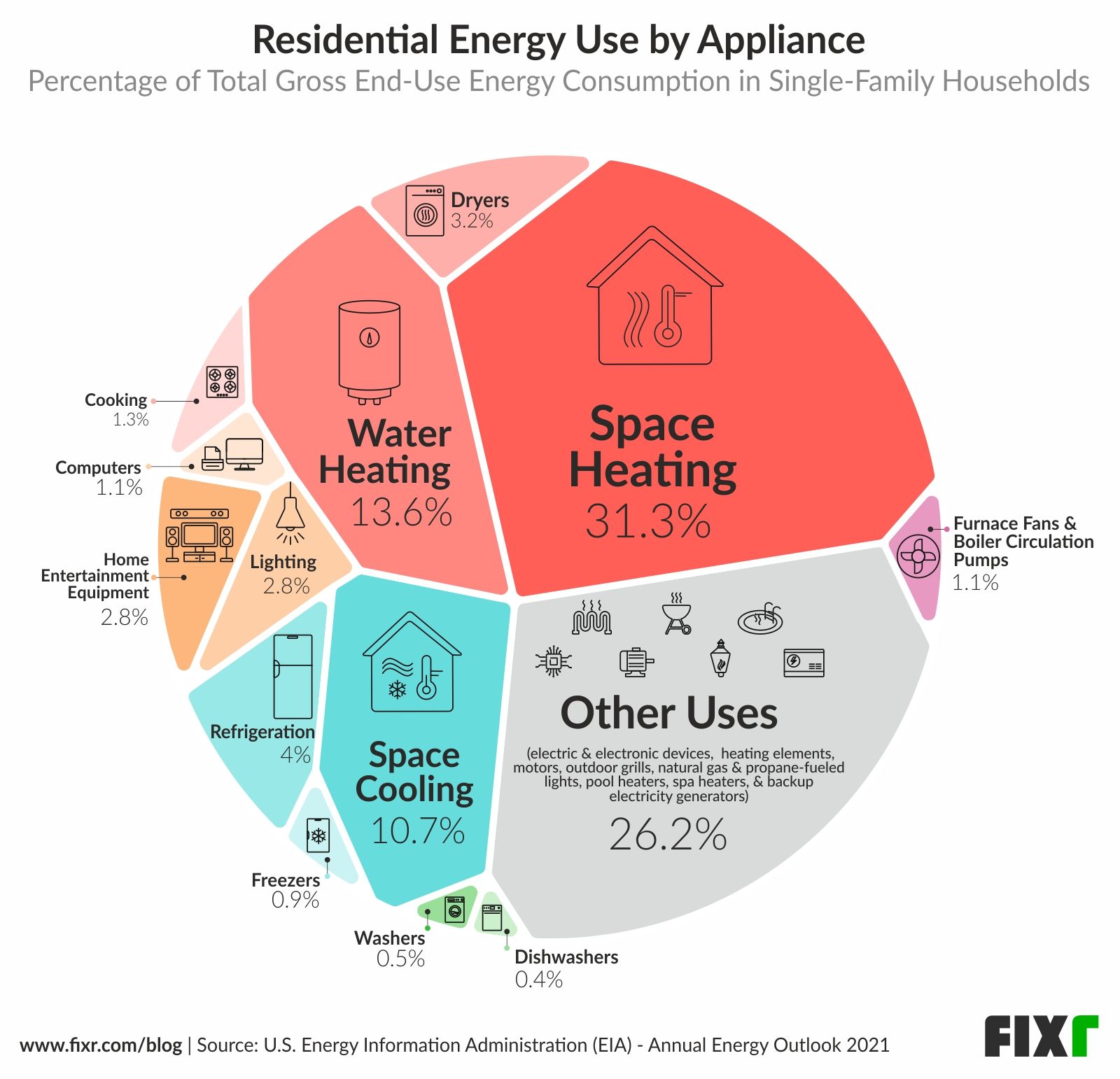
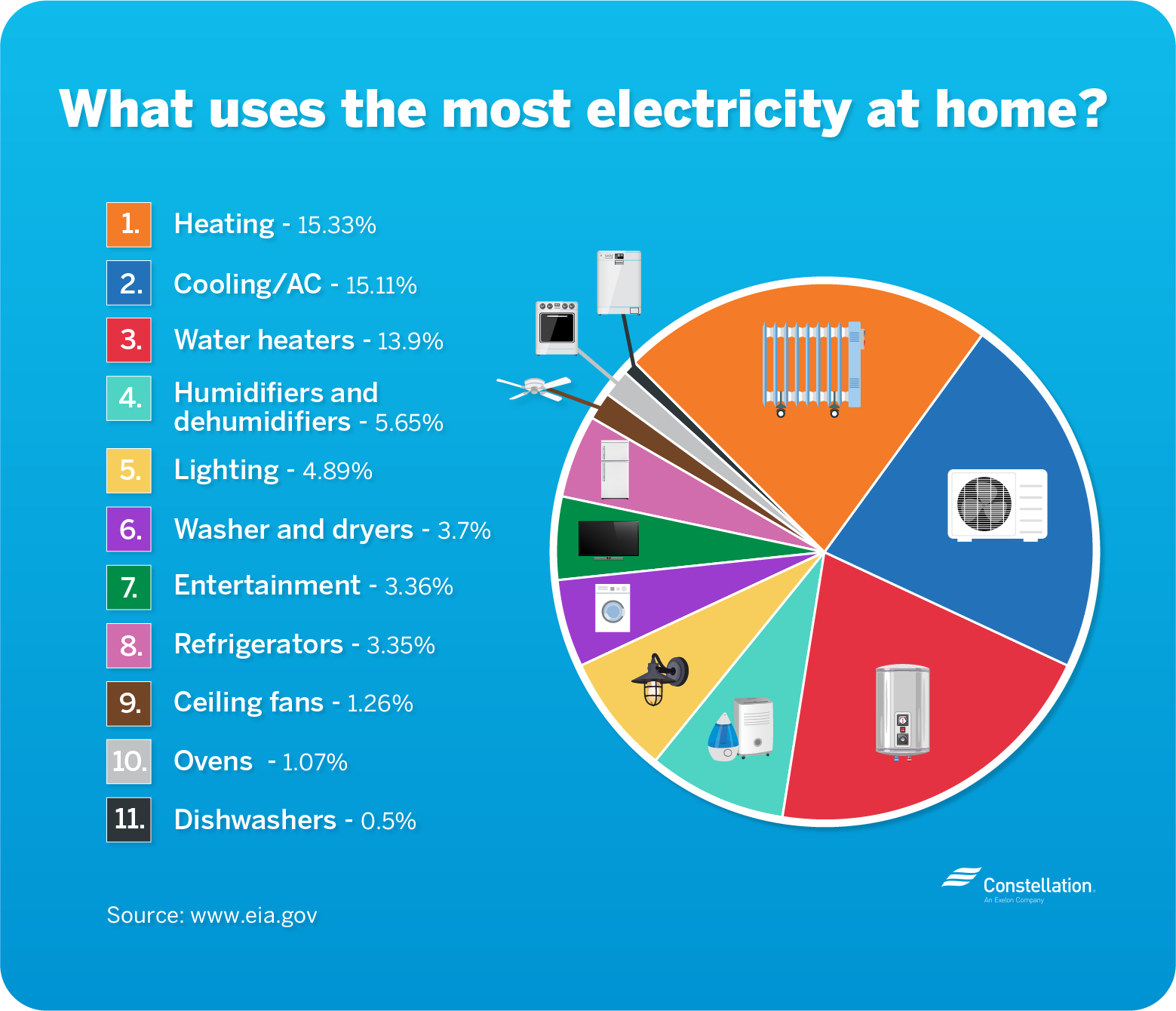
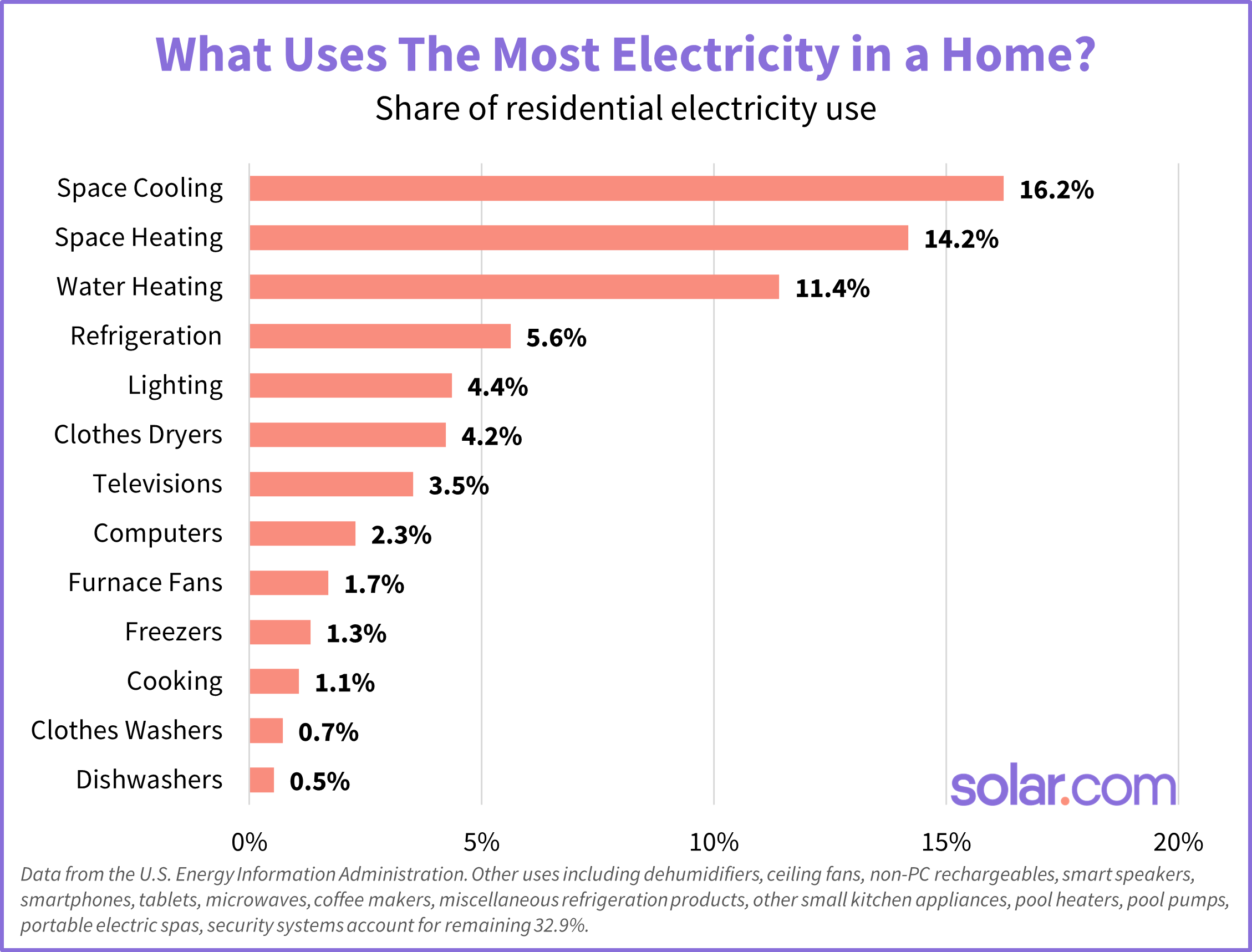
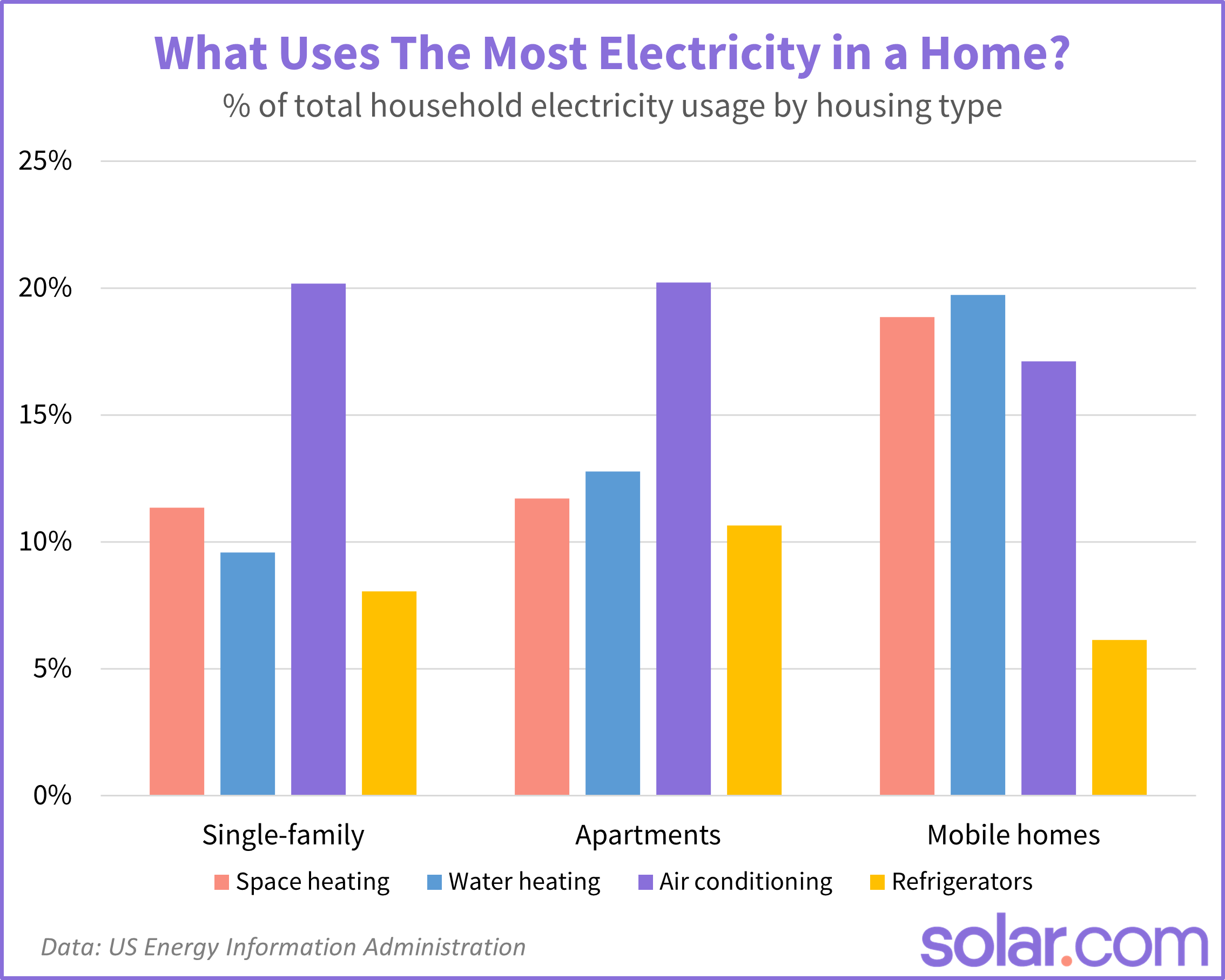
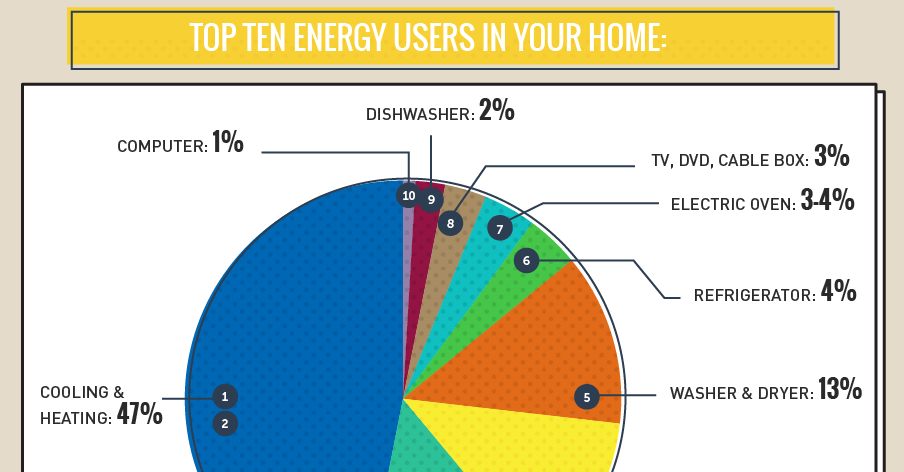
So, what's the biggest culprit? Generally speaking, it's your heating and cooling systems. Think about it: furnaces, air conditioners, heat pumps – they're all working incredibly hard to either pump heat in or extract it out of your home, often against the relentless force of Mother Nature. This process requires a substantial amount of energy, making them the top electricity users in many households. The benefits of a well-functioning HVAC system are clear: a comfortable living environment, improved air quality (with proper filters), and protection from extreme temperatures. But these benefits come at a cost, a cost often reflected in your electricity bill.
Beyond HVAC, your water heater is another major contender. Whether it's electric or gas (which often uses electricity for ignition and control systems), heating water for showers, laundry, and dishwashing takes a significant amount of energy. Consider how often you're using hot water throughout the day. Showers, doing laundry, running the dishwasher – all these seemingly routine activities contribute to your overall electricity consumption. The purpose is straightforward: to provide hot water on demand for cleaning and sanitation. The benefit is obvious: convenience and hygiene.
Must Read
After heating and cooling and water heating, major appliances like refrigerators, washers, dryers, and ovens come into play. Refrigerators run constantly to keep food cold, washing machines churn through water and clothing, dryers use heat to remove moisture, and ovens generate intense heat for cooking. Each appliance has its own energy profile, and older models tend to be far less efficient than newer, Energy Star-rated versions. In education, understanding appliance efficiency can be a great project for students learning about energy conservation and sustainability. In daily life, choosing energy-efficient appliances can significantly reduce your carbon footprint and save you money in the long run.
So, how can you become an energy detective in your own home? A simple start is to use an energy monitor. There are many affordable options available that plug into the wall and track the electricity usage of specific appliances. This can be a real eye-opener! Another easy method is to pay close attention to your electricity bill. Most providers offer detailed usage breakdowns online, allowing you to see when you're using the most electricity. You can also try a simple experiment: unplug appliances when you're not using them. Many electronics continue to draw power even when they're turned off (this is called "phantom load"). By unplugging them, you can reduce your energy consumption and save a little money. Small changes can add up to significant savings over time. And remember, being aware of your energy usage is the first step towards making a difference!