
What Type Of Metal Is Copper

Okay, so imagine this: You're doing a bit of spring cleaning, rummaging through that junk drawer we all have (don't even try to deny it, I see you!). You pull out an old, slightly tarnished penny, maybe one from your childhood, or perhaps a beautiful, reddish-brown antique teapot you inherited. You hold it up, and it catches the light in a particular way – a warm, almost glowing hue. Then, your mind wanders, as minds tend to do, to all the other places you've seen this color: the pipes under your sink, the intricate wiring inside your electronics, even some fancy architectural details on old buildings. It's everywhere, yet it's so distinctive.
And you might find yourself thinking, "What is this stuff? Why does it look like that? And why isn't it all rusty like that old wrench I found in the garden shed?" If that sounds like you, then welcome, friend, to the wonderful world of wondering about metals!
So, What Exactly Is Copper, Chemically Speaking?
Alright, let's get down to brass tacks – or rather, copper tacks! At its heart, copper isn't just "some metal." It's a pure element. Yes, you heard that right! On the periodic table, that famous chart of all the fundamental building blocks of the universe, copper has its very own spot. Its symbol is Cu, and its atomic number is 29.
Must Read
Think of it this way: water is H₂O, a compound made of hydrogen and oxygen. But copper? Copper is just... copper. It's a single, unadulterated type of atom. This makes it fundamentally different from things like steel (an alloy of iron and carbon) or even brass (an alloy of copper and zinc). When you hold a piece of pure copper, you're holding a material made up solely of copper atoms.
![23 Different Types of Metals and Their Properties & Uses [PDF]](https://www.theengineerspost.com/wp-content/uploads/2022/04/Types-of-Metals.jpg)
And What Type Of Metal Is It?
Now, to get a bit more specific within the metal family, copper falls into a category known as transition metals. These are a fascinating bunch of elements located in the central block of the periodic table, and they're famous for some really cool properties. Transition metals, including copper, often exhibit multiple oxidation states (which lets them do interesting chemical things), are generally hard, strong, and have high melting and boiling points.
But what truly makes copper special among its metallic brethren, and why it pops up everywhere from ancient tools to modern tech, are its specific characteristics:
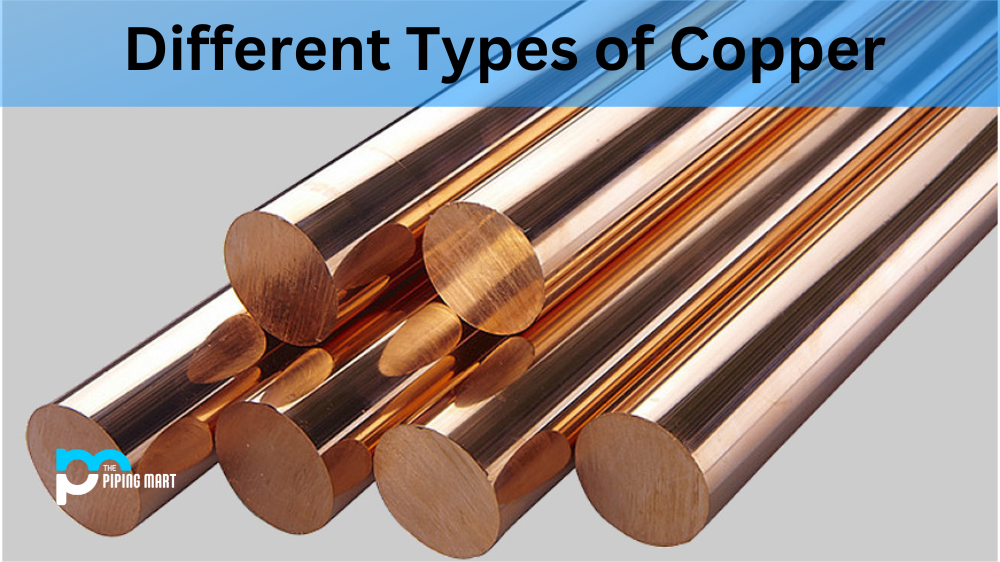
- Unrivaled Conductivity: Copper is an absolutely phenomenal conductor of both electricity and heat. Seriously, only silver is better at electrical conductivity, but silver is way too expensive for your average house wiring, right? This is why your phone, your computer, and pretty much every electrical appliance relies on copper wires. It's like the superstar athlete of electron movement!
- Malleable and Ductile: This is a fancy way of saying it's incredibly workable. You can flatten it into sheets (malleable) or draw it out into super-thin wires (ductile) without it breaking. Imagine trying to do that with a brick! This property made it invaluable for early toolmakers and makes it perfect for complex electronics today.
- Corrosion Resistant: Remember that rusty wrench? That's iron reacting with oxygen and water. Copper, on the other hand, is much more resistant to corrosion. It develops a protective layer called a patina (that lovely green-blue you see on old statues or roofs) which actually shields the metal underneath from further decay. Pretty neat, huh?
- Distinctive Reddish-Orange Hue: Okay, this isn't a "type" but it's certainly a defining characteristic! That warm, lustrous color is unique among common metals and has made it a favorite for decorative items and jewelry for millennia.
Why Does This Matter To Us?
Understanding that copper is a pure element and a transition metal helps us appreciate why it's been so crucial throughout human history and why it continues to be indispensable. It's not just a generic "shiny thing." Its unique atomic structure gives it a specific set of superpowers – especially its conductivity and workability – that few other materials can match.
From the Copper Age (yes, there was one, long before iron!) where it revolutionized tool-making, to powering our entire digital world today, copper is the quiet, reddish-orange workhorse. So, the next time you plug in your phone, turn on a light, or even just look at an old coin, you'll know you're not just seeing "a metal," you're looking at a truly remarkable, pure element – copper – doing what it does best. Pretty cool, right?
![23 Different Types of Metals and Their Properties & Uses [PDF]](https://www.theengineerspost.com/wp-content/uploads/2022/04/Copper.jpg)
