
What Type Of Current Is Produced By A Battery

Alright, gather 'round, friends! Let's talk batteries. We've all got 'em. They power our phones, our remotes, sometimes even our dreams (if you have a really intense electric blanket, that is). But what's actually happening inside those little powerhouses? More specifically, what kind of electrical current are they spitting out?
Well, buckle up buttercup, because we're diving into the wonderful world of Direct Current, or DC as the cool kids call it. You might be thinking, "Direct? Like, straight to the point? No messing around?" And you’d be… mostly right!
Imagine a river. Now, if that river is always flowing in the same direction, always heading south, let's say, that's kind of like DC. It’s a steady, unwavering flow of electricity. No zig-zagging, no going backward. Just pure, unadulterated directness. A true electrical patriot!
Must Read
So, What Does "Direct Current" Actually Mean?
Okay, less river metaphors, more science-y stuff… but still fun, I promise! Think of electricity as a bunch of tiny electrons (these little guys are always up to something). In a DC circuit, these electrons are all marching in the same direction, like a synchronized swimming team… if that swimming team was made of subatomic particles. And also incredibly tiny.
DC current maintains a constant voltage, meaning the 'push' behind those electrons stays pretty steady. That's why your phone doesn't suddenly decide to charge really, really fast for a second, then completely stop. (Wouldn't that be terrifying? Especially when you are expecting a very important call!)
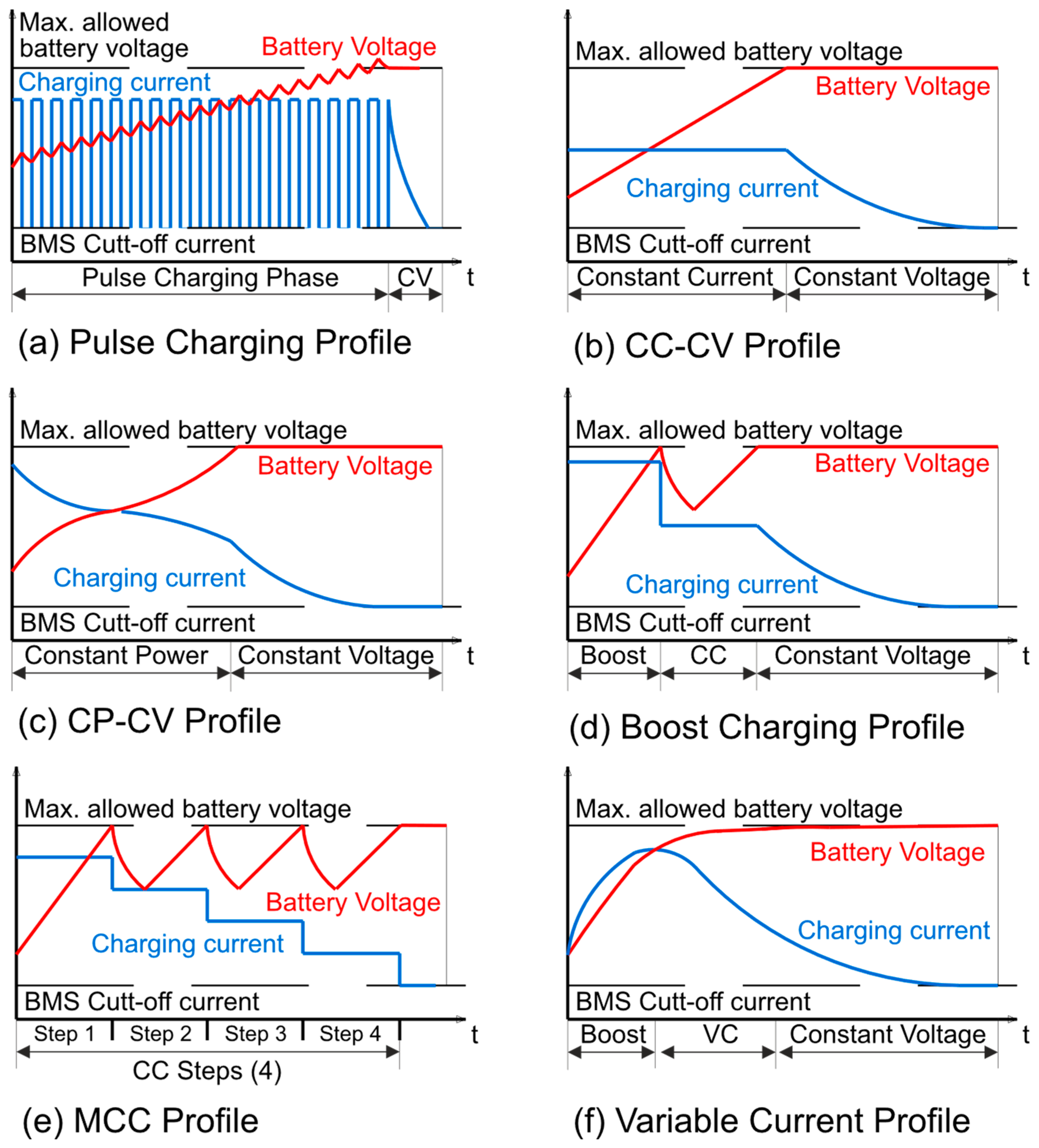
Think of it like this: You're filling a bucket with water. With DC, you’re holding the hose steady, so the water fills the bucket at a constant rate. Now, compare that to the other type of current (we'll get to that soon!), it would be like someone is controlling the water flow and making the stream come and go. Not a good way to fill that bucket!
Why Batteries Love Being Direct (Current-ly Speaking!)
Batteries are fundamentally designed to produce DC. Internally, they use chemical reactions to separate positive and negative charges. These separated charges create a voltage difference (that "push" we talked about) and when you connect the battery to a circuit, those electrons flow from the negative end to the positive end. Nice and orderly.
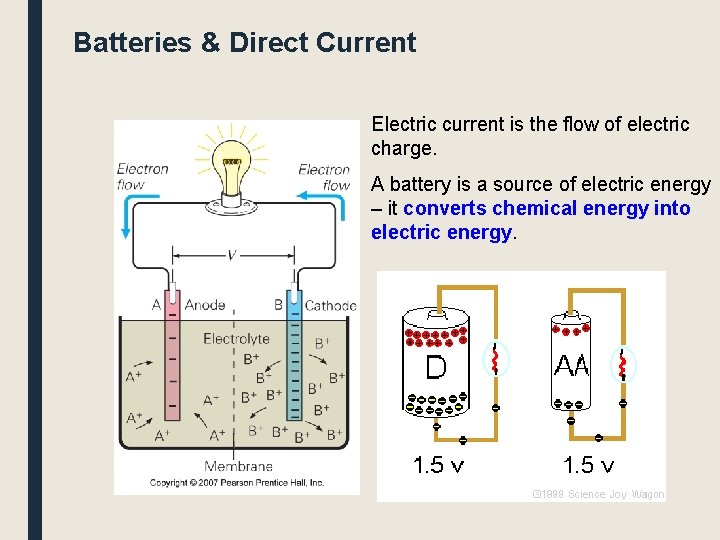
This is great for things like electronics, which generally prefer a nice, stable power supply. Imagine trying to run your delicate computer on a current that's constantly changing direction and voltage. It would probably throw a digital tantrum and start flashing error messages faster than you can say "blue screen of death."
Also, this is why hooking the wrong ends of the battery (positive to negative) is a really bad idea. You're forcing the flow of electrons in the opposite direction than the battery's design. Like trying to push a river uphill… it won't end well. (In fact, it might involve sparks, heat, and a potentially very unhappy battery.)

Now, a Quick Side Trip: AC – The Other Current!
Before you think DC is the only current in town, let's give a shout-out to its slightly more chaotic cousin: Alternating Current, or AC. This is what comes out of your wall outlets, powering your lights, your TV, and your questionable life choices made late at night while watching infomercials.
AC current alternates direction, changing back and forth many times per second. It's like that river that flows north for a while, then suddenly reverses and flows south. Confusing, right? But it has its advantages, mainly in long-distance power transmission. It’s more efficient to send high-voltage AC across power lines than high-voltage DC.
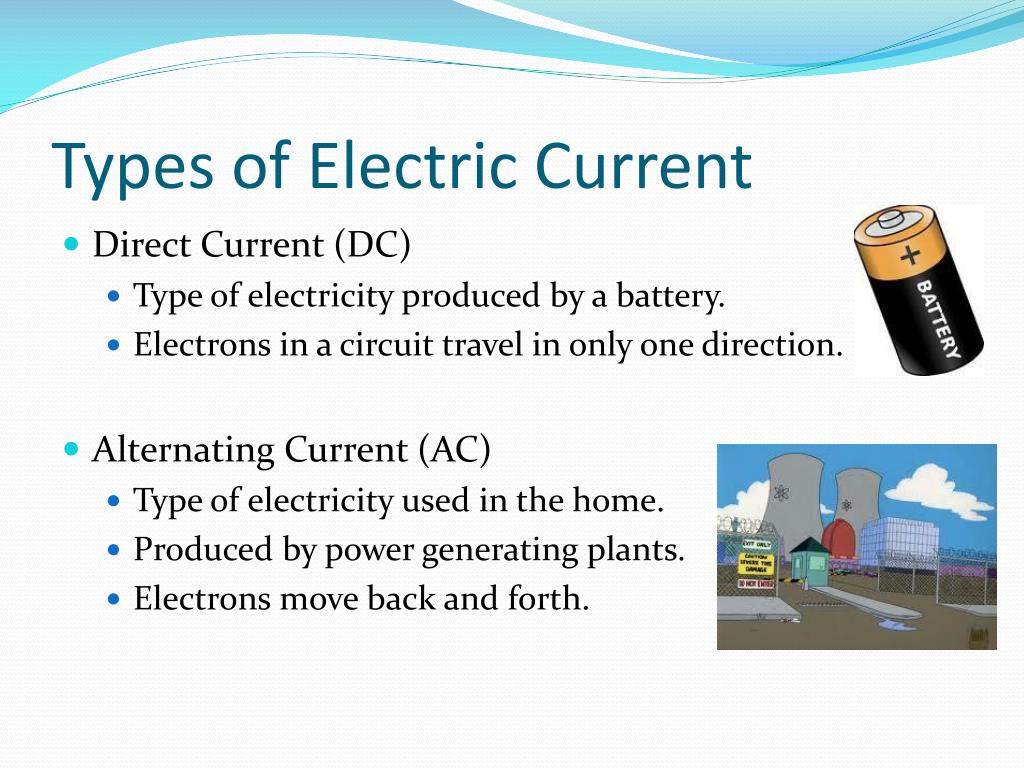
Think of it like this: DC is great for short, precise tasks, like running a tiny robot. AC is great for long-haul journeys, like getting power from a distant power plant to your house. Both are essential for a modern life, but each has a specific role to play.
The Takeaway (aka the End of the Story!)
So, next time you pop a battery into your TV remote or your child's singing, dancing abominations (toys), remember that you're harnessing the power of direct current. A steady, reliable, and electron-packed flow that keeps our little digital worlds spinning. And if anyone ever tries to tell you that batteries produce AC, just smile knowingly and say, "Ah, but actually…" and then launch into this incredibly informative (and hilarious, of course!) explanation. You’ll be the life of the party!
And now, if you'll excuse me, my phone is about to die. Time to embrace the power of DC!