
What Tools Are Needed To Harness Hydroelectric

Alright, picture this: you're sitting in a cafe, latte in hand, and someone asks you, "So, what does it actually take to harness the power of a raging river and turn it into electricity?" You could launch into a dry, technical explanation... or you could tell them a story! Because let's be honest, hydroelectric power is way more exciting than it sounds, especially when you break down the tools involved.
First things first, you're gonna need a river. I know, groundbreaking, right? But not just any trickle will do. You're looking for something with some serious oomph, preferably with a nice, steady flow. Think less "babbling brook" and more "mini-Niagara." Bonus points if it already has a dramatic waterfall. Makes things way more cinematic, you know?
The Big Damn Dam (and Reservoir)
Okay, so you've got your river. Now comes the slightly less-nature-friendly part: the dam. This isn’t your grandpa’s flimsy beaver dam (though those are impressively engineered, let’s give credit where it's due). We're talking a colossal, concrete wall designed to hold back a serious amount of water. Think of it as the river’s way of saying, "Whoa there, slow down, I'm being contained for the greater good!"
Must Read
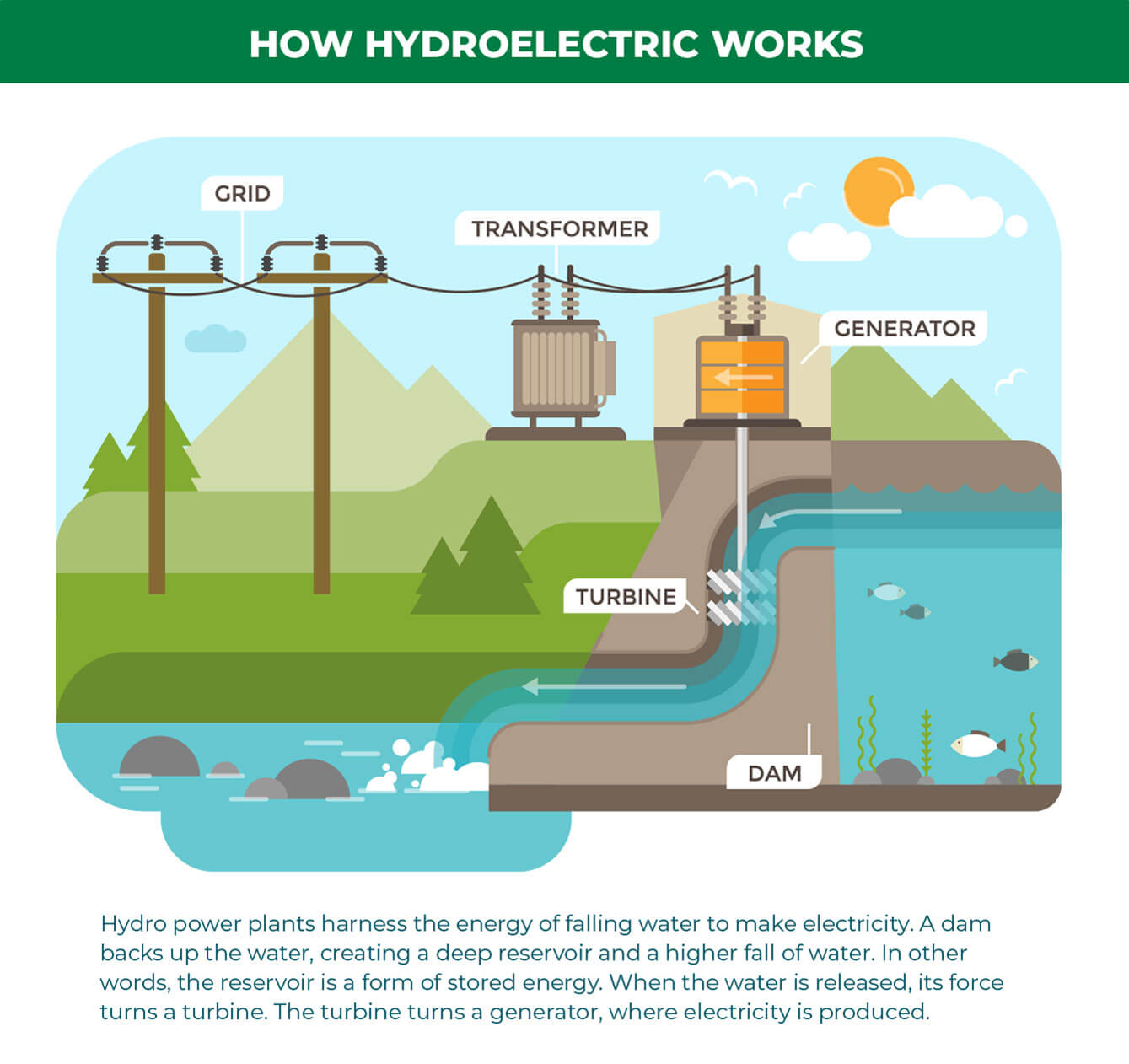
Behind the dam, you create a reservoir – basically a giant, artificial lake. This is where all that potential energy is stored, just waiting to be unleashed. It's like charging a massive battery made of water. And let's be honest, who doesn't love a good artificial lake? Instant boating, fishing, and Instagram opportunities! (Though maybe don’t Instagram yourself swimming too close to the intake…).
The Intricate Plumbing (Penstock and Intake)
Next up: the intake. This is where the water begins its journey from chilled-out reservoir to electricity-generating powerhouse. It’s essentially a big, underwater doorway that lets the water flow into the dam. Think of it as the river saying, “Okay, I’m ready for my close-up, Mr. DeMille!”

Once inside, the water plunges down a giant pipe called a penstock. This is where things get really interesting. The penstock is designed to channel the water’s energy and direct it towards the turbine. It's like a giant water slide for H2O molecules. Whee!
The Spinning Superhero: The Turbine
Now we get to the star of the show: the turbine. This is where the magic really happens. The turbine is basically a giant water wheel, but way more sophisticated. The water from the penstock slams into the turbine’s blades, causing it to spin at incredibly high speeds. Imagine being on a merry-go-round powered by a firehose – that's kind of what it's like for the turbine blades. Only, you know, less dizzying (probably).
The key thing is that this spinning motion is what converts the kinetic energy of the water into mechanical energy. It's like turning a crank really, really fast, only the crank is the size of a small car and the water is doing all the work. We're basically harnessing the awesome power of nature to create something useful. High five, Mother Nature!
The Conversion Expert: The Generator
But wait, there's more! We're not done yet. The spinning turbine is connected to a generator. The generator is the device that converts the mechanical energy from the turbine into electrical energy. It uses the principles of electromagnetism to turn the spinning motion into a flow of electrons – which is basically electricity. Think of it as the translator, taking the turbine’s spinning language and turning it into something your phone can understand.
The electricity is then sent through a transformer, which increases the voltage so it can be efficiently transmitted over long distances through power lines. Without the transformer, your electricity would fizzle out before it even reached your toaster. Nobody wants lukewarm toast, right?

The Exit Strategy: The Tailrace
Finally, the water, having done its job and helped generate electricity, exits the dam through the tailrace. This is essentially an outflow channel that returns the water to the river downstream. It's like the river saying, "Thanks for the brief detour, now I'm back to my regularly scheduled flowing!"
So, there you have it! From rivers and dams to turbines and generators, harnessing hydroelectric power is a complex process, but it's also a pretty darn cool one. Next time you flip on a light switch, take a moment to appreciate the journey that power took – especially if it involved a giant concrete dam and a bunch of whirling turbines.
And remember, folks, conservation is key. Even though hydroelectric power is renewable, it still has an impact on the environment. So, use your power wisely, and maybe consider investing in a giant hamster wheel to generate your own electricity. Just kidding... mostly.
