
What To Do When House Floods

Alright, settle in, grab your metaphorical (or actual) coffee, because we're about to talk about something nobody ever wants to discuss: your house doing its best impression of an indoor swimming pool. Yes, we're talking about a flood. Before you hyperventilate into your latte, let me assure you, while it feels like the end of the world, it's actually just... a really, really inconvenient puddle. A huge, disastrous, furniture-floating puddle.
First things first, that initial moment of discovery. It’s never a gentle notification, is it? It’s usually a squishy sound underfoot, a sudden waterfall where your ceiling used to be, or the terrifying realization that your beloved rug is now a spongy island in a burgeoning lake. Your brain, quite naturally, might go straight to: "Nope, not happening. I just watered the plants too much." Spoiler alert: you probably didn't.
Step 1: Don't Become a Human Lightning Rod (Safety First, Always!)
Your absolute, number one, top-of-the-list priority is safety. Before you even think about rescuing Grandma's porcelain cat collection, you need to ensure you're not about to star in your own accidental electrocution montage. Seriously, this isn't funny. Water and electricity are the ultimate frenemies, and they will turn on you faster than a reality TV villain.
Must Read
Find your main breaker panel and turn off the power to the affected areas – or better yet, the entire house! If you have to wade through water to get to it, and you're not sure if the power is already off, don't do it. Call your utility company. Same goes for gas: if you smell it, or suspect a gas line leak due to the water damage, get out and call for help immediately.
Step 2: Stop the Deluge (If You Can!)
Once you’re safely in the dark (literally, if you followed my advice about the breaker), it's time to play detective. Where is all this glorious water coming from? Is it a burst pipe doing a dramatic fountain impression? An overflowing bathtub? A rogue dishwasher? Your house isn't just spontaneously generating water, believe it or not.
If it's a pipe or an appliance, your next heroic feat is to find your main water shut-off valve and turn it off. This is usually located near your water meter outside, in your basement, or near your water heater. If you don't know where it is, consider this your urgent homework for after the current crisis. Trust me, future you will thank you.
Step 3: Rescue Mission & Damage Control
Okay, the water isn't flowing anymore, the lights are off, and you're not glowing. Good job! Now for the actual messy part. Think strategically: what’s most valuable? What’s most susceptible to damage? Start moving smaller, more precious items to higher, drier ground. This includes electronics, important documents, family photos, and anything else you can't bear to lose.
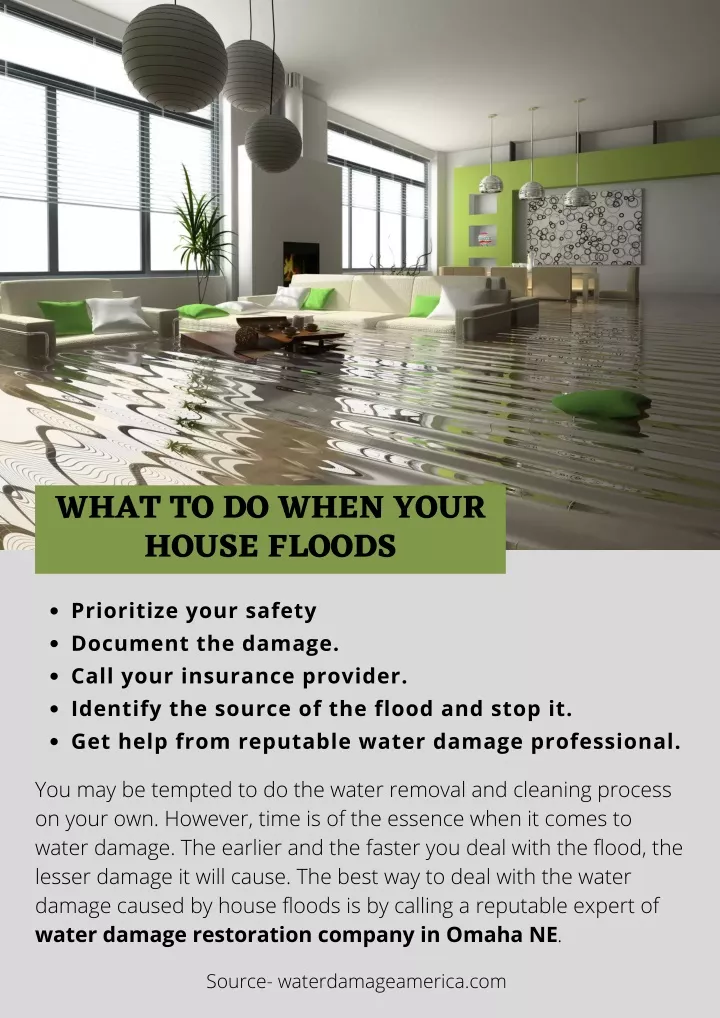
![What to Do When Your House Floods [4 main steps]](https://www.goodlifefire.com/images/blog/house-floods.jpeg)
For furniture, if you can't move it, at least try to get it off the floor. Use aluminum foil, plastic blocks, or even thick wood scraps under furniture legs. This helps prevent water from wicking up into the wood and also reduces potential rust stains on your flooring. It’s a small step, but it makes a big difference in preventing secondary damage.
Step 4: Document, Document, Document!
Before you even think about mopping, vacuuming, or bailing with your salad bowl, grab your phone and start taking pictures and videos. Take so many photos that your phone storage weeps. Get wide shots, close-ups of damage, the water line – everything. This isn't just for your scrapbook; it's absolutely crucial for your insurance claim.

Then, once your camera roll is bursting, call your insurance company. Immediately. The sooner they know, the sooner they can guide you through the next steps and send an adjuster. Pro tip: they often have emergency services they can recommend, too.
Step 5: The Big Dry (and the Mold Monster)
Once the water source is stopped and everything's documented, it's time to get that water OUT. Fast. The clock is ticking, my friend. Why? Because the infamous mold monster loves a good flood party, and it arrives uninvited within 24-48 hours. Seriously, mold doesn't mess around.

If it's a small flood, you might manage with a wet/dry vacuum, mops, buckets, and every fan you own pointed at the wet spots. Open windows and doors for ventilation (if it’s not raining outside, obviously!). For anything more substantial, you're going to need professional help. Water damage restoration companies have powerful extractors, industrial-grade dehumidifiers, and all the gizmos to dry your house faster than you can say "mildew."
Be prepared to remove wet carpets, padding, and potentially even sections of drywall. It sounds drastic, but sometimes it's the only way to prevent long-term mold issues and structural damage. Think of it as an unplanned, extremely damp renovation opportunity!
A Final Splash of Wisdom
Dealing with a house flood is stressful, messy, and can feel utterly overwhelming. But remember, you're tougher than a soggy piece of drywall. Take it one step at a time, prioritize safety, document everything, and don't hesitate to call in the professionals. Your house will eventually dry out, your furniture will (mostly) recover, and you'll have a truly epic story to tell at your next café visit. Just maybe avoid ordering anything with too much water in it for a while.