
What Temperature Can You Legally Leave Work
Okay, let's talk about something we've all probably daydreamed about at least once: What temperature is too much to handle at work? Is there a magic number where you can just throw your hands up and say, "Nope, I'm outta here!" and it's... legal?
Well, the short answer is… it's complicated. Think of it less like a clearly marked highway exit and more like a winding country road with a lot of "it depends" signs. But that's what makes it interesting, right? Let's dig in!
The Wild West of Workplace Temperatures
Here's the deal: unlike some very specific regulations around things like safety equipment, there's usually no federal law in the US that specifies a maximum (or minimum!) temperature for workplaces. Yep, you read that right. It's a bit like the Wild West out there when it comes to thermal comfort.
Must Read
So, if there's no federal law, what gives? Well, OSHA (the Occupational Safety and Health Administration) does provide guidelines and recommendations. They basically say employers have a general duty to provide a safe and healthful workplace, and that includes addressing extreme temperatures. But "safe and healthful" is pretty vague, isn’t it?
State's Rights to the Rescue (Sometimes)
Some states, like California and Washington, have taken matters into their own hands and established their own specific temperature regulations for certain industries, particularly those involving outdoor work like agriculture and construction. This is especially true when it comes to heat stress prevention.

Think of it like this: California's got your back if you're picking grapes in the scorching sun. But what about Brenda, who's stuck in a stuffy office with a broken AC in Ohio? It’s a different ball game.
Factors, Factors, Everywhere!
Even in states with regulations, it's not just about the thermometer reading. A bunch of other factors come into play. For example:

- The type of work: Are you sitting at a desk, or are you hauling heavy boxes? The more strenuous the activity, the more heat impacts you.
- Clothing: Are you wearing a suit and tie, or shorts and a t-shirt? Common sense, right?
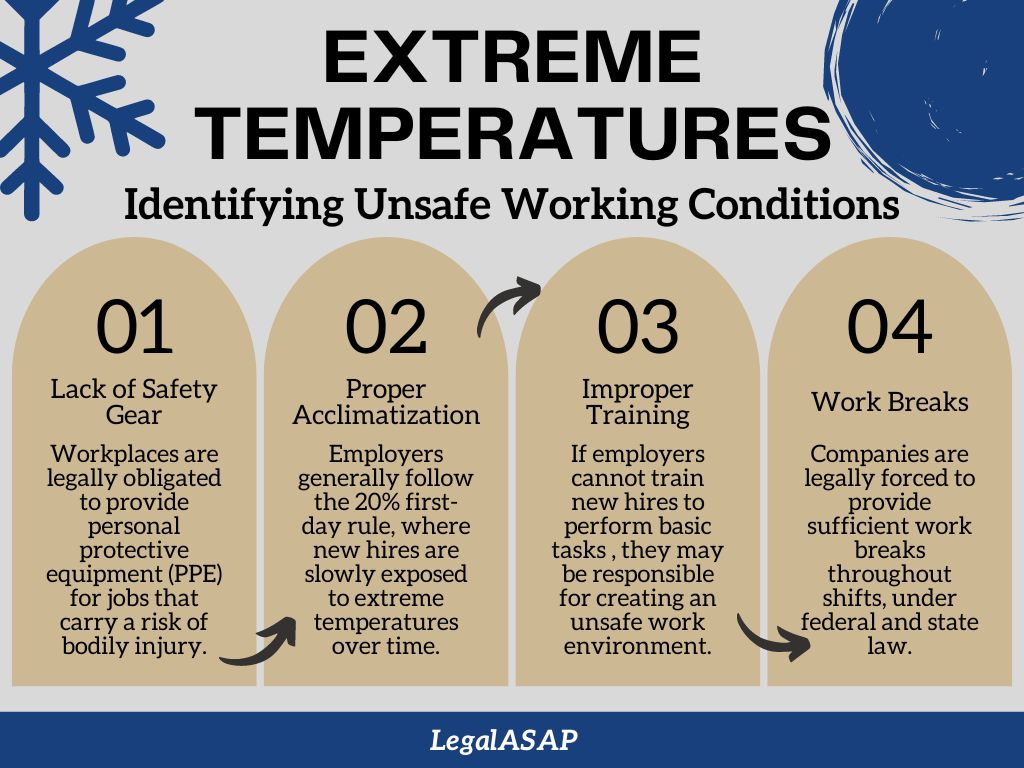
- Acclimatization: Has your body had time to adjust to the heat? Someone new to a hot environment is more at risk than someone who's been working in it for weeks.
- Individual health: Certain medical conditions can make people more susceptible to heat-related illnesses.
- Humidity: Dry heat is bad, but humid heat is really bad because your sweat can't evaporate and cool you down. It's like being wrapped in a hot, wet blanket!
So, what does this all mean? It means that determining a "legal" temperature to leave work is a nuanced thing. It's not as simple as saying, "Once it hits 90 degrees, I'm out!"
What Can You Do?
Okay, so you can't just walk off the job because it's a bit warm. But here's what you can do:

- Talk to your employer: This is the most important step. Communicate your concerns! Maybe they're unaware of the issue, or maybe they have solutions in place that you don't know about.
- Know your rights: Research your state's specific regulations regarding workplace temperature and safety. Knowledge is power!
- Document everything: Keep a record of the temperature, humidity, and your symptoms. This can be helpful if you need to escalate the issue.
- Take breaks: Step away from the heat, drink water, and cool down.
- Report unsafe conditions: If your employer isn't taking your concerns seriously and you believe the conditions are unsafe, you can file a complaint with OSHA.
Think of it like this: You wouldn't wait until your car engine is smoking to get it checked, right? Similarly, address temperature concerns before they become a health hazard.
The Bottom Line
While there's no magic temperature number that automatically allows you to ditch work, your employer has a responsibility to provide a safe and healthful work environment. By understanding your rights, communicating effectively, and taking proactive steps, you can help ensure that your workplace is a comfortable and safe place to be, no matter the weather outside (or inside!). And if all else fails, start a petition for mandatory siesta breaks. Just a thought!
So, next time you're feeling the heat at work, remember this: It's not just about the temperature on the thermometer, it's about the whole picture. Stay informed, stay safe, and stay cool (literally and figuratively!).
