
What Size Portable Generator To Run Central Air

Okay, so you're thinking about running your central AC with a portable generator? That's ambitious! Like trying to power a spaceship with AA batteries… almost. But totally doable with the right planning (and a big enough generator!). Let's dive into this fun, slightly nerdy, topic.
Why is this even a question?
Power outages happen. Mother Nature throws tantrums. Grids fail. You get the picture. And who wants to sweat it out like a marathon runner in a sauna when you have perfectly good central air? Exactly! That's why we need to talk generator sizes. Think of it as prepping for the apocalypse... a comfortably air-conditioned apocalypse!
Now, before we get ahead of ourselves, let’s be clear: powering your whole house, including that power-hungry AC unit, is a serious electrical undertaking. You gotta know what you're doing, or you risk frying things. Like, literally frying things.
Must Read
The AC Unit: A Power-Hungry Beast
Your central air conditioner is a demanding guest. It doesn't sip power; it gulps it. It’s got a big compressor that needs a massive jolt of electricity just to get started. This is called the starting wattage, and it's way more than the running wattage (what it needs to keep going). Think of it like a cheetah sprinting versus jogging. Big difference!
Find the starting wattage and running wattage on the unit itself. It's usually on a sticker somewhere. Or, check the owner's manual. Embrace the inner detective! This information is crucial. If you can't find it, consider calling an HVAC technician. They speak fluent AC!
Pro-tip: The size of your AC unit is measured in "tons." One ton equals 12,000 BTUs (British Thermal Units). A 2-ton AC unit needs less power than a 5-ton one. Obvious, right? But always good to state the obvious. Especially when electricity is involved.
Generator Math (Don't Panic!)
Alright, deep breaths. We're doing some light math. Nothing too scary. We're aiming for a generator that can handle the AC's starting wattage plus the wattage of anything else you absolutely need to run at the same time. We’re talking fridge, maybe a light or two, definitely your phone charger (priorities!).
Let's say your AC unit needs 4000 starting watts and 1500 running watts. And your fridge needs 600 starting watts and 200 running watts. You need a generator that can handle at least 4600 starting watts (4000 + 600). And it should comfortably provide 1700 running watts (1500 + 200). Always err on the side of caution. A slightly bigger generator is better than one that's constantly struggling. It's like wearing shoes that are a size too big instead of a size too small.

Important Note: Some AC units have even higher starting wattages. Especially older ones. We're talking 6000, 7000, even 8000 watts! This is where things get serious. You might need a seriously beefy generator, or consider a soft-start kit for your AC (more on that later).
Generator Types and Sizes
Portable generators come in all shapes and sizes. Some are small and quiet, perfect for camping. Others are huge and powerful, ready to run a small town (okay, maybe just your house). You'll typically find them rated in watts. Look for models rated at least 5000 watts, and possibly much higher, depending on your AC unit.
Inverter generators are generally quieter and produce cleaner power, which is better for sensitive electronics. But they might be more expensive. Regular portable generators are usually cheaper but can be louder and produce less stable power.
Also, consider the fuel type. Gasoline generators are common, but you'll need to store fuel safely. Propane generators can be a good alternative, as propane stores well. Dual-fuel generators can run on both gasoline and propane, giving you flexibility. Think of it as having a car that can run on gas or electric! Options are good.
Soft-Start Kits: A Clever Trick
A soft-start kit reduces the starting wattage needed by your AC unit. It's like giving it a gentle nudge instead of a full-on shove. This can allow you to use a smaller (and cheaper!) generator. It's like teaching your cheetah to do yoga before sprinting. Less strain, more efficient.
However, installing a soft-start kit might require some electrical know-how. Or, you can hire an HVAC professional to do it for you. Safety first!
Safety First! Seriously.
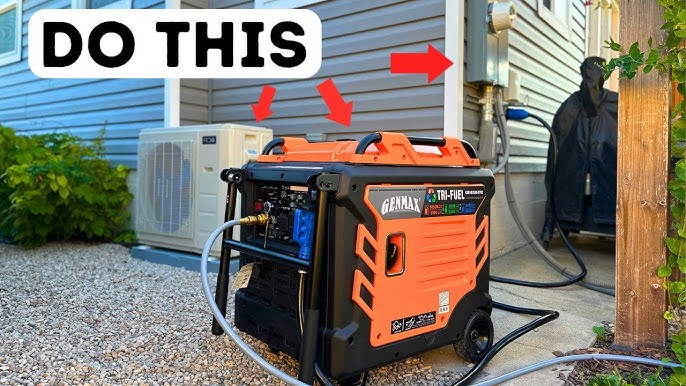
We can't stress this enough. Working with electricity is dangerous. Always follow the manufacturer's instructions for your generator. Never run a generator indoors or in an enclosed space. Carbon monoxide poisoning is a real threat. Use carbon monoxide detectors. Treat electricity with respect. It's powerful stuff!
Also, use heavy-duty extension cords that are rated for outdoor use. Don't overload circuits. Don't be a hero. If you're unsure about anything, consult a qualified electrician. Your safety (and your AC's safety!) is worth it.
The Bottom Line: Do Your Homework!
Choosing the right size portable generator to run your central air is a bit of a puzzle. But it's a fun puzzle! Gather information, do the math, and prioritize safety. Then you can enjoy the sweet, sweet relief of air conditioning during the next power outage. You'll be the envy of the neighborhood! Just don't tell everyone exactly how much nerdy research you did. Let them think you're just naturally awesome.