
What Size Portable Air Conditioner Do I Need

So, you're staring down summer's sweaty barrel, huh? Thinking about a portable air conditioner? Good choice. But now comes the million-dollar question (or, you know, the couple-hundred-dollar question): what size do you actually need?
The BTU Beast: Demystifying Cooling Power
Everyone throws around the term BTU, which stands for British Thermal Unit. Sounds fancy. But it basically measures how much heat your AC can remove from a room in an hour. Think of it as heat's worst nightmare.
The Official (Boring) Guidelines
You'll see charts everywhere. "150 square feet? You need 5,000 BTU!" "300 square feet? 8,000 BTU!" They're all remarkably… precise. But frankly, I think they're often… wrong.
Must Read
Here's my unpopular opinion: Overestimating is almost always better. Seriously. A slightly too-powerful AC is way better than a struggling, sweating AC that barely makes a dent in the humidity.
Why? Because an underpowered AC will run constantly. It'll work itself to death, waste energy, and leave you feeling like you're trapped in a lukewarm sauna. No one wants that.
Beyond Square Footage: What the Charts Don't Tell You
Those charts are a starting point, sure. But they completely ignore the real factors that influence your cooling needs. Like, is your room basically a greenhouse?
Does your room get direct sunlight all day? Are your windows ancient, drafty portals to the outside world? Do you have a lot of heat-generating appliances, like a supercomputer gaming rig?
Sunlight: The Silent Heat Thief
Sunlight is a huge factor! A room bathed in sunshine will need significantly more cooling power than a dim, basement dwelling. Think about it: are you trying to cool a cave or a tanning booth?
If your room is sunny, add at least 10% to the BTU recommendation. If it's super sunny, maybe even 20%. Don't be shy.
Insulation: Your First Line of Defense
Bad insulation is basically an open invitation for heat to crash your party. Old windows, poorly sealed walls, a leaky roof – they all contribute to heat gain. Think of your insulation as a sweater for your house.
If your insulation is questionable, bump up the BTU recommendation another notch. You're fighting a losing battle otherwise.
People and Pets: Tiny Heat Generators
Humans generate heat. It's a fact of life. So, if you regularly have multiple people hanging out in your room, factor that in. Especially if they're exercising, having a dance party, or engaging in competitive thumb wrestling.
Pets, too! Especially furry ones. A fluffy dog or a majestic Persian cat contributes to the overall heat load. They are cute little furnaces.

My Unpopular Opinion: Go Bigger (Within Reason)
I'm going to say it again: err on the side of overestimating. A slightly larger AC will cycle on and off, maintaining a consistent temperature. A smaller AC will struggle and fail.
Think of it like having a car. Would you rather have a car that can easily handle hills, or one that wheezes and strains every time you encounter a slight incline?
However, there is a limit. Don't buy a 20,000 BTU unit for a tiny bedroom. That's just overkill and a waste of money. And potentially could trip a breaker if your wiring is not right.
The "Too Big" Problem
A drastically oversized AC can actually be inefficient. It will cool the room down too quickly and then shut off. This short cycling can lead to uneven temperatures and higher humidity.
The goal is consistent, comfortable cooling. Not a blast of arctic air followed by a wave of sticky humidity.
Beyond BTUs: Other Things to Consider
Size isn't everything! (Though in this case, it's pretty important.) Think about other features that might be important to you.
Do you want a unit with a remote control? A sleep mode? A dehumidifier function? These are all nice-to-haves that can enhance your overall experience.
Noise Level: The Silent Assassin
Portable ACs can be noisy. Some are significantly louder than others. Read reviews and pay attention to decibel ratings if noise is a concern.
You don't want to end up with a unit that sounds like a jet engine taking off in your living room. Especially if you're trying to watch TV or sleep.
Portability: The Whole Point
It's a portable air conditioner, right? So, make sure it's actually easy to move around. Consider the weight and whether it has wheels.
Imagine lugging a heavy, clunky AC up a flight of stairs. Not so fun. Unless you're training for the Olympics.
Exhaust Hose: The Necessary Evil
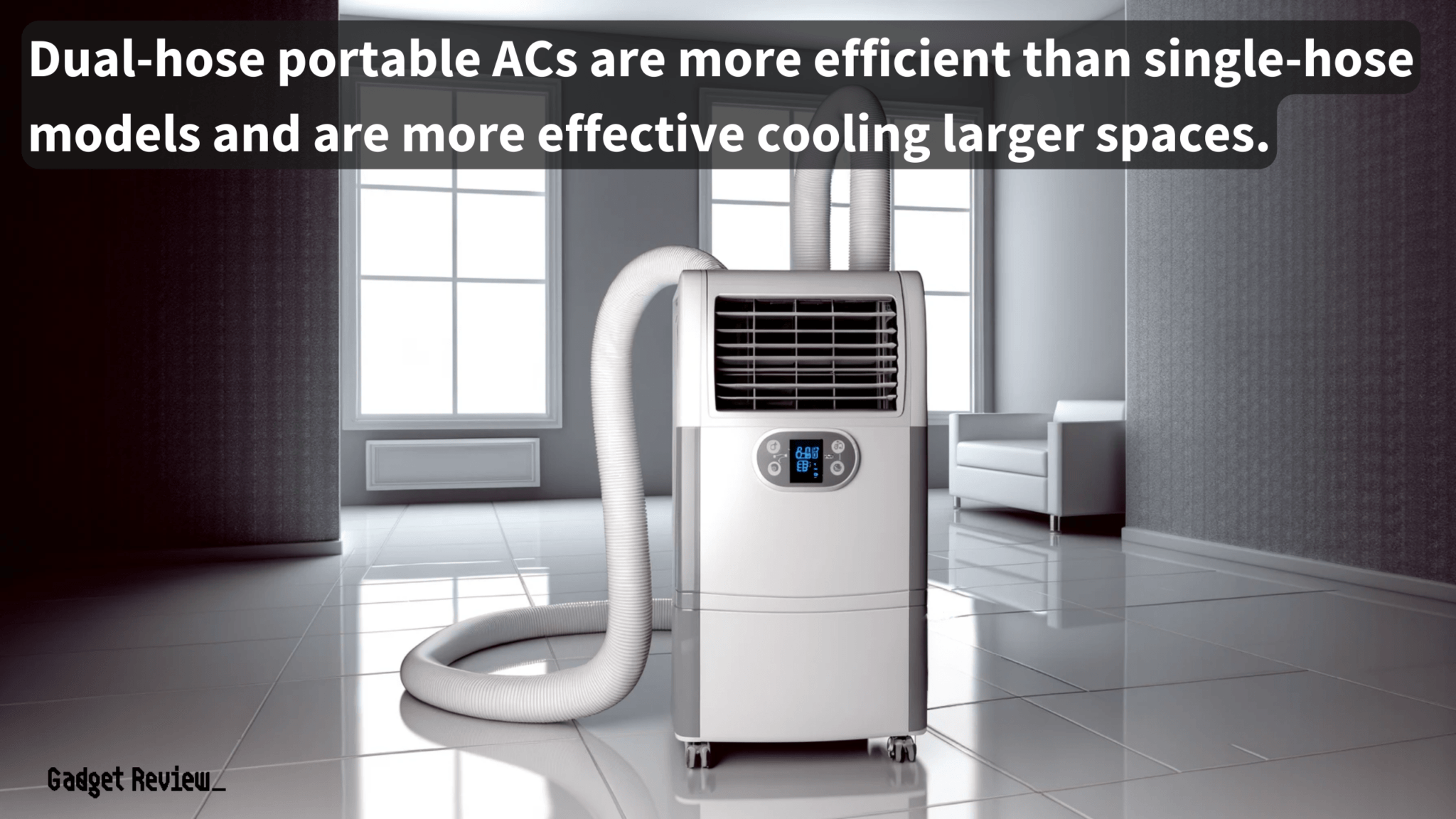
All portable ACs need an exhaust hose to vent hot air outside. This is usually done through a window. Make sure the hose is long enough to reach your window and that the unit comes with a decent window kit.
A poorly designed window kit can let hot air back in, defeating the purpose of the AC. It's like trying to bail water out of a boat with a hole in the bottom.
Final Thoughts: Trust Your Gut (and Maybe Add a Few BTUs)
Ultimately, choosing the right size portable AC is a balancing act. Consider the square footage of your room, but also think about sunlight, insulation, and other factors.
Read reviews, do your research, and don't be afraid to go slightly bigger than the charts recommend. Because sweating is never stylish.
And remember, I told you my unpopular opinion. When in doubt, overestimate those BTUs a little! Your future, cooler self will thank you.