
What Size Inverter Do I Need To Run A Refrigerator
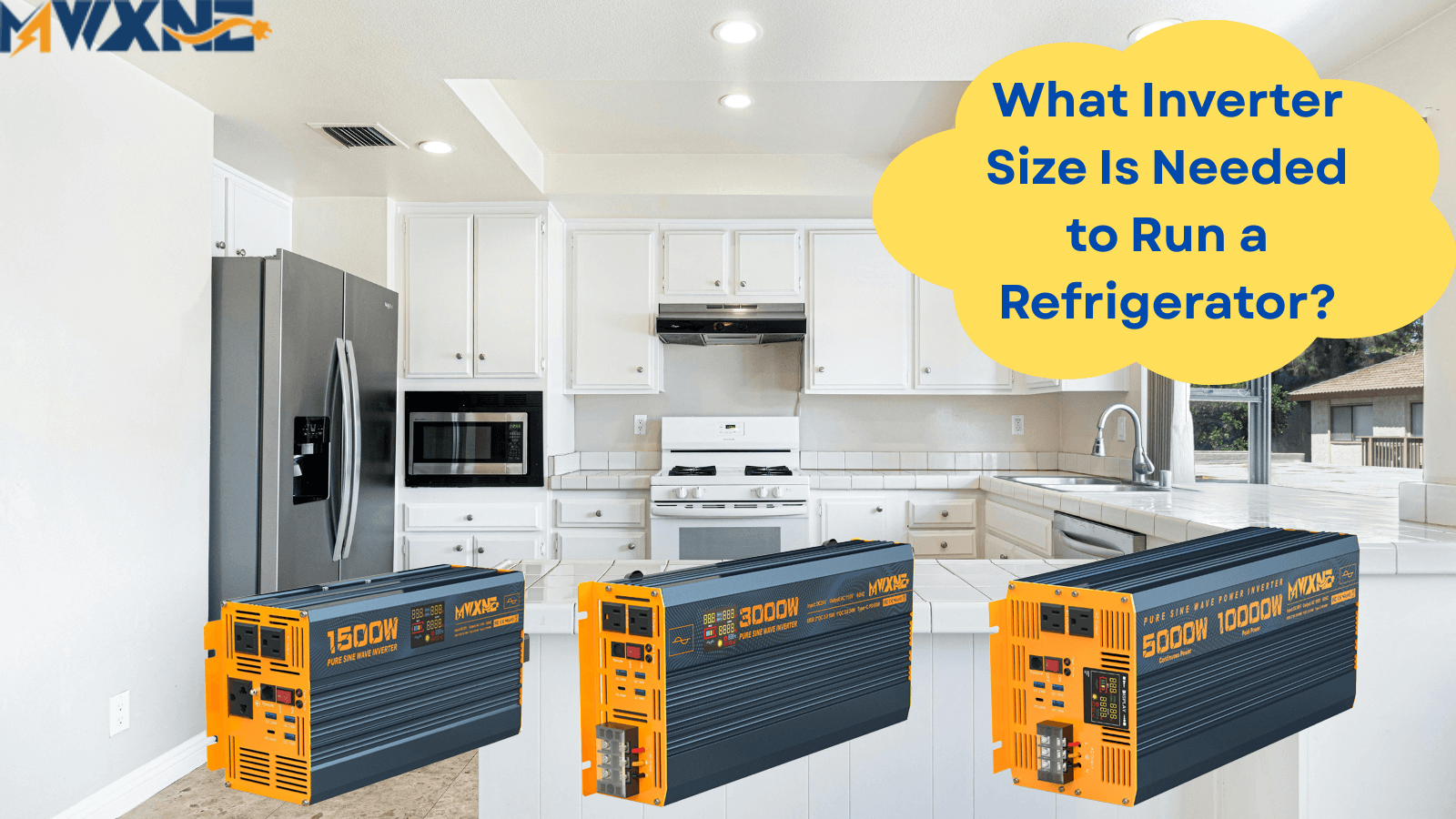
So, you're dreaming of a world where your trusty refrigerator keeps chilling even when the power grid throws a tantrum? Fantastic! You're looking at the glorious world of inverters. The big question is: what size do you need to keep your precious groceries cold?
First Things First: Decoding Your Fridge's Secret Language
Your refrigerator isn't just a silent box humming in the corner. It's a power-hungry beast… well, maybe a slightly peckish pet, depending on the model. We need to understand its appetite before picking an inverter.
Look for a sticker, usually near the power cord or inside the fridge door. You're hunting for the wattage or amperage. It might say something like "150 watts" or "1.5 amps at 120 volts".
Must Read
Amps? Volts? Don't panic! If you only see amps, just multiply that number by the voltage (usually 120 volts in the US) to get the wattage. Think of it like this: Amps x Volts = Watts. Simple as pie (and hopefully your fridge is full of it)!
The Starting Surge: The Fridge's Big Gulp
Here's the kicker: refrigerators, like teenagers raiding the snack cabinet, have a starting surge. This is a brief, intense burst of power they need when the compressor kicks on. It's much higher than their usual running wattage.
This surge can be 2 to 3 times (or even more!) the running wattage. Let's say your fridge runs at 150 watts. The starting surge could be anywhere from 300 to 450 watts, or even higher for older models! Always be prepared for this potential surge.
Think of it like this: your fridge is a race car. It needs a huge burst of energy to get off the starting line, but then it settles into a more efficient cruise. We need an inverter that can handle that initial burst.
Inverter Sizing: More is Better (Within Reason!)
Now we get to the fun part: picking an inverter! You want to make sure you get one big enough to handle your fridge's starting surge and its continuous power needs.
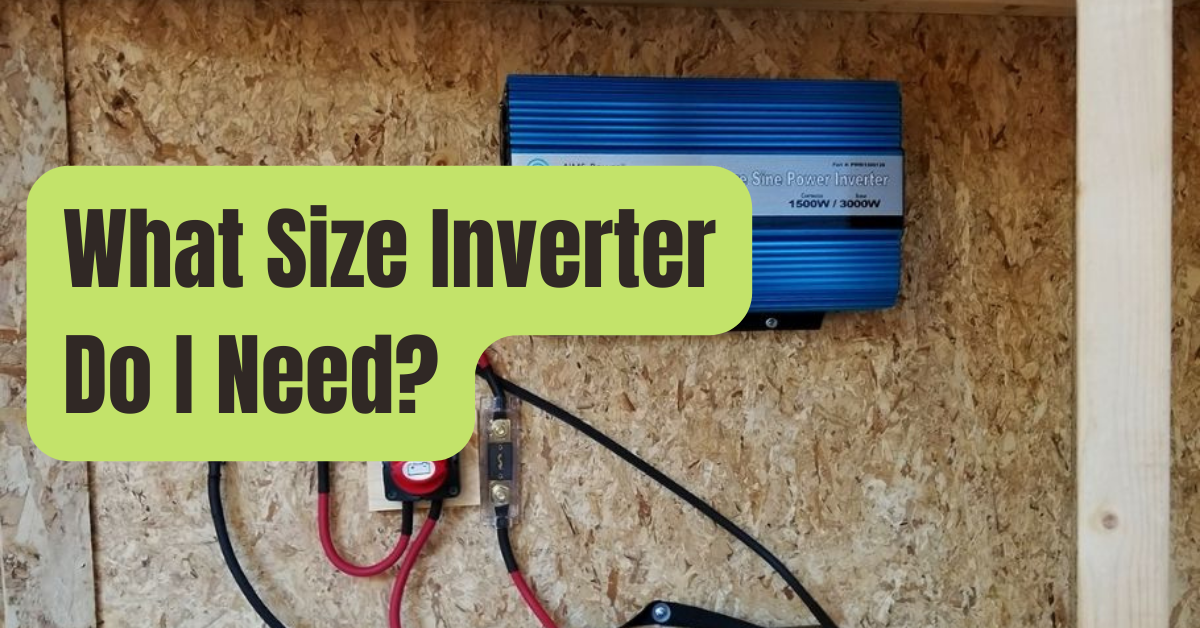
A good rule of thumb is to choose an inverter with a wattage rating at least 2 to 3 times the fridge's running wattage. This will give you plenty of headroom for that starting surge, preventing overloads and sad, warm food.
For our 150-watt fridge example, that means aiming for an inverter that can handle at least 450-600 watts. Some people even go higher just to be safe. Better safe than sorry… especially when ice cream is on the line!
Pure Sine Wave vs. Modified Sine Wave: The Inverter Showdown
There are two main types of inverters: pure sine wave and modified sine wave. Think of them as the gourmet and the… well, the slightly less gourmet option.
Pure sine wave inverters produce a cleaner, smoother power output that's virtually identical to what you get from the wall outlet. This is the best choice for refrigerators and other sensitive electronics.
Modified sine wave inverters are cheaper, but their power output isn't as clean. They can sometimes cause appliances (especially those with motors like refrigerators) to run less efficiently, overheat, or even fail prematurely.
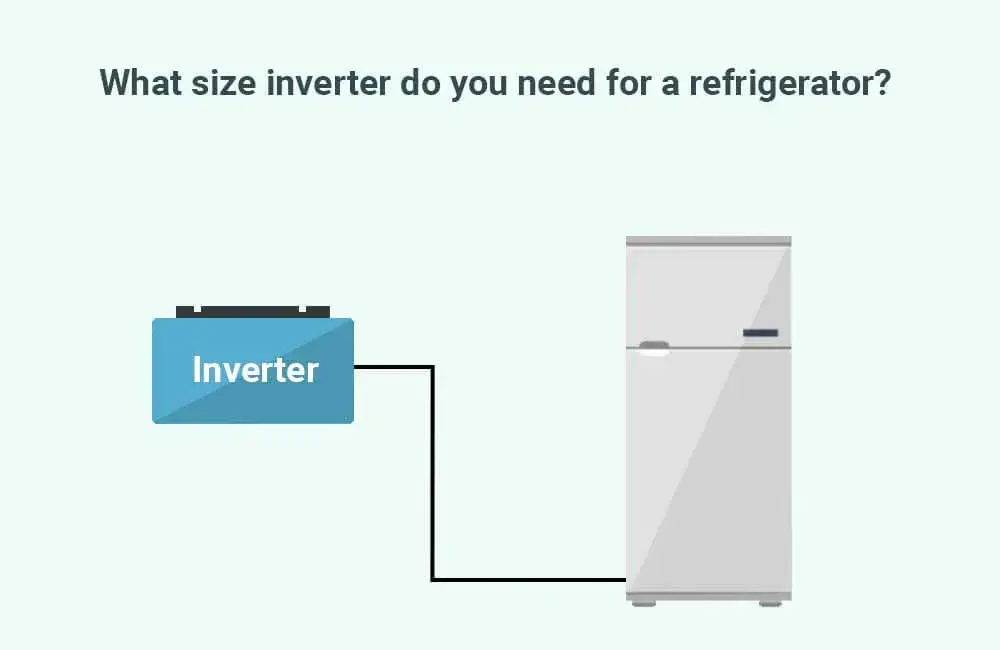
While a modified sine wave might work for your fridge, it's generally recommended to spend the extra money on a pure sine wave inverter. It's like buying insurance for your refrigerator's well-being. Your fridge will thank you!
Adding Up the Extras: What Else Will You Plug In?
Don't forget to consider anything else you might want to run off the inverter at the same time as your refrigerator. A small lamp? A phone charger? Every little bit adds up.
Add up the wattage of all the devices you plan to use simultaneously and factor that into your inverter sizing calculation. You don't want to overload the inverter and plunge yourself into darkness (and warm food!).
It's always a good idea to overestimate your needs slightly. Having a little extra power capacity is like having an extra slice of pizza – you might not need it right now, but it's nice to know it's there.
Battery Power: The Fuel for Your Fridge's Freedom
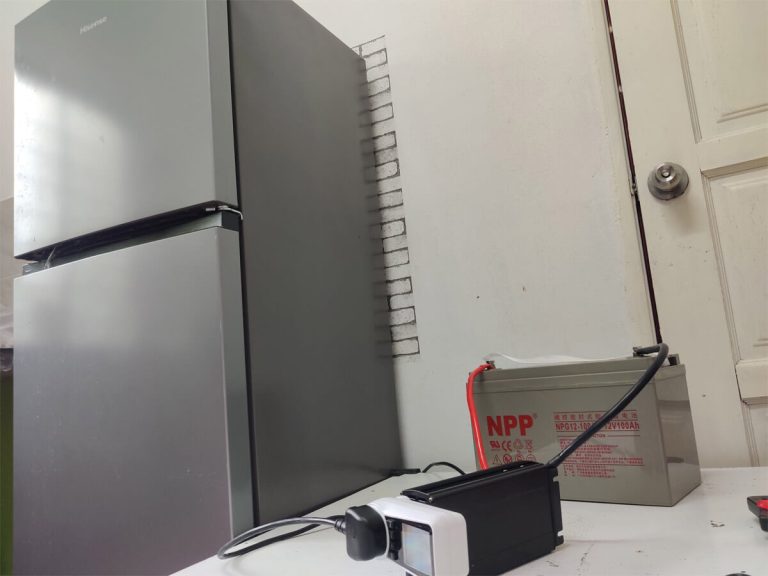
An inverter is only as good as its power source. You'll need a battery (or bank of batteries) to power your inverter. The size and type of battery you need will depend on how long you want to run your fridge and how much power it consumes.
Deep cycle batteries are the best choice for inverter applications. These batteries are designed to be discharged and recharged repeatedly, unlike car batteries which are designed to deliver a short burst of power.

Calculating battery size can get a bit technical, involving amp-hours and discharge rates. But don't worry! There are plenty of online calculators and resources to help you figure out the right battery setup for your needs. Or, better yet, consult with an electrician.
Real-World Examples: Let's Get Practical!
Okay, let's look at some real-world scenarios. These are just examples, so be sure to check your fridge's actual wattage before making any decisions.
Scenario 1: Small Apartment Fridge (Running Watts: 100, Surge Watts: 300) You'd want an inverter rated for at least 300 watts, but a 500-watt or even a 600-watt inverter would be a safer bet. Plus, you can run the TV!
Scenario 2: Standard Kitchen Fridge (Running Watts: 150, Surge Watts: 450) Aim for an inverter in the 500-750 watt range. This will give you plenty of headroom for the surge and allow you to power a few other small devices.
Scenario 3: Large, Energy-Efficient Fridge (Running Watts: 200, Surge Watts: 600) A 750-1000 watt inverter would be ideal. This will easily handle the surge and give you plenty of extra power for other appliances. You can now live off-grid in style!
Professional Help: When in Doubt, Call the Experts!
If you're feeling overwhelmed by all the calculations and technical jargon, don't hesitate to consult with a qualified electrician or solar power specialist. They can help you choose the right inverter and battery setup for your specific needs and ensure that everything is installed safely.
Think of it as hiring a professional chef to ensure your fridge stays cold and your food stays fresh. It's an investment in peace of mind and delicious leftovers.
Remember, safety always comes first. Working with electricity can be dangerous, so if you're not comfortable doing it yourself, leave it to the pros!
The Sweet Sound of a Humming Fridge (Even When the Lights Go Out!)
Choosing the right inverter for your refrigerator is all about understanding your fridge's power needs, accounting for the starting surge, and selecting an inverter with enough capacity to handle the load.
With a little bit of research and planning, you can ensure that your fridge keeps chilling, even when the power goes out. This is a fantastic insurance and convenience.
So go forth, conquer the darkness, and keep your ice cream frozen! You've got this!