
What Size Generator To Run A 2000 Sq Ft House
Okay, so you're trying to figure out what size generator you need for your 2000 sq ft house, huh? It's like trying to guess how many marshmallows fit in a jar – tricky, but totally doable. Don't worry, we'll break it down. You're not alone in this, by the way. Everyone panics a little when faced with wattage calculations.
First things first: Why do you want a generator? Is it for those super annoying, blink-and-you-miss-them power flickers? Or are we talking full-blown, ice-storm-knocking-out-the-grid kinda scenario? The answer makes a HUGE difference. A little "blip" coverage is way different than powering the whole homestead during the next apocalypse (or, you know, just a really bad thunderstorm).
The Bare Essentials: Enough to Survive (Relatively Comfortably)
Let's say you just want to keep the lights on, the fridge humming, and maybe catch up on Netflix. (Priorities, right?) We’re talking about the essentials here.
Must Read
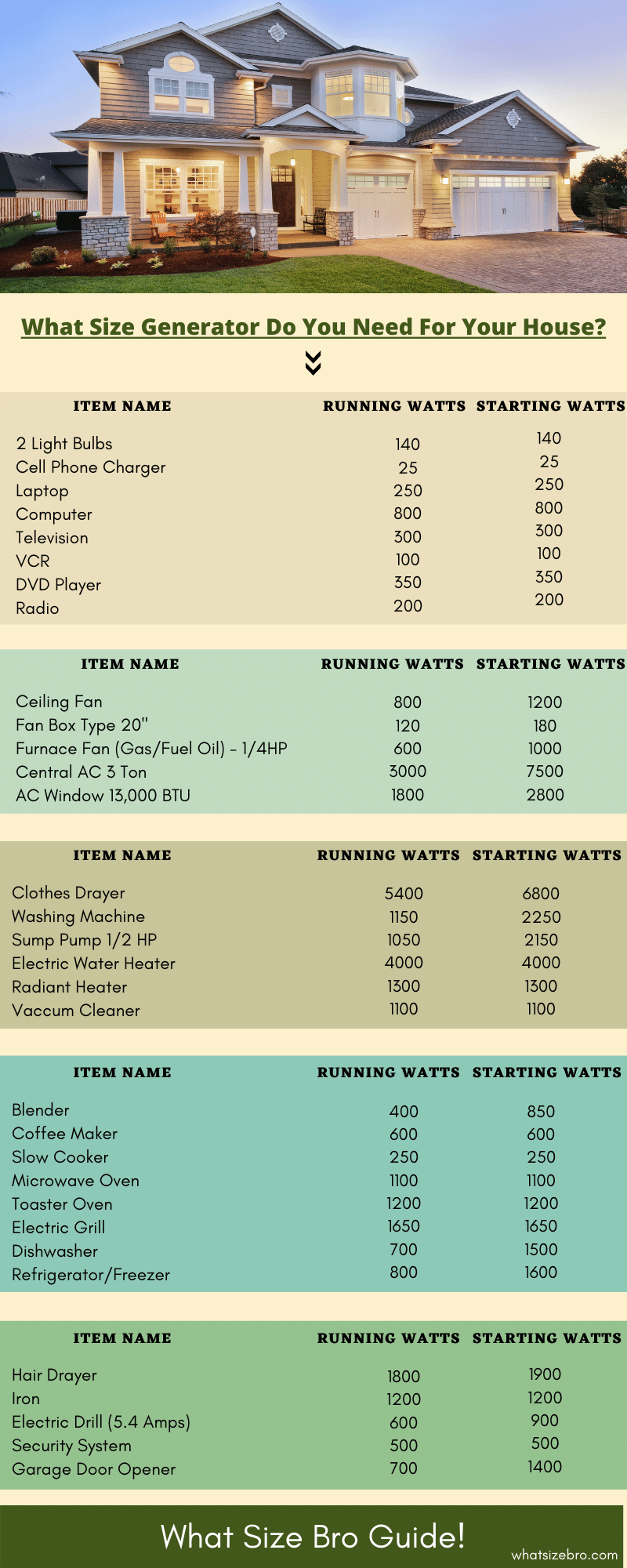
A typical fridge? It needs around 600 starting watts, then settles down to maybe 150 running watts. Not too scary, huh? Your lights (LEDs, hopefully!), maybe 10-20 watts each. TV? Let’s be generous and say 150 watts. Throw in your internet router (gotta stay connected!), and you’re still not breaking the bank.
Okay, but what about the big stuff? Like, the furnace. Or the AC. That’s where things get… interesting. Furnaces usually need a good chunk of starting watts, then settle down. Central AC? Hoo boy. We’re talking potentially thousands of starting watts. That’s a whole different ballgame, my friend.
For just the absolute basics, you’re probably looking at a 3000-5000 watt generator. But seriously, do the math for your specific appliances. Don’t just guess! There are handy wattage calculators online. Google is your friend here!
The Whole Shebang: Powering Everything (Like a Boss)
Alright, so you want to power EVERYTHING. We’re talking AC blasting, oven baking, dishwasher washing, the whole nine yards. You want to feel like the power never even went out. I respect that. Ambition is good.
Here’s the thing: running a 2000 sq ft house with everything running simultaneously requires a significant generator. We’re talking considerably larger than the "essentials" option.

Think about it: Central AC can easily draw 3000-5000 starting watts. Your electric oven? Another 2000+ watts. Add in the fridge, lights, and everything else, and you’re quickly approaching Mount Wattage Everest.
For this level of power, you’re realistically looking at a 7500-10000 watt generator, or even larger, especially if you have a well pump (those things are wattage HOGS). And remember, you want some headroom! Don't max out your generator constantly. It's like running your car at redline all the time – not a good plan.
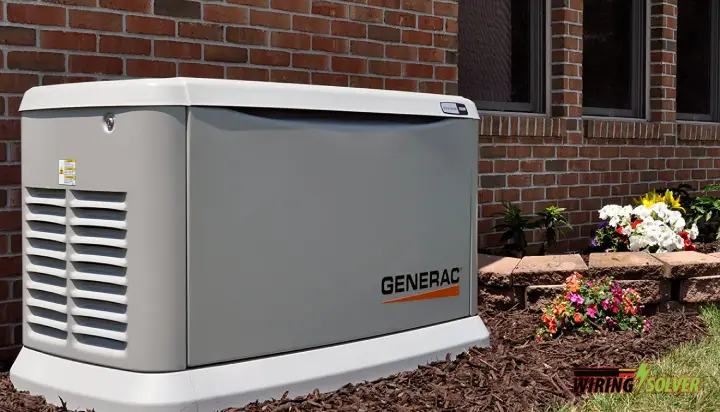
Also, consider a standby generator. These are permanently installed and automatically kick on when the power goes out. They’re more expensive, sure, but they’re incredibly convenient. No more fumbling around in the dark trying to start a generator in the pouring rain. Trust me, that's an experience you want to avoid.
Important Considerations (Don’t Skip This!)
Fuel type matters! Propane? Gasoline? Natural gas? Each has its pros and cons. Propane and natural gas are generally easier to store long-term, but gasoline is often more readily available (though, let's be honest, during a disaster, EVERYTHING becomes scarce).
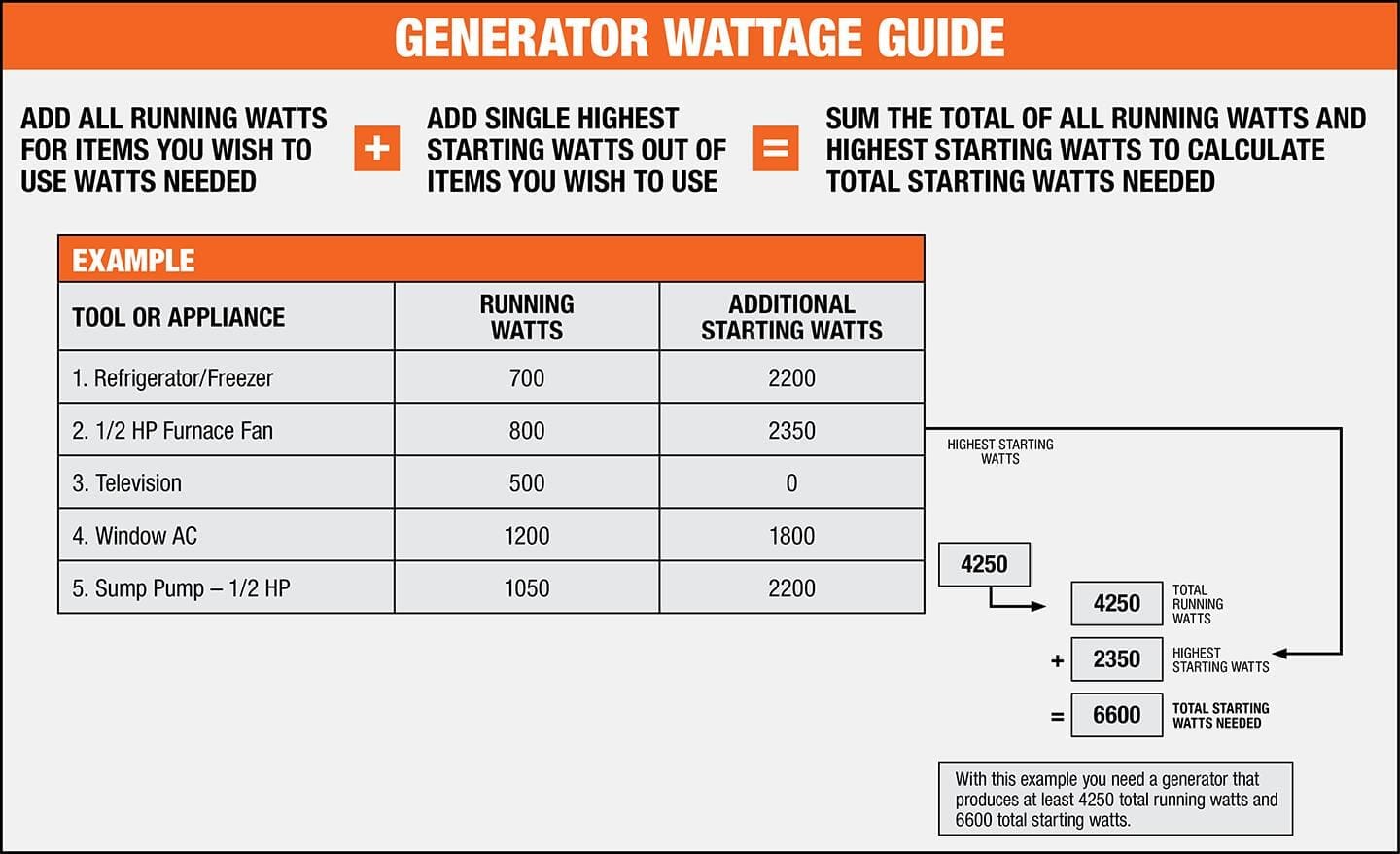
Starting watts vs. running watts! This is super important. Many appliances need a surge of power to start (starting watts) then less power to keep running (running watts). Make sure your generator can handle those initial surges.
Noise! Generators can be LOUD. Check the decibel rating before you buy. Your neighbors (and your sanity) will thank you. Think of it as an investment in neighborhood peace.
Professional installation! Especially for standby generators, get a qualified electrician involved. Electricity is nothing to mess with. Seriously.
So, what size generator do you need? It depends! Figure out your priorities, do your homework, and don't be afraid to ask for help. Good luck, and may your power outages be short and sweet! (And may your generator always start on the first try!)