
What Size Generator Is Needed To Run A House

Let's face it, nobody wants to think about needing a generator. But when the power goes out, suddenly knowing how to keep the lights on, the fridge humming, and the Wi-Fi buzzing becomes the hottest party trick in the neighborhood. That's why figuring out what size generator you need for your house is not just practical, it's almost a superpower! It gives you the peace of mind knowing you can weather any storm (literally) and keep your life relatively normal.
So, what's the big deal? The purpose of a generator, quite simply, is to provide electricity when the grid fails. But the benefit extends far beyond just keeping the lights on. Think about it: a generator can prevent food spoilage in your refrigerator and freezer (saving you money!), allow you to continue working from home (keeping you productive!), and even power medical equipment (which can be life-saving!). In short, a properly sized generator offers comfort, security, and continuity when you need it most.
Now, let's get to the nitty-gritty: how do you figure out what size generator you need? It's all about watts. Every appliance in your house requires a certain amount of power to run, measured in watts. There are two types of watts to consider: starting watts and running watts. Starting watts are the surge of power needed to initially turn on an appliance, while running watts are the power needed to keep it running continuously. Starting watts are almost always higher than running watts.
Must Read
Here's the fun part (sort of): you need to add up the wattage requirements of all the appliances you want to run simultaneously during a power outage. Start by making a list of essential items. This might include your refrigerator, a few lights, a phone charger, your furnace fan (if you have gas heating), and maybe the TV (for sanity!). Check the appliance labels or owner's manuals for their wattage ratings. If you can only find amps and volts, you can calculate watts using the formula: Watts = Amps x Volts.

Once you have your list and the wattage requirements, add up the running watts of all your chosen appliances. Then, identify the appliance with the highest starting watts and add that number to your running watt total. This will give you a rough estimate of the total wattage your generator needs to handle.
Important tip: Don't cut it too close! It's always better to overestimate your wattage needs slightly. Choose a generator with a wattage rating that's a bit higher than your calculated total. This will give you some headroom and prevent the generator from being overloaded.
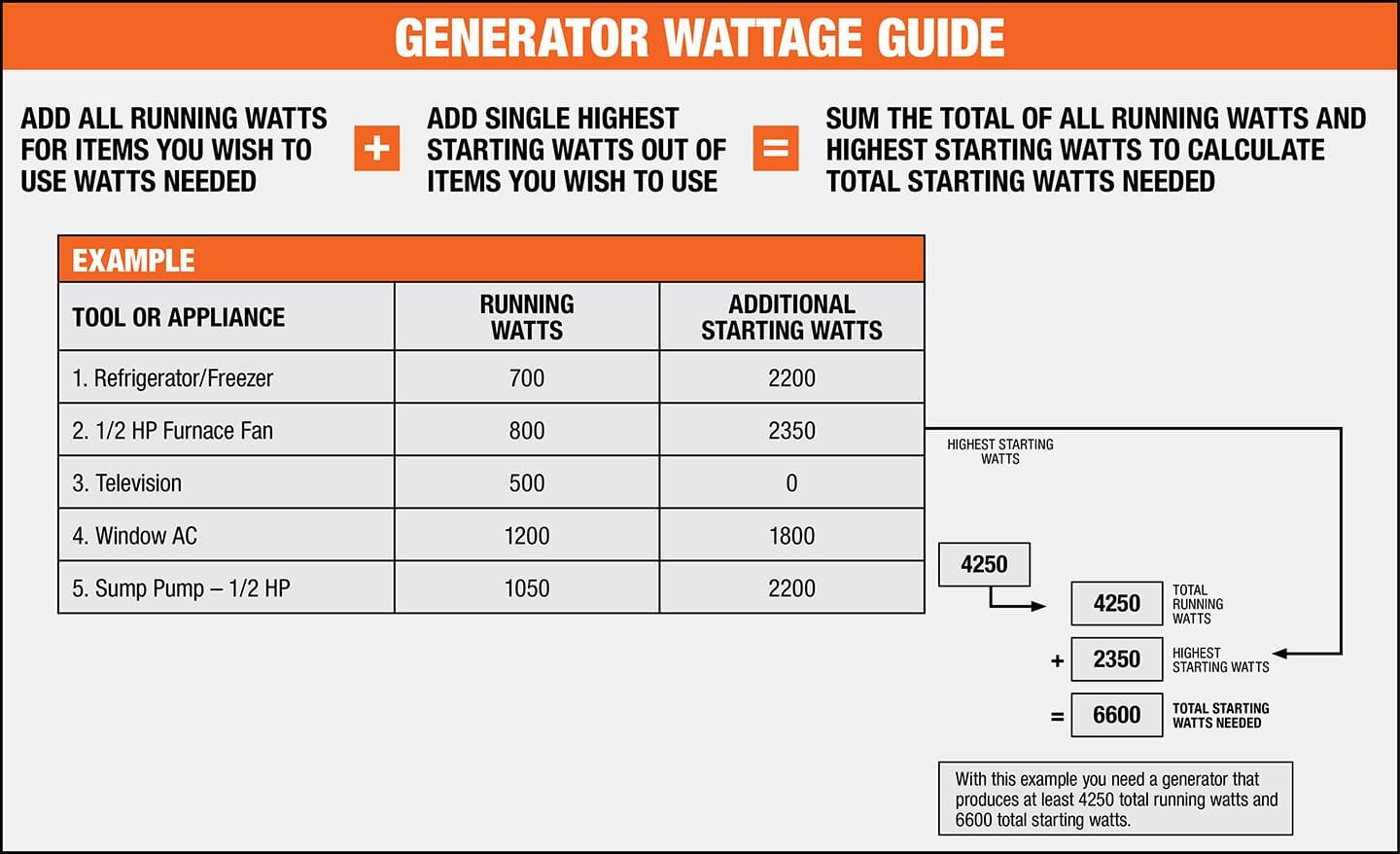
For example, a small apartment might only need a 3000-watt generator to run essential appliances, while a larger home with central AC might require a 7000-watt or larger generator. It's also worth considering a whole-house generator that automatically kicks in when the power goes out, but these are significantly more expensive and require professional installation. Do your research, crunch the numbers, and choose a generator that fits your needs and budget.
Finally, remember to factor in the fuel source. Generators typically run on gasoline, propane, or natural gas. Each has its pros and cons in terms of cost, availability, and storage. Choosing the right fuel source is crucial for ensuring your generator is ready to go when you need it most. Good luck and stay powered up!

