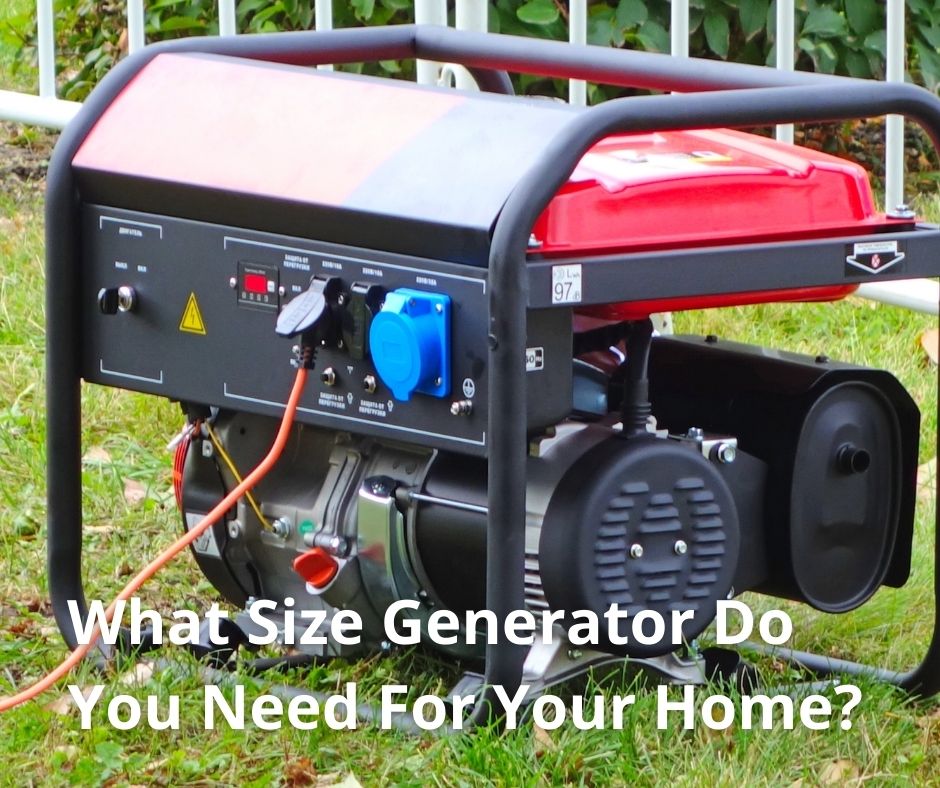
What Size Generator Do You Need To Power A House
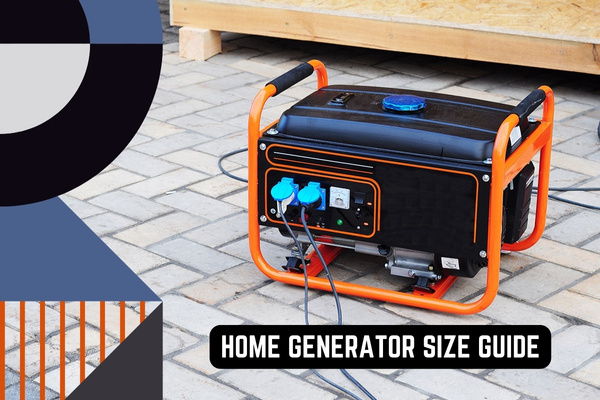
Okay, picture this: The lights flicker. The TV sputters. Your internet goes down. Darkness descends! It's a power outage, folks, and it's about as fun as a root canal without the laughing gas. But fear not! A generator can be your knight in shining armor, your beacon in the blackout. But before you run out and buy one, you gotta answer the big question: What size generator do I actually need?
Watt's the Deal with Watts?
The key to understanding generator sizing is understanding watts. Think of watts as the language your appliances speak. Every fridge, TV, microwave, and even that fancy electric toothbrush, needs a certain number of watts to run. This wattage is usually listed on the appliance itself, often near the power cord or on a sticker. It's like the appliance's secret handshake. Find that number!
Now, there are two kinds of watts we need to worry about: starting watts and running watts. Running watts are what the appliance needs to keep humming along smoothly. Starting watts are a burst of energy it needs to kickstart, like that jolt you need to get out of bed on a Monday morning. Starting watts are almost always higher than running watts, sometimes significantly so. Think of your air conditioner – it needs a big gulp of power to get going before settling down to its normal hum.
Must Read
Figuring Out Your Needs: A Simple Calculation
So how do you figure out what size generator you need? Let's break it down into a (relatively) painless process.
- Make a list! Write down all the appliances you absolutely need to run during an outage. We're talking necessities here: refrigerator (to keep that ice cream from melting, obviously!), some lights, maybe the furnace (depending on the season), and perhaps a device to charge your phone so you can doomscroll in the dark… I mean, stay informed!
- Find those watts! Look for the wattage information on each appliance. Write down both the running watts and the starting watts (if listed). If only amperage (amps) and voltage (volts) are listed, you can calculate watts using this formula: Watts = Amps x Volts. Remember high school science? No? Well, now you do!
- The running watt total: Add up all the running watts of the appliances you listed. This is the minimum wattage your generator needs to supply continuously. This is like your baseline, the foundation upon which our generator kingdom will be built.
- The starting watt surge: This is where things get a little tricky. You can't just add up all the starting watts. That would lead to generator overkill of epic proportions. Instead, find the appliance with the highest starting wattage. Add that to your total running watts. Then, add a little extra "just in case" buffer.
Let's do a ridiculously simple example:
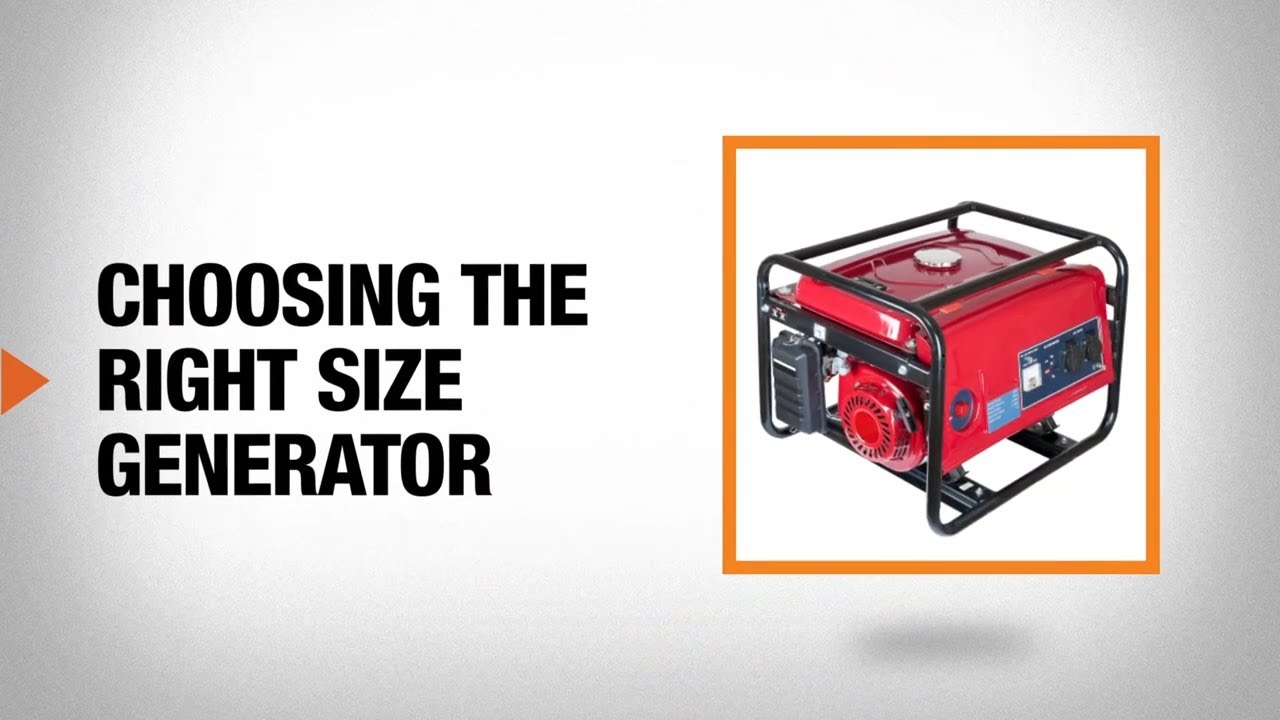
Say you want to run a refrigerator (600 running watts, 1800 starting watts), a lamp (100 running watts), and a TV (200 running watts). Your total running watts are 900. Your highest starting watt appliance is the refrigerator (1800 starting watts). So, you need a generator that can handle at least 900 (running) + 1800 (starting) = 2700 watts. But, just to be safe, let's add a buffer of, say, 500 watts. That means you're looking for a generator that can deliver at least 3200 watts.
Don't Forget the Fine Print!
Keep in mind a few important caveats. First, generators lose some of their power at higher altitudes. If you live in the mountains, you may need a slightly larger generator than you think. Second, it's always better to overestimate than underestimate. A generator running at close to its maximum capacity will wear out faster and may not be able to handle unexpected surges. It's like trying to run a marathon in flip-flops – not a good idea.

Finally, consider the type of fuel your generator uses. Propane generators are convenient, but propane tanks can run out. Gasoline generators are readily available, but gasoline can degrade over time. Diesel generators are fuel-efficient but can be noisy. Each has its own set of pros and cons.
Ultimately, choosing the right size generator is about balancing your needs with your budget and your tolerance for noise. Don't be afraid to ask an expert for help! A qualified electrician or generator dealer can help you assess your specific situation and recommend the perfect generator for your home.
So, go forth and conquer those power outages! With a little planning and the right generator, you can keep the lights on, the fridge cold, and the internet… well, at least you can keep your phone charged. And that, my friends, is a victory in itself.