What Size Central Air Conditioner Do I Need

Okay, let's talk about central air. Not in a boring, technical way that makes your eyes glaze over faster than a donut. We're talking about it like we're swapping stories over a backyard BBQ, because let's be real, nobody actually enjoys figuring out AC sizing.
Think of it this way: imagine trying to wear your toddler's clothes. Hilarious, right? And wildly uncomfortable. Or, picture squeezing into a phone booth – remember those? – when you could be lounging on your couch. That's what happens when your AC is the wrong size. Too small, and it's like trying to cool your house with a handheld fan during a heatwave. Too big, and it's like trying to freeze a penguin in the Sahara.
The Goldilocks Zone of AC: Not Too Big, Not Too Small
Finding the just right size for your central air conditioner is crucial. It's not just about comfort; it's about efficiency, your bank account, and the lifespan of your system. A system that’s too small will run constantly, struggling to reach the set temperature, leading to high energy bills and a premature breakdown. Imagine your poor AC gasping for air, perpetually running a marathon. Not a pretty picture, is it?
Must Read
And a system that's too big? Well, it'll cool your house down super fast, but it'll also short-cycle. That means it turns on and off frequently, which wastes energy and doesn't dehumidify properly. You end up with a chilly, clammy house – less "cozy sweater weather" and more "mildew convention." Plus, all that starting and stopping puts extra strain on the system, shortening its lifespan. Think of it like constantly slamming on the brakes in your car; eventually, something's gonna give.
So, How Do You Find the "Just Right" Size?
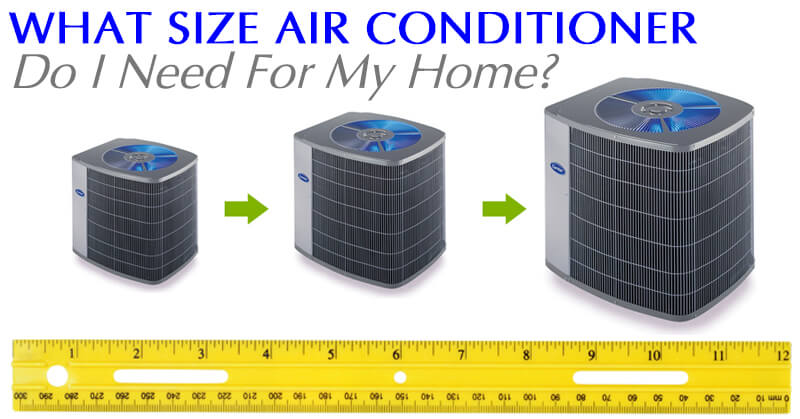
This is where things get slightly more technical, but don't worry, we'll keep it breezy. AC size is measured in BTUs (British Thermal Units). A BTU basically measures how much heat the AC can remove from your house in an hour. You'll also see AC capacity referred to in tons. One ton of AC is equal to 12,000 BTUs.
Now, how many BTUs or tons do you need? There are a few factors at play:
- Your home's square footage: This is the big one. A larger house needs more cooling power.
- Your climate: If you live in a scorching desert, you'll need more AC than someone in a mild coastal area.
- Insulation: Good insulation keeps the cool air in and the hot air out, reducing the load on your AC. If your insulation is like Swiss cheese, you'll need more cooling power.
- Windows: Large, sunny windows let in a lot of heat. Window treatments and energy-efficient windows can help mitigate this.
- Number of occupants: More people equals more body heat. Sorry, gotta factor that in!
A very rough rule of thumb is that you need about 20 BTUs per square foot of living space. But remember, this is just a ballpark figure! It doesn’t account for all the other factors we just talked about.

The Smart Move: Call a Professional
Honestly, the best way to determine the right size AC for your home is to get a professional HVAC contractor to do a Manual J load calculation. This is a detailed assessment that takes all those factors (square footage, climate, insulation, windows, occupants, etc.) into account to determine the precise cooling load for your home. It's like getting a tailor-made suit for your house – perfectly fitted to your needs.
Think of it like this: you could try to cut your own hair, but the results might be… questionable. Similarly, you could try to guess the right AC size, but you're much better off letting a professional handle it. They have the expertise and the tools to get it right, ensuring you get the most efficient and comfortable cooling for your home.
So, skip the guesswork, ditch the donut glaze, and call a pro. Your wallet (and your sanity) will thank you.