
What Size Ac Unit For 1800 Square Foot House

Okay, so you're wondering what size AC unit you need for your 1800 square foot house? Awesome! Let's tackle this. It's not rocket science, but picking the right size is super important. Get it wrong, and you'll either be sweating buckets or shivering in summer. Nobody wants that!
The Magic Number: BTUs and Tons
First, let's talk about jargon. When we talk about AC size, we usually talk about BTUs (British Thermal Units). Think of BTUs like the measuring stick for how much heat an AC unit can remove from your house per hour. More heat to remove? You need more BTUs! Another term you'll hear is "tons." One ton of AC equals 12,000 BTUs. Yes, it's a weird system. Don't ask me why. I just work here.
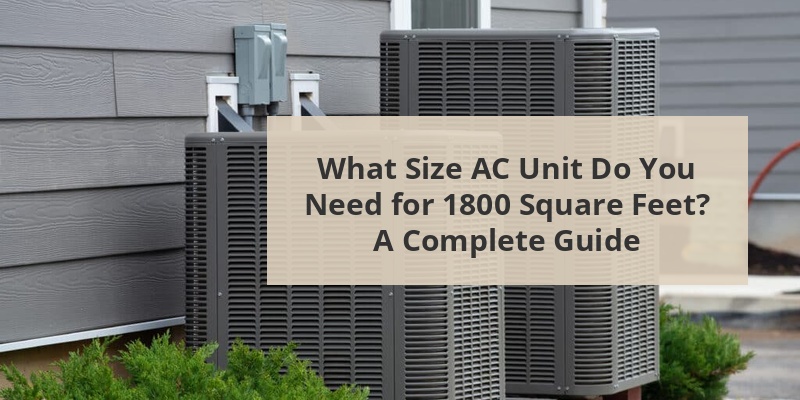
Generally, for an 1800 square foot house, you're looking at something in the neighborhood of a 3-ton to 3.5-ton AC unit, or 36,000 to 42,000 BTUs. Boom! There's your answer. But... hold your horses! It's not quite that simple. (Sorry! Had to throw in a little suspense.)
Must Read
Hold Up! Location, Location, Location!
Where you live makes a HUGE difference. Think about it: a house in sunny Phoenix, Arizona, needs way more cooling power than a similar house in, say, Seattle, Washington. (No offense, Seattle, but your summers are pretty mild.)
So, consider your climate. If you live somewhere with scorching summers, you might need to lean towards the 3.5-ton side of things. If you live in a more temperate zone, a 3-ton unit might be just perfect.
Pro Tip: Check out climate zone maps online. They can give you a good idea of how hot (or not!) your summers typically are.
Sun's Out, Guns... I Mean, AC On! (Insulation Matters!)
Besides location, insulation is key. Imagine trying to cool a house that's basically a giant sieve for air. All that lovely cool air just seeps out! Good insulation keeps the heat out in the summer and the heat in during the winter. That means your AC unit doesn't have to work as hard, and you might be able to get away with a slightly smaller unit.
If your house is older and has terrible insulation (think drafty windows and walls), consider upgrading your insulation before buying a new AC unit. You'll save money on your energy bills in the long run, and you might be able to downsize your AC unit. Win-win!
Other Factors to Consider
Okay, we're not done yet! (Almost, I promise!) Here are a few other things to keep in mind:

- Number of Windows: Lots of windows, especially if they face south or west, can let in a ton of heat.
- Window Efficiency: Are your windows energy-efficient? Double-paned windows are way better than single-paned ones.
- Ceiling Height: High ceilings mean more volume to cool. You might need a slightly larger unit if you have super high ceilings.
- Number of People Living in the House: More people = more body heat = more cooling needed. (We're basically human radiators!)
- Appliances: Some appliances, like ovens and dryers, can generate a lot of heat. Think about how often you use them.
Get a Professional Opinion (Seriously!)
While this article hopefully gives you a good starting point, the absolute best thing to do is to call a qualified HVAC technician. They can do a proper load calculation to determine the exact BTU requirements for your house, taking into account all the factors we've discussed (and probably a few more!). They'll come to your house, poke around, and give you an expert recommendation. This is money well spent!
The Takeaway: Comfort is Worth It!
Choosing the right size AC unit can feel a little overwhelming, but it's worth the effort. You'll be more comfortable in your home, save money on your energy bills, and extend the lifespan of your AC unit. So, do your research, consider your specific needs, and get a professional opinion. You'll be chilling in no time (literally!).
Go forth and conquer that summer heat! You've got this!
