What Side Of A Hurricane Is The Most Dangerous

Okay, so hurricanes, right? They're like that annoying houseguest who shows up uninvited, eats all your snacks, and leaves a trail of destruction. But, just like figuring out who to avoid at a family reunion, understanding which part of a hurricane is the biggest troublemaker is super important. Think of it as hurricane etiquette – survival edition!
The Hurricane's Bad Side: Not Just a Feeling
You might think, "Oh, it's just a swirling mass of wind and rain, what's the big deal?" Well, imagine a revolving door. Step in on the right side, you're gently pushed along. Step in on the left (relative to its direction of spin), BAM! You're getting smacked by the door. Hurricanes have a similar dynamic.
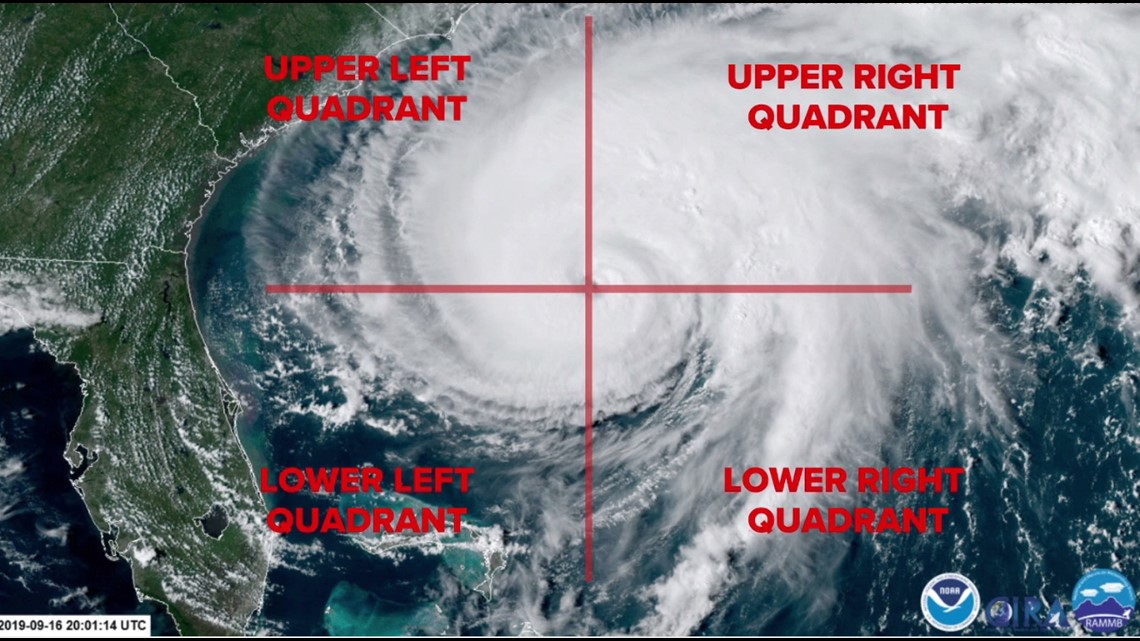
The most dangerous side of a hurricane is generally the right side, relative to the direction it's moving in the Northern Hemisphere. Why? It's all about simple addition.
Must Read
Think of it this way: the hurricane is spinning, and it's also moving forward. The forward motion of the hurricane adds to the rotational wind speed on the right side. So, if a hurricane has winds of 100 mph, and it's moving forward at 20 mph, the right side effectively experiences winds of 120 mph! Ouch!
It's like when you're running on a treadmill. If someone suddenly speeds it up, you're going to have a harder time staying on your feet, right? The right side of the hurricane gets that extra "speed boost."
Storm Surge: The Real Party Crasher
But wait, there's more! It's not just about wind. The storm surge, which is basically a wall of water pushed ashore by the hurricane's winds, is also generally worse on the right side. That's because the winds are pushing water towards the coast with that extra oomph we talked about.
Imagine trying to empty a swimming pool with a bucket. If you just scoop water, it's manageable. But if someone's also pushing the water towards you with a giant inflatable raft, you're going to be overwhelmed! That's kind of what happens with storm surge on the right side of a hurricane.
I remember one time during a minor storm, I thought I was being smart parking my car "just a little ways" from the beach. Let's just say my car got a salty bath and learned a valuable lesson about respecting the ocean's power. The storm surge is no joke, folks!
Why the Left Side Isn't Exactly a Picnic
Now, before all you left-siders start celebrating, don't get too comfortable. The left side isn't exactly a walk in the park either. It still experiences hurricane-force winds and heavy rain. Plus, depending on the specific circumstances, there can still be significant storm surge on the left side, just usually not as severe.
Think of it like this: The right side is the VIP section of the hurricane's destructive party, but the left side is still in the general admission area, and things are still pretty wild. You're not getting the full brunt, but you're still going to feel the effects.

Location, Location, Location!
Ultimately, the specific impact of a hurricane depends on many factors, including its size, intensity, forward speed, and the shape of the coastline. The right side is generally worse, but local geography can change things.
If you live in an area prone to hurricanes, listen to your local authorities and follow their advice. They know the local conditions best and can help you stay safe. Evacuation orders are there for a reason, so don't be a hero! It's better to be bored inland than to be caught in the storm.
So, next time a hurricane is heading your way, remember: understanding its dynamics can help you make smart decisions and stay safe. And hey, maybe you can impress your friends with your newfound hurricane knowledge. Just try not to be that person who talks about the hurricane during the hurricane. Nobody likes that guy.