What Should You Set Your Ac To When On Vacation
Alright, gather 'round, folks! Let's talk about something near and dear to my heart (and my electric bill): the Great Thermostat Vacation Debate. You're jetting off to Tahiti, finally escaping Brenda from accounting and her passive-aggressive stapler placement. But a nagging question lingers... what do you do with the AC back home?
The Options, Laid Bare (and Slightly Exaggerated)
First, we have the "Leave It On Full Blast" strategy. This is championed by people who believe their houses need to be kept at a consistent, arctic temperature, regardless of human occupancy. They envision their furniture spontaneously combusting from the sheer heat if the AC dares to falter. This strategy is also favored by utility companies, who send thank-you notes shaped like money bags.
Then there's the "Turn It Off Completely" approach. These folks are eco-warriors, or possibly just terrified of their electric bill. They believe their homes can handle anything Mother Nature throws at them. They imagine their houses transforming into self-sufficient, solar-powered havens while they sip Mai Tais on the beach. Reality, however, might involve returning to a swamp populated by mold colonies and a particularly aggressive family of spiders.
Must Read
And finally, the reasonable, middle-ground option: the "Set It and Forget It (Smartly)" method. This is the Goldilocks approach. Not too hot, not too cold, but just right. But what, pray tell, is just right?
The Science (Sort Of) Behind the Sweet Spot
Okay, time for a little science. Don't worry, I promise there won't be a quiz. The US Department of Energy (yes, that's a real thing!) recommends setting your thermostat to 85°F (29°C) when you're away. Now, I know what you're thinking: "85 degrees? That's practically a sauna!" But hear me out.
The goal isn't to keep your house at a comfortable living temperature. It's to prevent excessive heat and humidity from building up. Think of it like this: your house is a giant sponge. If it gets too hot and humid, it soaks up moisture like crazy. This can lead to mold growth, warped wood, and a general feeling of "ick" when you return.
Setting the AC to 85°F helps control that humidity without wasting a ton of energy trying to maintain a living room that feels like a walk-in freezer. Plus, it makes that first blast of cool air when you return all the more satisfying. It's like earning your air conditioning!

Beyond the Numbers: Smart Tech to the Rescue!
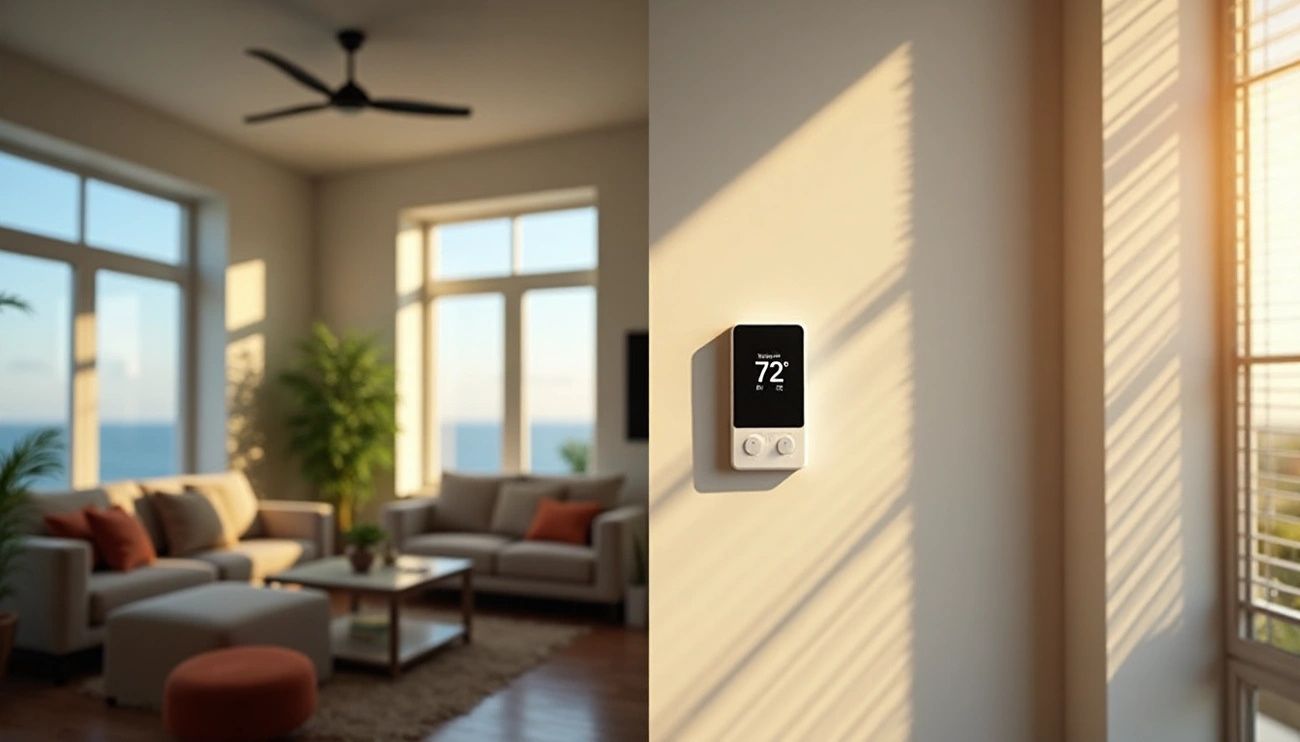
Of course, in this glorious age of technological wizardry, we have options beyond simply twiddling a dial. Enter the smart thermostat. These little gadgets are like tiny, temperature-obsessed butlers. You can control them from your phone, set schedules, and even have them adjust automatically based on the weather forecast.
Imagine this: you're lounging by the pool, smugly checking your phone. Your smart thermostat sees a surprise heatwave rolling in and kicks on the AC a little earlier than scheduled. Crisis averted! Your houseplants send you a telepathic thank you. Brenda from accounting, stuck in her sweltering office, seethes with envy.
Things to Consider (Besides Brenda's Envy)
Before you set off on your adventure, consider a few more factors:
- Your Climate: If you live in a desert, 85°F might be perfectly fine. But if you live in the Amazon rainforest (lucky you!), you might want to set it a bit lower.
- Your House's Insulation: A well-insulated house will retain cool air (or prevent heat buildup) much better than a drafty old Victorian.
- Your Possessions: Are you storing priceless artifacts, delicate musical instruments, or Brenda's stapler collection? Consider their specific temperature requirements. (Okay, maybe not Brenda's staplers.)
- Your Pets: If you're leaving Fluffy or Fido behind (with a trusted pet sitter, of course!), make sure the temperature is comfortable and safe for them. This is non-negotiable!
The Verdict: Don't Be a Thermostat Tyrant!
So, what's the final answer? Set your AC to 85°F (29°C), invest in a smart thermostat if you can, and consider your climate and your house's specific needs. And for goodness sake, don't worry about Brenda's staplers. Just go enjoy your vacation! You've earned it.
Remember, a slightly warmer house is better than a moldy house, a sky-high electric bill, or a house full of spontaneously combusting furniture. Now go forth and vacation, knowing you've made the right decision for your home (and your wallet)!