
What Should The Voltage Of A Car Battery Be

Ever wondered about the secret language of your car battery? It’s not Morse code, but voltage readings! Understanding them is surprisingly cool.
Think of voltage as the battery's energy level. It tells you how ready your car is to roar to life. It's like checking the fuel gauge, but for electricity!
Decoding the Voltage Vibe
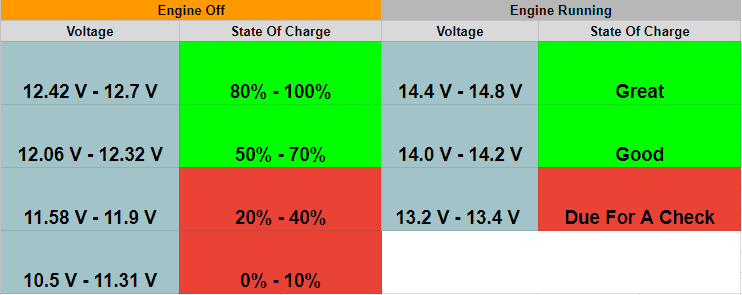
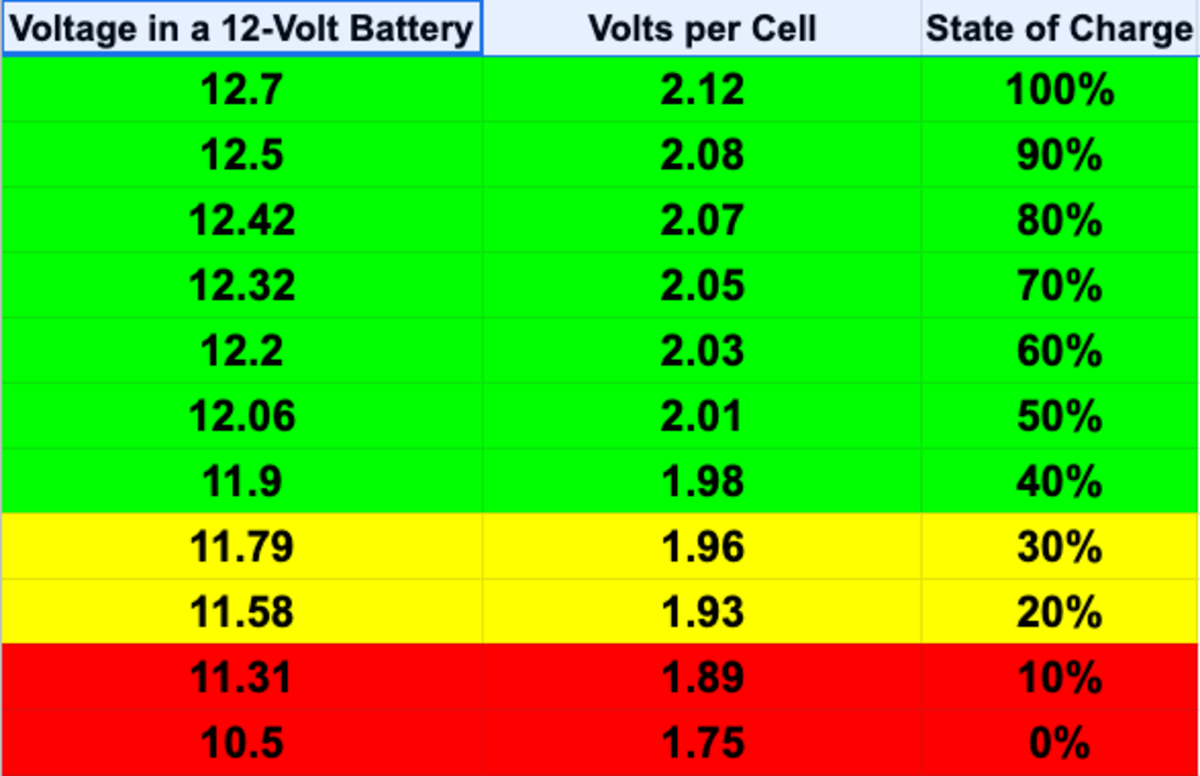
So, what’s the magic number? Well, a healthy car battery usually chills around 12.6 volts. That's when the engine is off, peacefully resting.
Must Read
When the engine is running, that voltage jumps up a bit! Expect to see something between 13.7 and 14.7 volts. This is thanks to the alternator, charging things up.
The Battery's Baseline: 12.6 Volts
Consider 12.6 volts the gold standard. This is a fully charged battery's happy place. It's like a phone showing 100% – pure, unadulterated energy!
If your battery consistently reads below 12.4 volts, something might be amiss. It’s like your phone battery draining super quickly even when you're not using it.
Time for a little investigation, maybe a chat with your mechanic. They can help diagnose potential issues.
Charging Up: 13.7 to 14.7 Volts
Now, let’s talk about what happens when the engine's running! Your car's alternator steps in as the designated charger.
It converts mechanical energy from the engine into electrical energy. Pretty neat, huh? This keeps the battery topped up while you drive.
Readings between 13.7 and 14.7 volts indicate that the alternator is doing its job. It's like having a personal power plant under the hood!
Warning Signs: Voltage Red Flags
What if your battery voltage isn’t playing by the rules? Let’s explore some common voltage red flags. Knowing these could save you from a roadside headache.
Low voltage is often the most common issue. It’s like your battery is whispering, "I'm tired, please help!"
And high voltage can be just as problematic. Imagine your battery screaming, "I'm too full, I might explode!" (Okay, maybe not explode, but you get the idea.)
Low Voltage: The Underperforming Battery
If you consistently see readings below 12.4 volts, your battery might be struggling. This could be due to several factors.
Maybe it's old and losing its mojo, just like us after a long day. Or perhaps there’s a parasitic drain. This is when something in your car is secretly sucking power even when it's off.
Think of it as a tiny vampire slowly draining the battery’s life force. A mechanic can hunt down these sneaky culprits.
High Voltage: The Overachiever
Seeing voltages consistently above 14.7 volts can also be a concern. This usually points to a problem with the alternator.
It might be overcharging the battery, which isn't good. It's like feeding a goldfish too much food – it can get sick! Overcharging can damage the battery.
It can even shorten its lifespan. Too much electricity isn’t always a good thing, apparently!
Checking Your Battery's Vital Signs
So, how do you actually check your car battery’s voltage? Don't worry, it's not rocket science. You'll need a multimeter, a handy tool for measuring voltage.
They are relatively inexpensive and easy to use. Think of it as a stethoscope for your car's electrical system. Plus, learning how to use one is empowering!
It’s like becoming a DIY doctor for your vehicle.
The Multimeter Method: A Quick How-To
First, make sure your car is turned off. Safety first, always! Set your multimeter to DC voltage mode.
Usually, this is indicated by a "V" with a straight line above it. Connect the red lead to the positive (+) terminal on your battery. Connect the black lead to the negative (-) terminal.
Read the voltage displayed on the multimeter. Voila! You've just performed a mini-diagnosis on your car's power source.

When the Engine is Running
To check the voltage while the engine is running, repeat the same steps. But, of course, with the engine running! Be super careful of any moving parts.
Note the reading on the multimeter. It should be between 13.7 and 14.7 volts. If it's not, something might be up with your alternator.
Consider having a professional take a closer look. Better safe than sorry, especially when it comes to your car’s electrical system!
Why All This Voltage Talk Matters
Why should you care about all this voltage stuff? Because a healthy battery is essential for a reliable car. It's the heart of your car’s electrical system.
Without it, you’re not going anywhere! A dead battery is a major inconvenience, especially when you’re in a hurry.
Understanding voltage helps you prevent those situations. It's like having a superpower – the ability to predict car trouble before it strikes!
Preventing Battery Problems
Regular voltage checks can help you catch potential problems early on. It's like getting a regular check-up at the doctor.

You can identify issues before they become major headaches. This can save you time, money, and frustration in the long run.
Plus, you'll feel like a car-savvy superhero! Ready to leap into action and save the day (or at least, your car).
Extending Battery Life
Maintaining proper voltage also extends your battery's lifespan. A happy battery is a long-lasting battery. Treat it well, and it will treat you well in return.
Avoid leaving your lights on overnight, as this drains the battery. And if you're not driving your car for extended periods, consider using a battery tender.
These nifty devices keep your battery topped up. Think of them as a personal trainer for your battery, ensuring it stays in tip-top shape.
Voltage: More Than Just a Number
So, there you have it – the entertaining world of car battery voltage! It’s more than just a number; it's a window into your car's electrical health.
Understanding it can empower you to take better care of your vehicle. And who knows, you might even impress your friends with your newfound car knowledge!
Go ahead, grab a multimeter, and check out your battery's voltage. It might just surprise you!