
What Natural Resources Are Used To Make Nylon
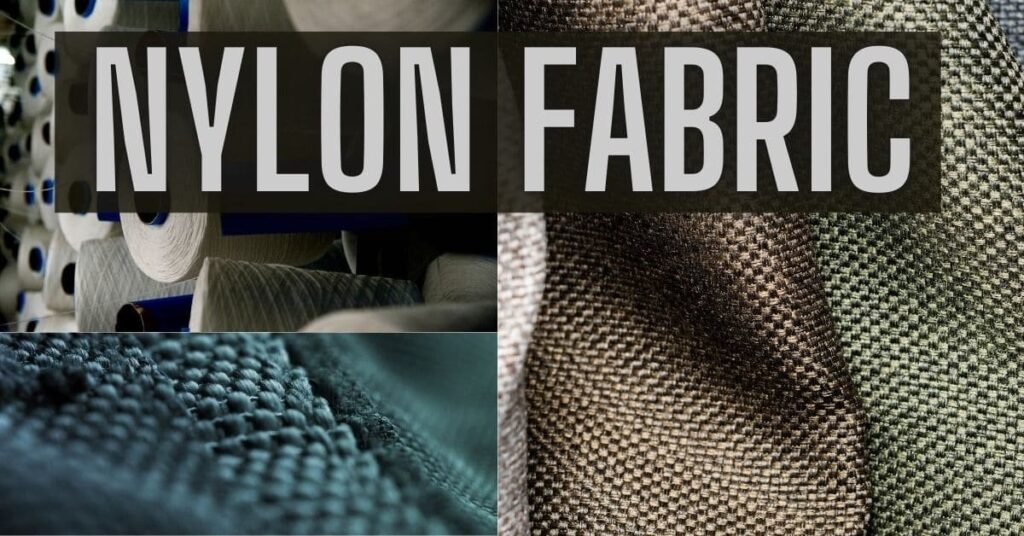
Ever slipped into your favorite pair of nylon leggings and wondered where that stretchy, smooth material actually comes from? You might be surprised! It's not spun from spiderwebs by tiny fashion-forward fairies (though that would be adorable). The story of nylon involves a little chemistry, a dash of resourcefulness, and a surprising connection to some of Earth's oldest treasures.
From the Earth to Your Wardrobe: The Starting Line
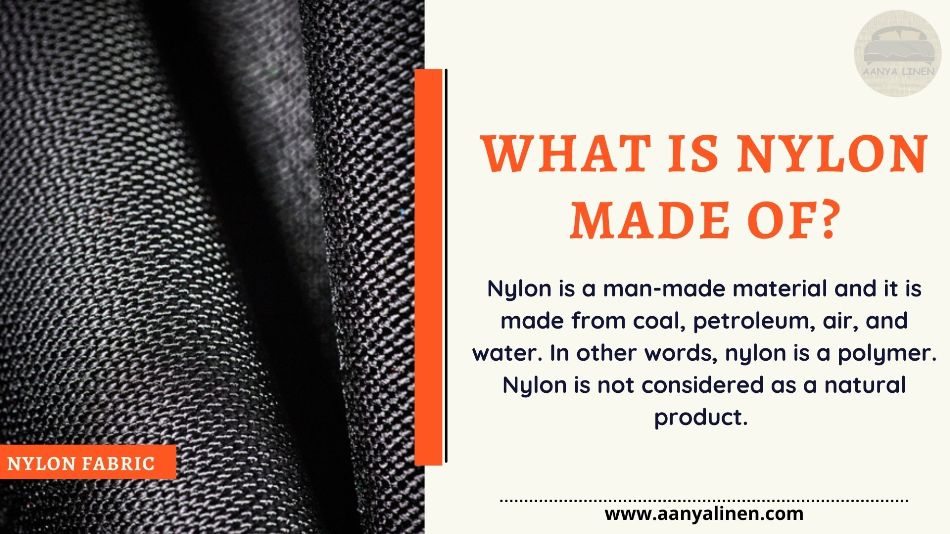
Nylon's creation isn't a simple "pick it off a tree" kind of process. The key ingredients are derived from natural resources, primarily petroleum, but also sometimes coal, natural gas, or even agricultural products. Think of it like baking a cake; you need the raw ingredients before you can whip up something delicious (or in this case, durable).
So, how do we get from gooey, black petroleum to sleek, colorful nylon? Buckle up, because here comes the (simplified!) science bit.
Must Read
The Cracking Conundrum
First, we need to break down those big, complex hydrocarbons found in petroleum into smaller, more manageable molecules. This is done through a process called "cracking," which involves using heat and pressure. Imagine it like taking a giant Lego castle and dismantling it into individual bricks.
These smaller molecules are then used to create the building blocks of nylon. Two of the most important building blocks are adipic acid and hexamethylenediamine. These are the stars of our nylon show!
Adipic Acid: From Ancient Forests to Your Leggings
Adipic acid can be derived from benzene, which in turn, is often obtained from – you guessed it – petroleum. But the story doesn't end there! Benzene itself has a fascinating history. It's a ring-shaped organic compound that's essentially a distant cousin of the stuff that makes up ancient forests that have been compressed over millions of years to form petroleum or sometimes coal.
So, in a way, your nylon leggings are a testament to the power of time and pressure! They represent sunshine captured by plants eons ago, transformed into a substance that can be used to make comfy and stylish clothing. Who knew fashion could be so… geological?

Hexamethylenediamine: The "Hexa" Factor
Hexamethylenediamine, or HMDA for short, is another crucial component. It, too, can be derived from petroleum. It's a molecule with six carbon atoms in a chain (hence the "hexa" part), with amine groups attached to each end. Think of it as a molecular handshake waiting to happen.
The synthesis of HMDA involves several chemical reactions. It's all part of transforming simple molecules into something complex and useful. These molecules are combined with adipic acid, as explained above.
The Nylon Polyamide Chain Reaction!
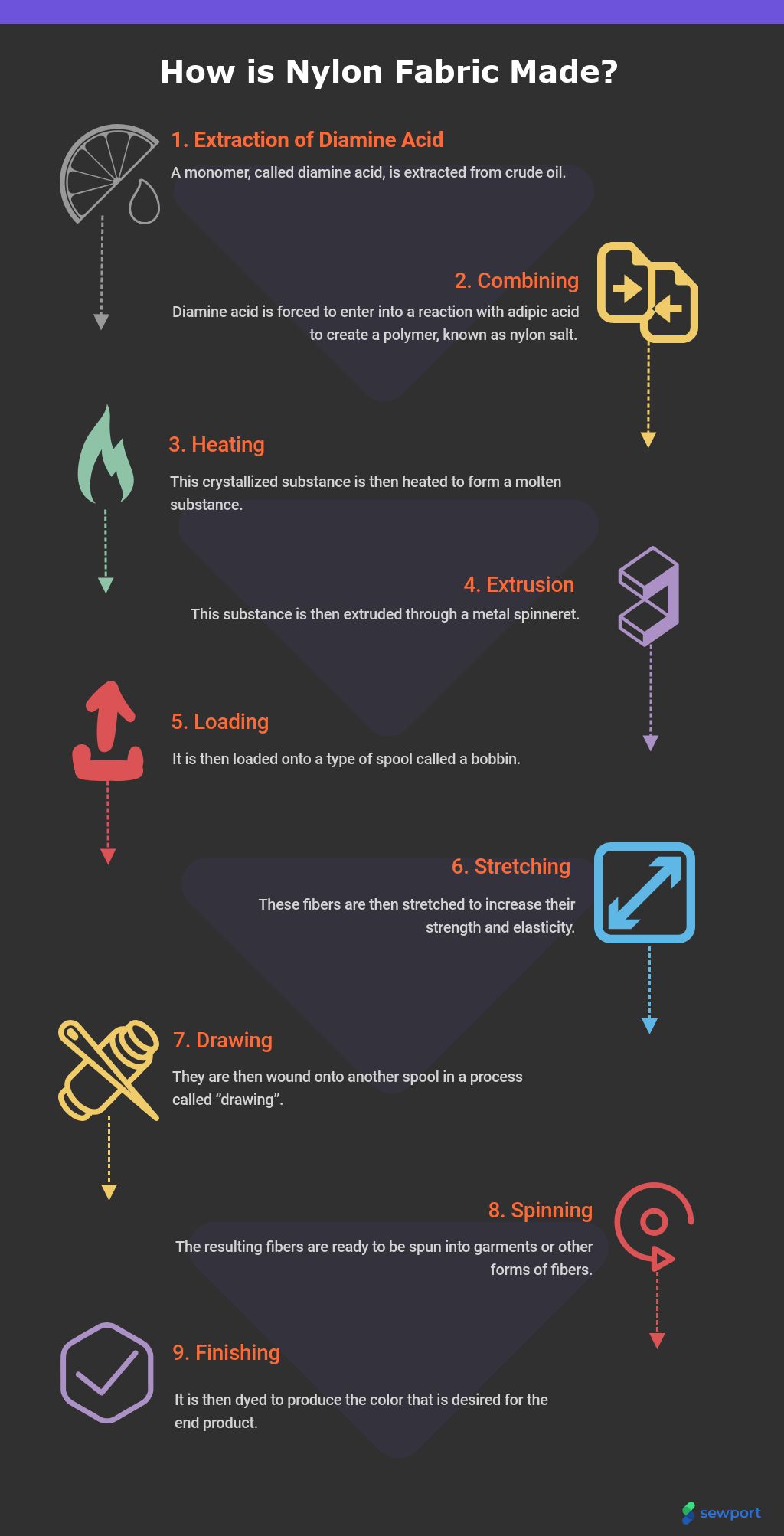
Now for the magic moment! Adipic acid and hexamethylenediamine are combined in a chemical reaction called polymerization. This is where the individual building blocks link together to form a long chain called a polymer. Think of it as stringing beads together to make a necklace.
This long polymer chain is nylon! It's this repeating structure that gives nylon its strength, elasticity, and durability. A whole bunch of small molecules, chemically bonding together, results in the strong fiber we know.
During the polymerization process, water is released as a byproduct. It's a fascinating illustration of how chemical reactions can create new materials while also releasing other substances. It is similar to baking, where a loaf of bread releases smells and steam from the oven.
From Molten Goo to Marvelous Fibers
The resulting nylon polymer is a molten goo. This goo is then forced through tiny holes called spinnerets. Think of it like squeezing toothpaste out of a tube, but on a microscopic scale.
As the molten nylon emerges from the spinnerets, it cools and solidifies into long, continuous fibers. These fibers are then stretched, twisted, and processed to create different types of nylon yarn. The yarn can then be woven or knitted into fabrics.
These fabrics become everything from stockings and shirts to carpets and car tires. From its humble beginnings as molten goo, nylon emerges as a marvel of modern engineering.
Beyond Petroleum: Sustainable Alternatives?
While most nylon is currently made from petroleum, researchers are exploring more sustainable alternatives. One promising avenue is using agricultural products, such as corn or sugar, as a feedstock for producing the building blocks of nylon.
Imagine nylon made from plants rather than fossil fuels! It could significantly reduce the environmental impact of nylon production. It's a future where your favorite leggings are not only comfortable but also eco-friendly.
Scientists are constantly working on new and improved methods for making nylon. The goal is to reduce waste, conserve resources, and create a more sustainable textile industry. Maybe one day your leggings will thank you.
The Legacy of Nylon: A Material That Changed the World
Nylon wasn't just a new fabric; it was a revolution. It was invented by Wallace Carothers at DuPont in the 1930s. He did not live to see the full impact of his work, sadly, but his invention shaped our world.

It replaced silk in many applications, especially during World War II. It was used for parachutes, ropes, and other essential military supplies. The war effort helped shape how the usage of nylon was developed.
After the war, nylon stockings became a symbol of post-war prosperity and femininity. They were durable, affordable, and stylish, making them a must-have item for women everywhere. The material changed how clothing was designed and made.
So, The Next Time You Wear Nylon...
Take a moment to appreciate the journey your nylon garment has taken. It started as sunlight captured by plants millions of years ago, transformed into petroleum, and then broken down into smaller molecules. These molecules are then joined together to form the long polymer chains that make nylon so strong and stretchy.
It's a testament to human ingenuity and the power of chemistry. And it all starts with the Earth's natural resources. So next time you pull on those leggings or zip up that jacket, give a little nod to the amazing story of nylon!
Who knew that a seemingly simple fabric could have such a complex and fascinating history? From ancient forests to modern fashion, nylon is a material that has truly changed the world, and continues to evolve, with researchers looking for eco-friendly sustainable alternatives.