
What Makes Water Hard Or Soft

Ever notice how sometimes your soap lathers up into a glorious mountain of bubbles, and other times it just… doesn't? Or maybe you’ve seen those stubborn, chalky spots on your shower doors or glasses straight out of the dishwasher? What’s up with that? Chances are, you've just had a close encounter with the fascinating world of hard and soft water. And trust me, it’s much cooler than it sounds!
It’s one of those everyday mysteries we rarely pause to ponder, but it quietly shapes our showers, our laundry, and even the taste of our morning coffee. So, grab a comfy seat, maybe a glass of water (you decide if it’s hard or soft!), and let’s dive into what makes our water one way or the other.
What's the Big Deal, Anyway?
At its core, the difference between hard and soft water boils down to what's dissolved in it. Think of water as a tiny, invisible sponge constantly picking up bits and pieces as it travels. It’s like a curious little explorer on a grand adventure!
Must Read
Imagine rainwater, fresh from the sky. It's usually pretty pure, almost like a blank slate. But once it hits the ground, that’s when the real journey begins. It trickles through soil, seeps into rocks, and flows through rivers and underground aquifers. And as it goes, it picks up souvenirs along the way.
The "Hard" Truth About Hard Water
So, what makes water "hard"? It’s all about minerals, specifically calcium and magnesium. These aren't just any minerals; they're the rock stars of water hardness. As water journeys through geological formations rich in limestone, chalk, or gypsum, it dissolves tiny amounts of these minerals. It’s like the water is giving the rocks a gentle, continuous hug, slowly eroding tiny fragments and carrying them along.
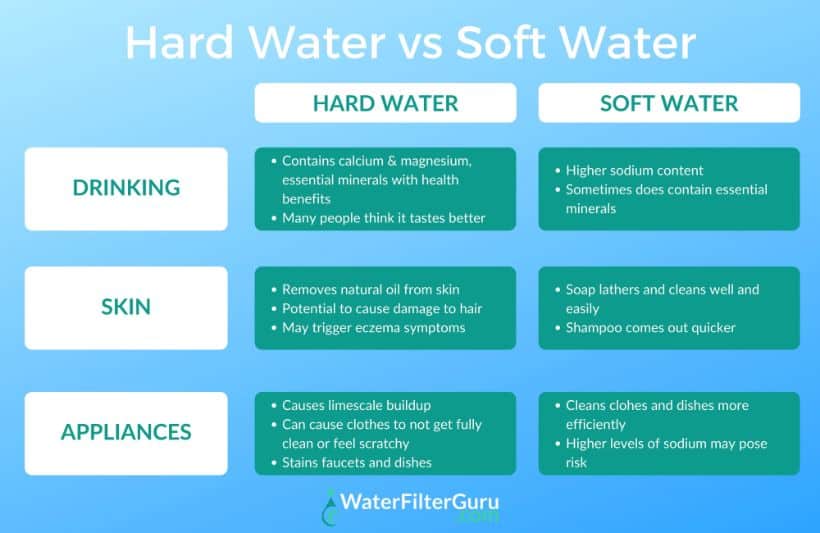
Think of it like this: if you walk through a dusty construction site, you’ll pick up some dust on your shoes, right? Water does the same thing, but with dissolved minerals. The more calcium and magnesium it picks up, the harder the water becomes. And where you live geographically plays a huge role in this. Areas with a lot of limestone or chalk in the ground tend to have naturally harder water. It’s a literal taste of the local geology!
Why do these minerals matter? Well, they’re a bit like tiny, invisible troublemakers when it comes to soap. Soap, in its purest form, wants to clean. But when it meets calcium and magnesium ions, they react. Instead of forming lovely, bubbly lather, the soap forms a sticky, insoluble residue. That's right, those notorious soap scum rings in your tub? That’s hard water and soap having a chemical spat!

And it's not just your tub. Ever seen those whitish, crusty deposits around your faucets or inside your kettle? That’s limescale, a build-up of those same calcium and magnesium minerals that have been left behind when the water evaporates. It’s like tiny mineral stalactites forming in your appliances, which can eventually reduce their efficiency and lifespan. Pretty wild, right?
The Soft Side of Water
On the flip side, we have soft water. This is water that has very low concentrations of those hard-hitting minerals, calcium and magnesium. Where does it come from? Often, it’s water that has flowed through areas with igneous rocks (like granite), which don't dissolve as easily, or through peaty soils, which might even remove some minerals.
With soft water, soap is in its happy place! There are no mineral antagonists to get in the way, so it lathers up beautifully. This means you need less soap to get suds, which is great for your wallet and your eco-conscious heart. Your skin might feel smoother, your hair silkier, and your clothes cleaner without that mineral residue.

However, soft water has its own quirks. Sometimes, that super-slippery feeling after a shower can make you wonder if you’ve actually rinsed all the soap off. Don’t worry, you probably have! It’s just your skin reacting to the lack of minerals that would normally leave a slightly dry, "squeaky clean" sensation. And while limescale isn't an issue, very soft water can sometimes be slightly more corrosive to pipes, especially if they're older metal.
Which One Is Better? It's Complicated!
So, is one inherently superior? Not really! It’s more about preference and practicality. Many people actually prefer the taste of moderately hard water because the dissolved minerals can give it a more distinct flavor. Think of mineral water – it’s often celebrated for those very minerals!
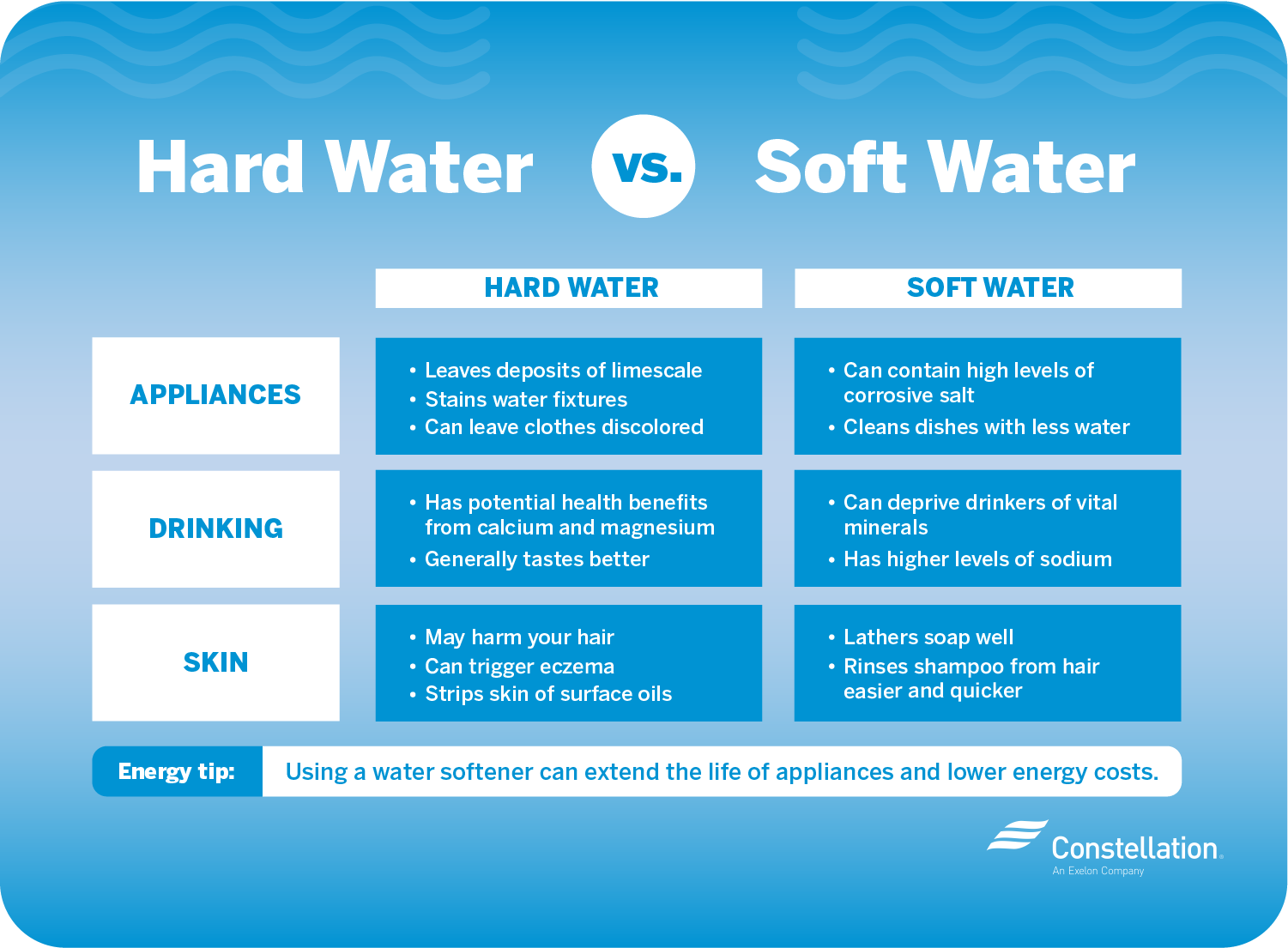
For household chores, soft water definitely wins the prize for reducing soap usage and preventing limescale build-up. But for drinking, it’s a matter of taste. Some find very soft water a bit bland, while others love its pure, clean taste.
The fascinating thing is that your water's hardness is a direct storyteller of the land it has traversed. It’s a tiny, liquid geological record arriving right at your tap, influencing everything from your shower routine to your tea kettle’s lifespan. Next time you notice those suds, or that pesky scale, remember the epic journey your water has been on – picking up souvenirs, making friends, and sometimes, making a bit of a mess!
It’s just another awesome reminder of the intricate, hidden chemistry happening all around us, even in something as seemingly simple as a glass of water. Pretty cool, huh?