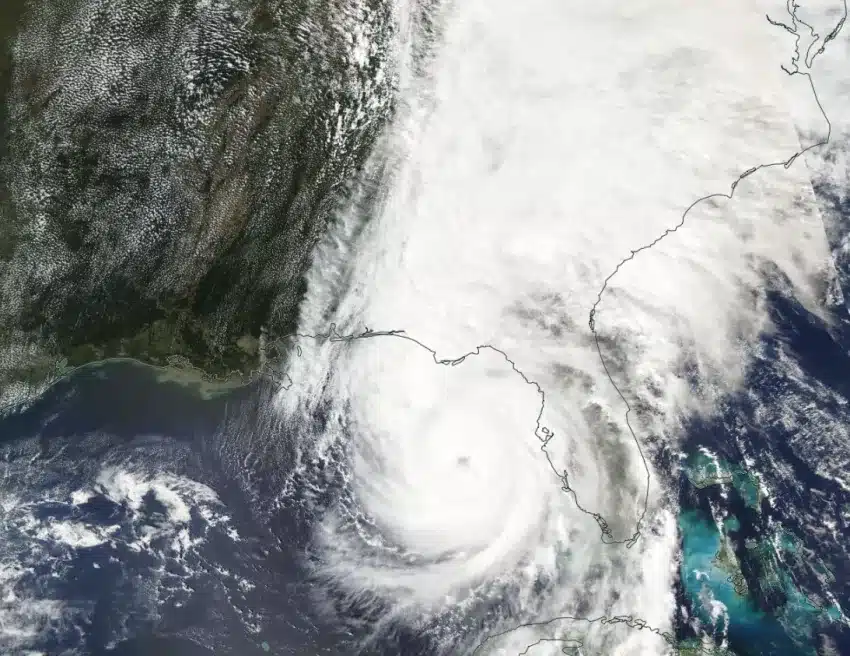
What Letter Hurricane Are We On
You know that feeling, right? You're scrolling through your news feed, or maybe you catch a snippet on the TV, and suddenly there's a huge storm barreling down, and it's got a name. Not just any name, but something like "Hurricane Franklin" or "Typhoon Mawar." And every single time, without fail, a little voice in the back of my head goes, "Wait, Franklin? We're on F already? Did I miss Hurricanes Abigail, Bartholomew, and Cynthia?"
It’s like we're constantly playing a game of alphabetical catch-up, isn't it? One minute it feels like the hurricane season has barely begun, and the next, we're hearing about storms deep into the alphabet, making you wonder if you accidentally slept through an entire month of wild weather. Seriously, you've thought about it too, haven't you?
That initial curiosity, that "what letter are we on?" thought, is actually a pretty common one. It’s not just a random pick-a-name-out-of-a-hat situation, thank goodness. There’s a whole meticulously planned system behind it, designed to keep us all informed and, frankly, make it easier to talk about these massive weather events without getting totally confused.
Must Read
So, Why Do We Name Hurricanes Anyway?
First off, let’s tackle the "why." Imagine trying to track two major storms in the same ocean basin at the same time if they were both just called "The Big Storm in the Atlantic." Chaos! Naming hurricanes (and tropical storms, typhoons, cyclones – different names for the same beast in different parts of the world) makes communication so much clearer. It helps meteorologists, emergency services, and us regular folks differentiate between storms, track their paths, and understand warnings without a hitch. It's about safety, really.
The Alphabetical Lowdown: How It Works
Okay, now for the main event: what letter are we on? Or rather, how do we get to a certain letter? The system is pretty straightforward once you get the hang of it, but it does have some quirks. The World Meteorological Organization (WMO) is the grand overseer of these lists.
For the Atlantic basin (which is what most folks in North America hear about), there's a predetermined list of names for each hurricane season. These lists cycle every six years. That means a name like "Hurricane Chris" from, say, 2018, could potentially pop up again in 2024, if it wasn't particularly devastating.
The names are arranged alphabetically, alternating between male and female names. So, if the first named storm of the year is "Arlene," the second will be a B-name (e.g., "Bret"), the third a C-name, and so on. Pretty logical, right?
But here's where it gets interesting: they skip certain letters. You won't find names starting with Q, U, X, Y, or Z on the main lists. Why? Because there simply aren't enough common names that start with those letters in English (and other relevant languages) to make long, diverse lists. Imagine trying to come up with six years' worth of unique, recognizable names starting with 'Q'! "Hurricane Quincy," "Hurricane Quasar"... it gets tough fast. So, they stick to the letters with a deeper name pool.
Different Oceans, Different Lists
It's important to remember that these lists are regional. The naming conventions for storms in the Pacific Ocean (typhoons) or the Indian Ocean (cyclones) follow their own alphabetical lists, often with names that reflect the cultures and languages of the countries in those regions. So, while we might be on "F" in the Atlantic, the Western Pacific could be on "M" with a completely different set of names. Mind-blowing, isn't it?
The "Hall of Fame"... or Shame: Retired Names
Here's a crucial part of the system: if a hurricane is particularly deadly or destructive, its name is retired permanently. This is to avoid insensitivity and to prevent confusion should a new storm with the same name appear. Think of names like Katrina, Sandy, or Maria. You won't see those names pop up again on any future lists. They're etched into history. When a name is retired, a committee chooses a new name, starting with the same letter, to take its place on the six-year rotation.
The Greek Alphabet: A Brief History
Remember a few years back, when we ran out of names on the regular list and started using the Greek alphabet? "Tropical Storm Alpha," "Hurricane Zeta"... It felt a bit apocalyptic, didn't it? Well, they actually retired that system! After the incredibly active 2020 and 2021 seasons, where the Greek alphabet was used extensively and caused some confusion (e.g., Zeta and Eta sounding similar, making it hard to retire specific Greek letters), the WMO decided to switch to an auxiliary list of names if the main list is exhausted. So, no more Hurricane Iota, thankfully!
So, What Letter ARE We On Right Now?
Alright, down to brass tacks! The exact letter we're on right this very second depends entirely on the current hurricane season and how many named storms have formed so far. You won't find a universal answer because the season is always progressing. If you want to know what letter the Atlantic basin is on for the current year, the best way is to check the official forecast pages from NOAA's National Hurricane Center (NHC) or the WMO. They always publish the full list of names for the year well in advance, and update their sites with current storm information.
It's pretty fascinating, right? What starts as a simple question about "what letter hurricane are we on" unravels into a well-thought-out international system, all designed to keep us a little safer and a lot more informed during hurricane season. So, next time you hear a hurricane name, you'll know there's a lot more to it than just a random pick!