What Is The Unit For Measuring Electric Current

Hey there, curious minds! Ever wondered what that mysterious "A" is on your phone charger or your car battery? Well, buckle up because we're about to dive into the electrifying world of… wait for it… measuring electric current! (Cue dramatic music).
Think of electric current like water flowing through a pipe. You wouldn't measure how much water is flowing using, say, bushels of apples, right? (Unless you're running a very strange farm!). We need a specific unit, something universal, something… electrical!
Enter the Ampere (and no, it’s not a type of pastry)
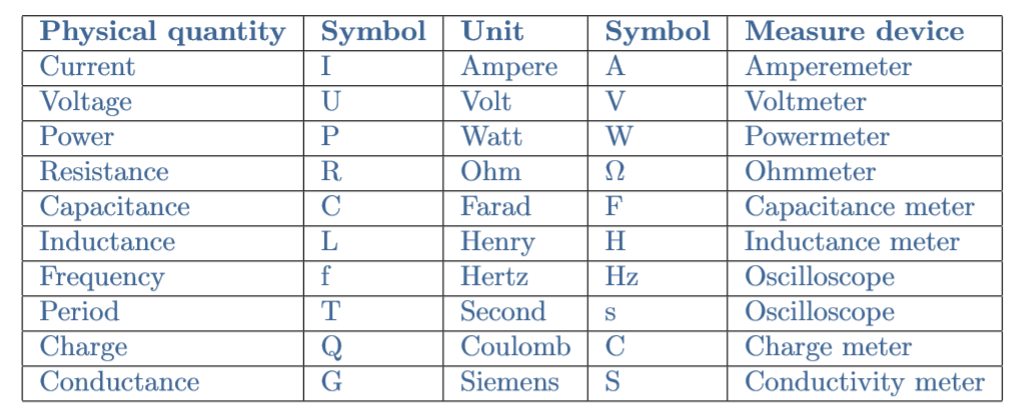
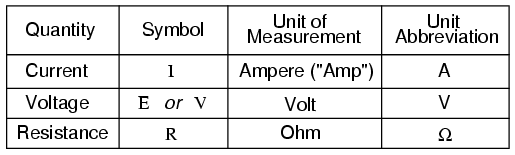
The official unit for measuring electric current is the Ampere, often shortened to just Amp or A. That's right, that's the "A" you see all over the place! Named after the brilliant French physicist André-Marie Ampère (say that five times fast!), it's the standard unit for quantifying how much electrical charge is flowing past a point in a circuit per unit time. Basically, it tells us how much "electrical stuff" is zooming along. Think of it as the speed limit for electrons… but way more exciting.
Must Read
Why is it important to know about Amps? Well, imagine plugging a device that needs 10 Amps into a circuit that only provides 5 Amps. Bad things can happen! It's like trying to force a fire hose amount of water through a garden hose – things are gonna get messy (and possibly explode… metaphorically, of course. Please don’t try this at home!).
Too few Amps: Your device might not work properly, or at all. It's like trying to run a marathon on a single grape. You just ain't gonna make it!

Too many Amps: This can be dangerous! It can overload the circuit, causing wires to overheat and potentially start a fire. Think of it like stuffing too much food into your mouth – you're gonna choke (again, metaphorically! Please chew your food properly).
Okay, so what IS an Amp, really?
So, we know what it measures, but how does it measure? It's kind of mind-bending, but an Amp is defined as the amount of current that would produce a specific force between two parallel conductors (wires) that are one meter apart in a vacuum. Yeah, I know, sounds like something out of a sci-fi movie! Don't worry too much about the physics details. Just remember that it's a standardized measurement based on the behavior of electricity.
Think of it this way: Imagine a stadium turnstile. The Ampere is like counting how many people pass through the turnstile per second. More people = more Amps!
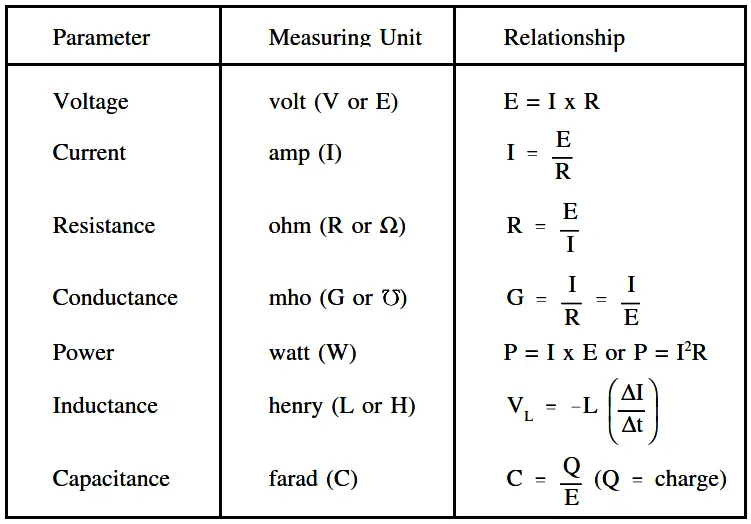
We often use prefixes to indicate smaller or larger amounts of current. Here are a few common ones:
- Milliampere (mA): One-thousandth of an Amp. Often used for small electronics. Think of it as a tiny sip of electricity.
- Microampere (µA): One-millionth of an Amp. Even tinier! Used in very sensitive devices. The electric equivalent of a hummingbird's heartbeat.
- Kiloampere (kA): One thousand Amps. Yikes! We're talking serious power now! Used in heavy industrial applications (like lightning strikes... hopefully not in your living room!).
Pro Tip: Always check the amperage rating of your devices and electrical circuits. It's usually printed somewhere on the device or power adapter. Knowing this info helps prevent electrical mishaps and keeps you safe!
So, You're Basically an Electrical Engineer Now!
Congratulations! You've just taken your first step into the fascinating world of electrical measurements. Now you know that the Ampere is the unit for measuring electric current, and you have a basic understanding of what it means. You can impress your friends, family, and even your pets with your newfound knowledge! (Okay, maybe the pets won't be that impressed.)
Remember, electricity powers so much of our modern world. Understanding the basics, even just a little bit, helps us appreciate the incredible technology that surrounds us every day. And who knows, maybe you'll be the next André-Marie Ampère, inventing the next big thing in electricity! Keep asking questions, keep exploring, and keep that spark of curiosity alive!
Now go forth and conquer the world… electrically! You've got the power!