What Is The Temperature At The Core Of The Sun
Ever wondered what the Sun, our life-giving star, is really like inside? We see its radiant glow, feel its warmth, and maybe even complain about it being too hot in summer. But what's the temperature at its very core? It’s a mind-boggling question that opens a window into the awesome power and energy source that fuels our entire solar system. Understanding the Sun's core temperature isn't just a fun fact; it's a key to understanding how stars work, how energy is created, and ultimately, how we exist.
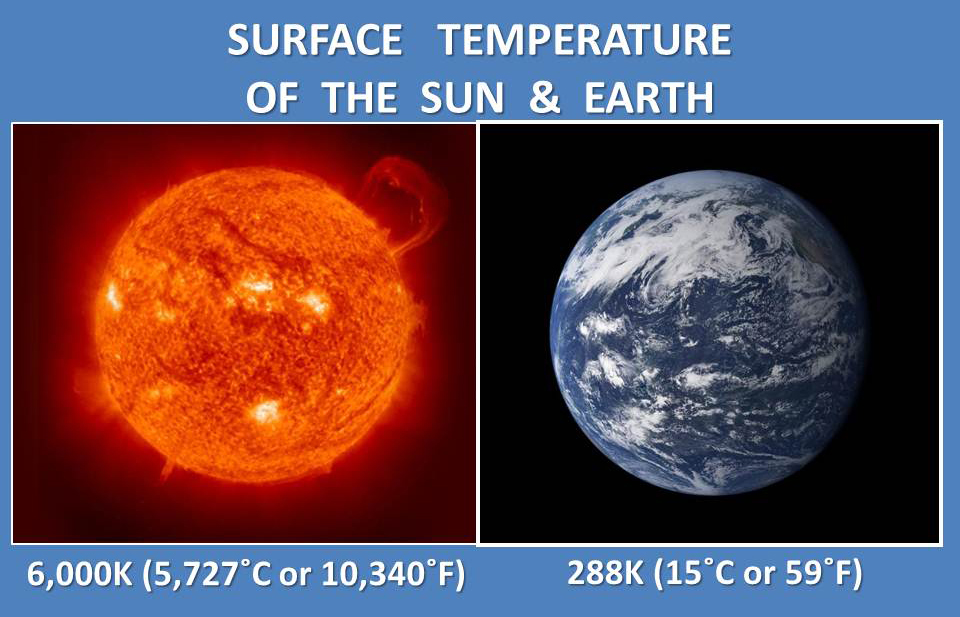
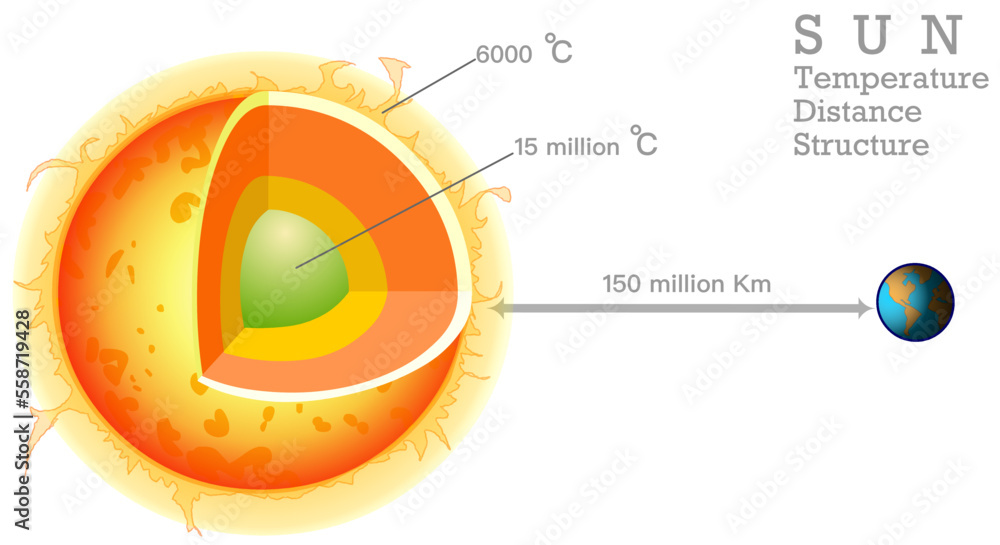
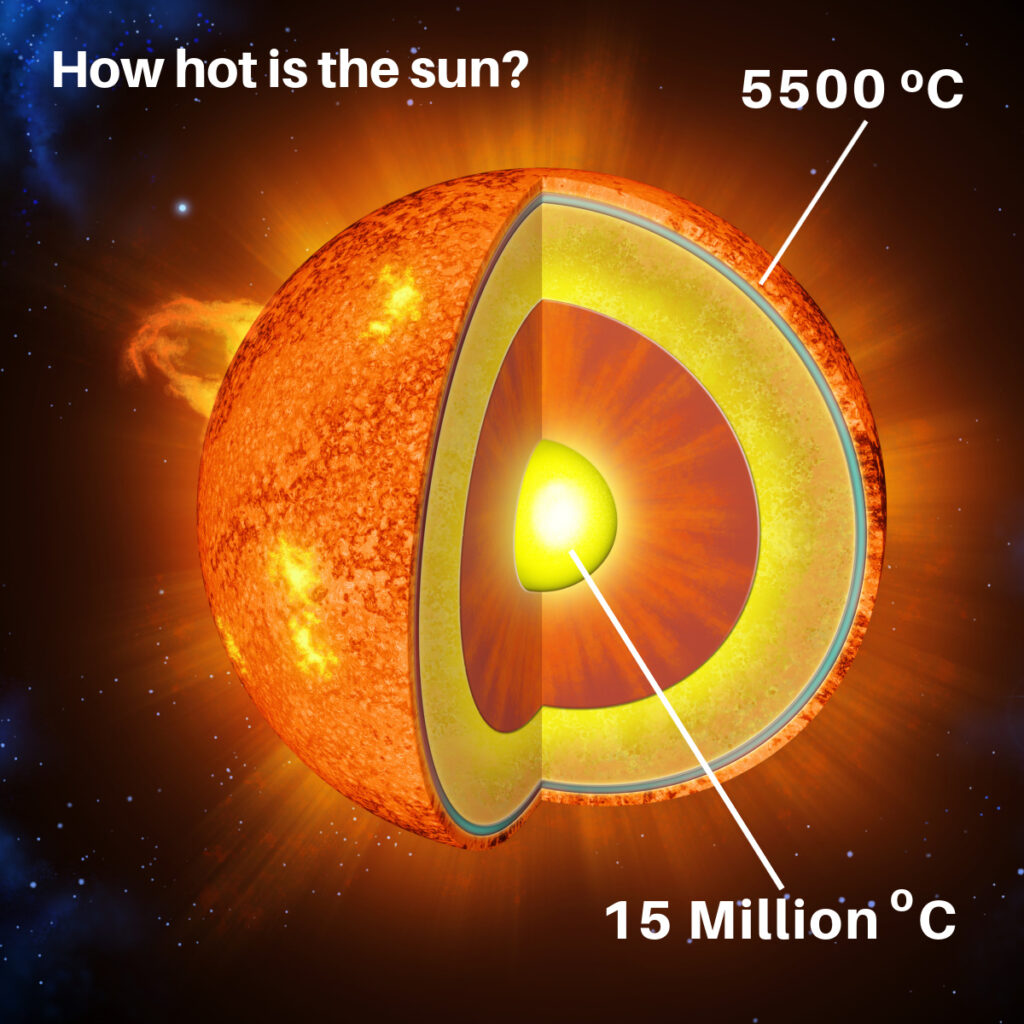
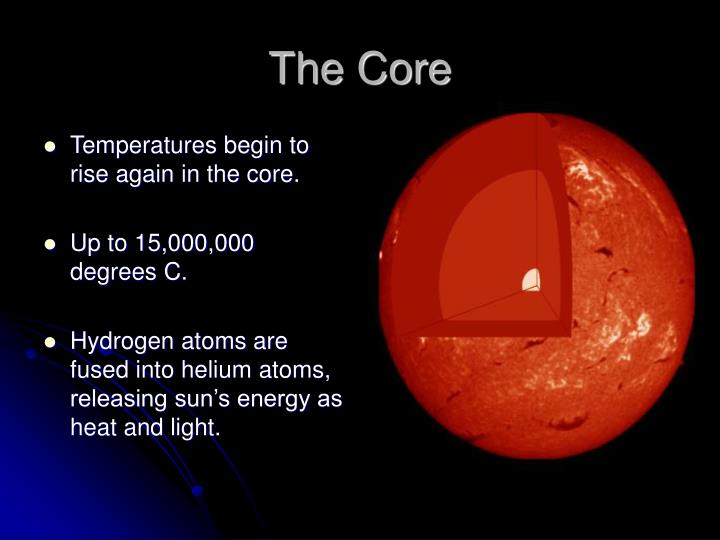
So, what's the magic number? The temperature at the Sun's core is estimated to be around 15 million degrees Celsius (27 million degrees Fahrenheit)! That’s incredibly hot – hotter than anything we can experience on Earth. But why is this number so important? Well, at this extreme temperature and immense pressure, something extraordinary happens: nuclear fusion. This is the process where hydrogen atoms are forced together to form helium, releasing vast amounts of energy in the process. This energy then travels outwards through the Sun, eventually reaching us as light and heat. Without this nuclear fusion, and therefore without the extreme core temperature, the Sun wouldn't shine, and life on Earth wouldn't be possible.
The purpose of knowing the Sun's core temperature and the processes happening there extends beyond just satisfying our curiosity. It helps us understand stellar evolution – how stars are born, live, and die. By studying our Sun, we can learn about other stars throughout the universe and predict their lifecycles. This knowledge is crucial for astrophysics and cosmology. Furthermore, understanding nuclear fusion in the Sun inspires research into harnessing fusion energy here on Earth. Imagine clean, virtually limitless energy derived from the same process that powers the Sun! That's the potential benefit.
Must Read
You might be thinking, “Okay, that’s all fascinating, but how is this relevant to me?” Actually, the Sun's activity and its core temperature indirectly affect us every day. Solar flares and coronal mass ejections (CMEs), driven by the energy generated in the core, can disrupt satellite communications, power grids, and even affect airplane navigation. Understanding the Sun helps us predict and mitigate these risks.
In education, learning about the Sun's core temperature provides a tangible example of physics and chemistry principles in action. It connects concepts like temperature, pressure, energy, and nuclear reactions in a dramatic and engaging way. Students can use models and simulations to visualize the process of nuclear fusion and understand the scale of the energy involved. It's a fantastic way to make science come alive!

Want to explore this topic further? Here are some simple ways to get started:
- Watch documentaries: Many excellent documentaries delve into the science of the Sun and its core.
- Explore online resources: NASA and other space agencies have websites filled with information, images, and videos about the Sun.
- Build a model: Create a scale model of the Sun to visualize its different layers and understand the relative size of the core.
- Think about it: Next time you feel the warmth of the sun, remember the incredible processes happening millions of kilometers away in its core!
So, next time you bask in the sunlight, take a moment to appreciate the incredible engine powering it all – the ultra-hot core of the Sun.