What Is The Strongest Category For A Hurricane
Ever watched a hurricane barrel across the news and wondered, "Just how bad is that, really?" We often hear about hurricanes categorized, but understanding what those categories actually mean, especially the strongest one, can be both fascinating and incredibly important. It's not just about bragging rights for Mother Nature; it's about understanding potential impact and taking appropriate action.
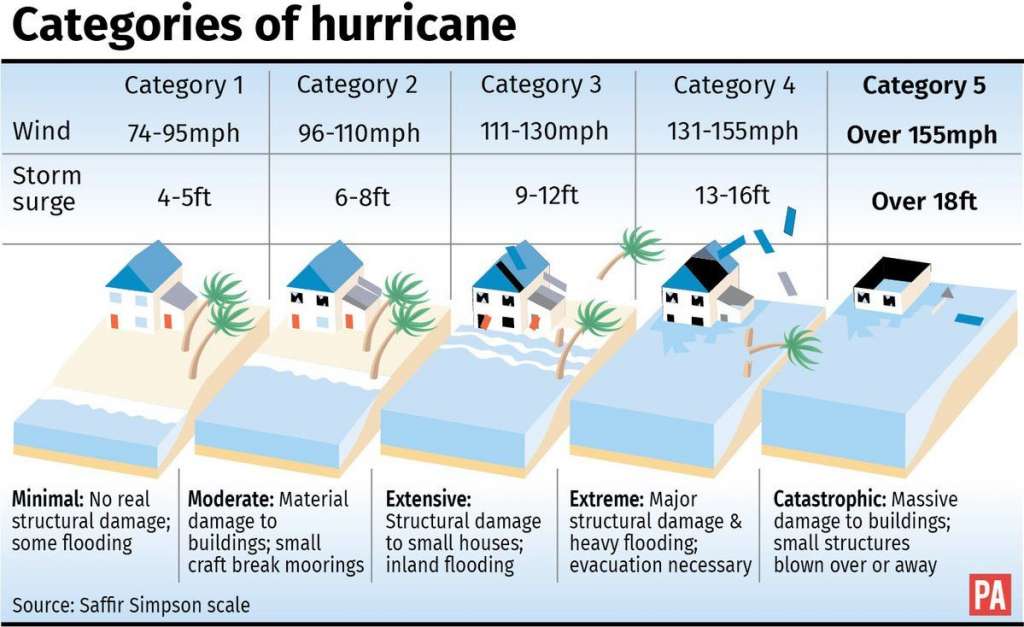
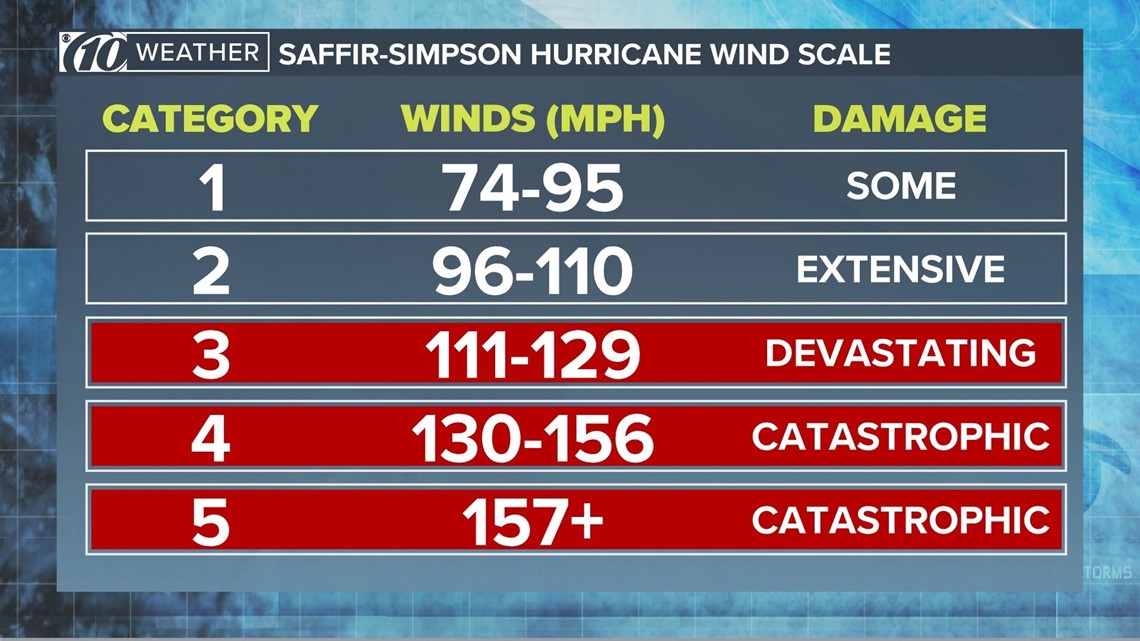
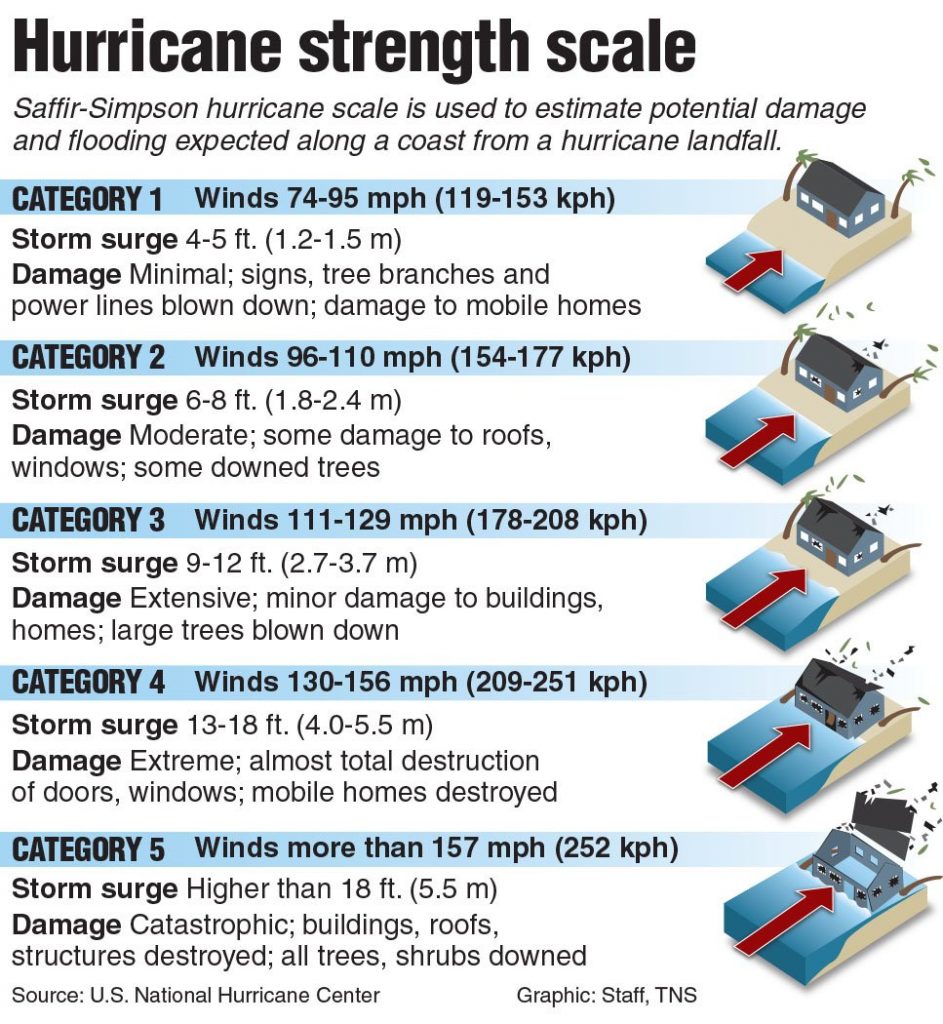
The scale we use to classify hurricanes is called the Saffir-Simpson Hurricane Wind Scale. This scale ranks hurricanes from Category 1 to Category 5 based solely on their sustained wind speeds. Think of it as a weather report's way of quickly telling you how much punch a storm packs. The benefit of this scale is clear: it provides a standardized, easily understandable way to communicate the potential for property damage and flooding associated with a hurricane. Before this, conveying a hurricane's threat was less precise, leading to potential underestimation or overestimation of the danger.
So, what's the strongest category? That would be a Category 5 hurricane. These storms boast sustained wind speeds of 157 mph (252 km/h) or higher. That's faster than many race cars! The damage potential from a Category 5 is, quite frankly, catastrophic. We're talking widespread devastation: complete roof failure on many residences and industrial buildings, all trees blown down, power outages lasting for weeks or even months, and coastal areas inundated by storm surge.
Must Read
In education, the Saffir-Simpson scale is a crucial tool for teaching about meteorology, climate science, and even risk management. Students learn how wind speed directly translates to potential damage, fostering a greater understanding of natural disasters and the importance of preparedness. In daily life, knowing the category of a hurricane allows individuals and communities to make informed decisions about evacuation, securing property, and stocking up on essential supplies. A Category 2, for example, might necessitate boarding up windows and securing outdoor furniture, while a Category 5 warrants immediate evacuation from vulnerable areas.
You might remember some infamous Category 5 hurricanes. Hurricane Katrina (2005), which devastated New Orleans, reached Category 5 status. Similarly, Hurricane Maria (2017), which ravaged Puerto Rico, was also a Category 5 storm, demonstrating the immense power and destructive potential of these events. More recently, Hurricane Dorian (2019) stalled over the Bahamas as a Category 5, leaving unimaginable destruction in its wake. These examples vividly illustrate why understanding hurricane categories, especially Category 5, is so critical.
Want to explore hurricane strength further? Check out websites like the National Hurricane Center (NHC) for real-time information on active storms and historical data. You can also use online simulations to see how different wind speeds affect structures. Even simply watching documentaries about past hurricanes can be incredibly informative and sobering. Remember, knowledge is power, and understanding the Saffir-Simpson scale, especially the implications of a Category 5 hurricane, can help you stay safe and informed during hurricane season.