
What Is The Scientific Definition For Energy

Hey everyone! Ever wondered what energy really is? Like, beyond that feeling you get after a double espresso or that thing your mom tells you to conserve? We use the word all the time, but what's the actual scientific scoop?
Well, buckle up, because we're about to dive into the fascinating world of energy, without any complicated equations or boring lectures. Think of this as a friendly chat about one of the most fundamental concepts in the universe.
So, What's the Deal with Energy?
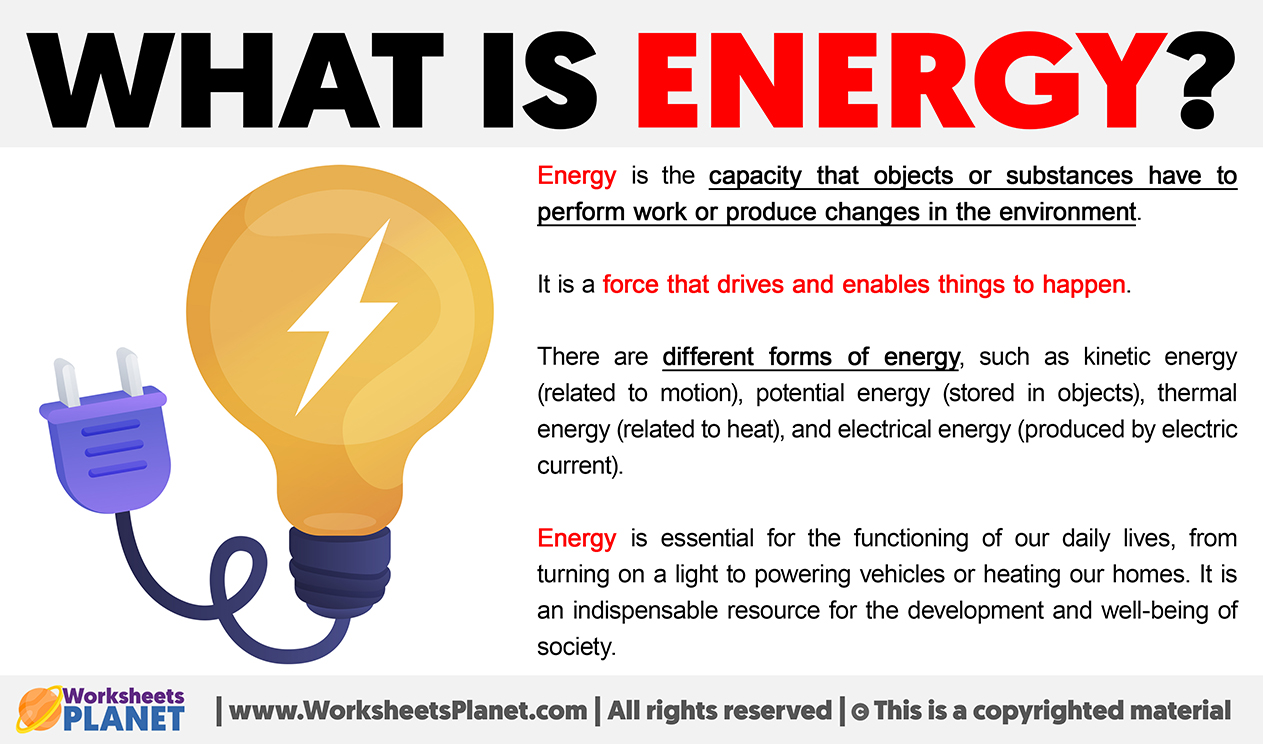
Okay, here's the official, scientifically-approved definition: Energy is the ability to do work. Simple enough, right? But what does that mean?
Must Read
Think of it this way: "Work" in physics doesn't just mean slaving away at your desk. It's more about causing a change. Pushing a box across the floor? That's work! Lifting a weight? Work! Even just heating up a cup of coffee? Yup, that's work too!
If something can cause any of those changes, then it has energy. No energy, no change. It's like the universe's basic law of causation. Pretty cool, huh?
Different Flavors of Energy
Now, here's where things get even more interesting. Energy comes in a whole bunch of different forms. It's not just one monolithic thing. It's like ice cream – you've got vanilla, chocolate, strawberry, rocky road… You get the picture!
Some of the most common types of energy include:

- Kinetic Energy: This is the energy of motion. Anything that's moving has kinetic energy. A speeding bullet, a rolling ball, even a vibrating molecule! The faster it moves, the more kinetic energy it has.
- Potential Energy: This is stored energy. It's waiting to be released. Think of a stretched rubber band, a book perched on the edge of a table, or a dam holding back a lake. They all have the potential to do work.
- Chemical Energy: This is energy stored in the bonds between atoms and molecules. When you burn wood, eat food, or use a battery, you're releasing chemical energy. It’s what makes life, well, life!
- Thermal Energy: This is the energy of heat. It's related to the movement of atoms and molecules within a substance. The hotter something is, the more thermal energy it has.
- Electromagnetic Energy: This is the energy of light, radio waves, microwaves, X-rays, and all the other forms of electromagnetic radiation. It’s how the sun warms our planet, how we communicate wirelessly, and how doctors see inside our bodies. Talk about versatile!
- Nuclear Energy: This is the energy stored in the nucleus of an atom. It’s released in nuclear reactions, like those that power nuclear power plants or create the incredible energy of the sun. Whoa, right?
The Energy Shuffle: Transformations and Conservation
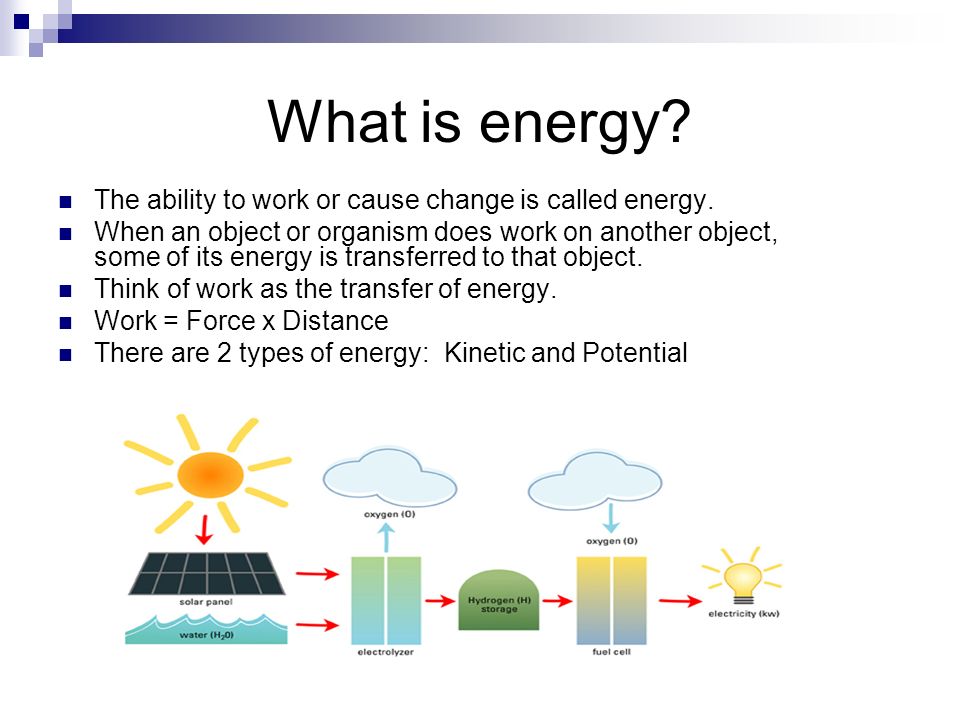
Okay, so energy comes in all these different forms. But here's the really amazing part: Energy can be transformed from one form to another! It's like a magic trick, but it's real!
For example, when you flip a light switch, you're converting electrical energy into light and heat energy. When you ride a bike, you're converting the chemical energy in your food into kinetic energy (motion) and thermal energy (heat from your muscles working). It's a constant energy shuffle happening all around us!
And here's the kicker: energy can't be created or destroyed, only transformed. This is the law of conservation of energy, one of the most fundamental laws in physics. It's like energy is playing a giant game of hide-and-seek, constantly changing its appearance but never disappearing altogether.
Think about a roller coaster. As it climbs to the top of the first hill, it gains potential energy. As it plunges down, that potential energy is converted into kinetic energy. At the bottom, it has maximum speed (and kinetic energy). As it climbs the next hill, that kinetic energy is converted back into potential energy. The total amount of energy stays the same (minus a little lost to friction and air resistance), but it's constantly changing form.
Why Should We Care?
So, why is all this important? Well, understanding energy is key to understanding how the universe works! It helps us develop new technologies, like solar panels and wind turbines. It helps us understand the climate crisis and find ways to reduce our energy consumption. It even helps us understand the fundamental processes that drive life itself.
Plus, it's just plain cool! Thinking about energy transformations is like having a secret decoder ring that lets you understand the inner workings of the world around you. From the smallest atom to the largest galaxy, energy is the driving force behind everything.
So, next time you hear the word "energy," remember that it's not just some abstract concept. It's the ability to do work, the thing that makes change possible, and the fundamental currency of the universe. Pretty mind-blowing, right?
Keep exploring, keep questioning, and keep your eyes peeled for the amazing energy transformations happening all around you!