
What Is The Scale Of Hurricanes
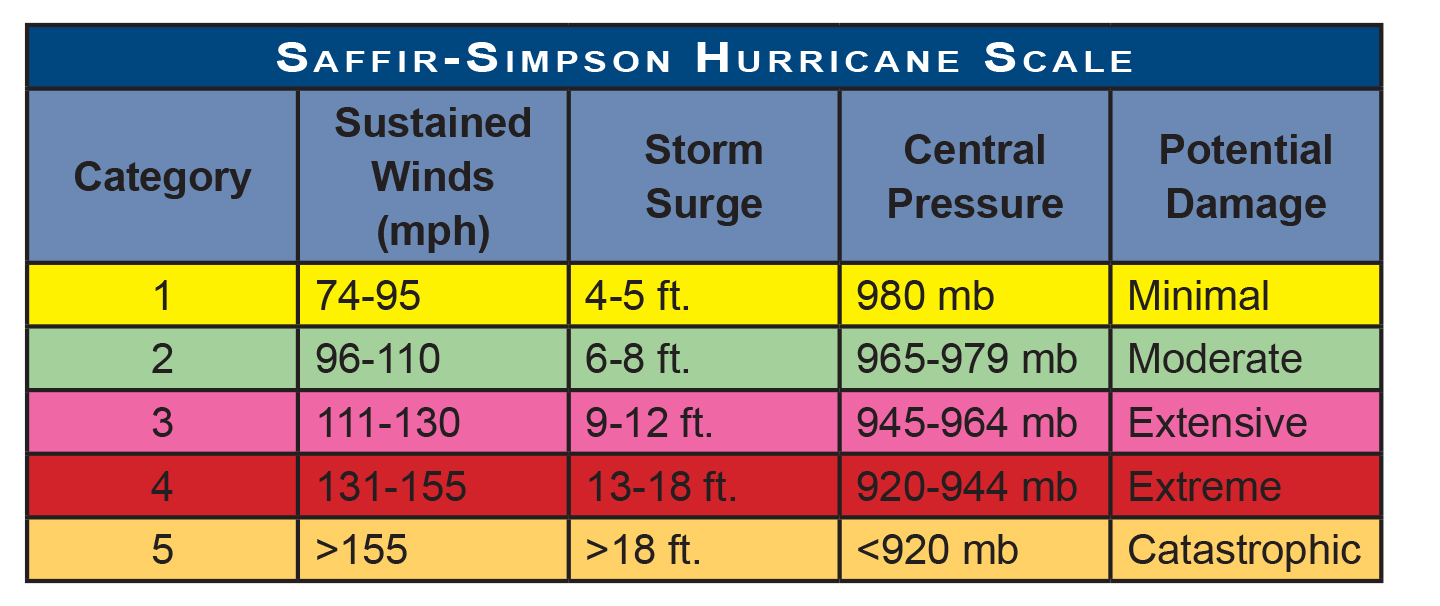
Alright, settle in, grab your imaginary cup of coffee. We need to talk about hurricanes. You know, those big swirly things that make news anchors look serious and send us all scrambling for plywood and bottled water. We see them on maps, little cartoon spirals, and think, "Yeah, that's a big storm." But let me tell you, friends, your brain is doing you a massive disservice.
The scale of a hurricane? It's like comparing a puddle in your driveway to the entire Pacific Ocean. It's so unbelievably enormous, it makes your average thunderstorm look like a polite sneeze.
It's Not Just a Storm, It's a Geographic Feature
First off, let's talk about width. When you see a hurricane on a weather map, it looks like it's going to hit your town. And it might! But what you're not fully grasping is that it's probably going to hit your town and the next five towns over, and then the entire state next door. We're talking about diameters that can easily stretch from 200 to 1,000 miles wide.
Must Read
Think about that for a second. That's like driving from New York City to Cleveland. Or from London to Edinburgh. Or from Paris to Rome – okay, maybe not Rome, but definitely a good chunk of France! Imagine a single storm system that covers that entire distance. If you started driving at one edge of it, you'd be listening to about five full podcasts, having an existential crisis about highway rest stop food, and probably needing a refill on gas before you even got close to the other side. And all the while, you're still inside the storm.
It's not just a storm front; it's a mobile weather continent. A terrifying, wind-swept, rain-soaked continent.

The Eye of the Storm: A Deceptive Calm (and Size)
And what about the famous "eye" of the hurricane? You know, that creepy calm center where the sun might actually peek through, giving everyone a false sense of security before the second half of the storm wallops them?
That eye isn't some tiny little hole you could jump over. Oh no. The eye itself can be anywhere from 20 to 40 miles wide, sometimes even larger. That's the size of a decent-sized city! Or a small county! Imagine walking through downtown Miami, perfectly sunny, birds chirping, only to remember you're smack in the middle of a colossal atmospheric blender. It's like finding a quiet cafe inside the Death Star.
The sheer enormity of that calm center just underscores how utterly gargantuan the rotating storm around it truly is.

Up, Up, and Away! (But Not You, Please Don't Go)
Okay, so we've covered how wide these monsters are. Now, let's go vertical. How high do hurricanes go? Are they just skimming the treetops?
Nope. Try the top of the troposphere. Hurricanes can reach heights of 9 miles (about 15 kilometers). For reference, that's higher than Mount Everest, which is a rather respectable 5.5 miles. It's also well above where commercial airplanes typically cruise (around 6-7 miles up). So, while you're sipping your ginger ale at 35,000 feet, you could theoretically be flying underneath a hurricane.
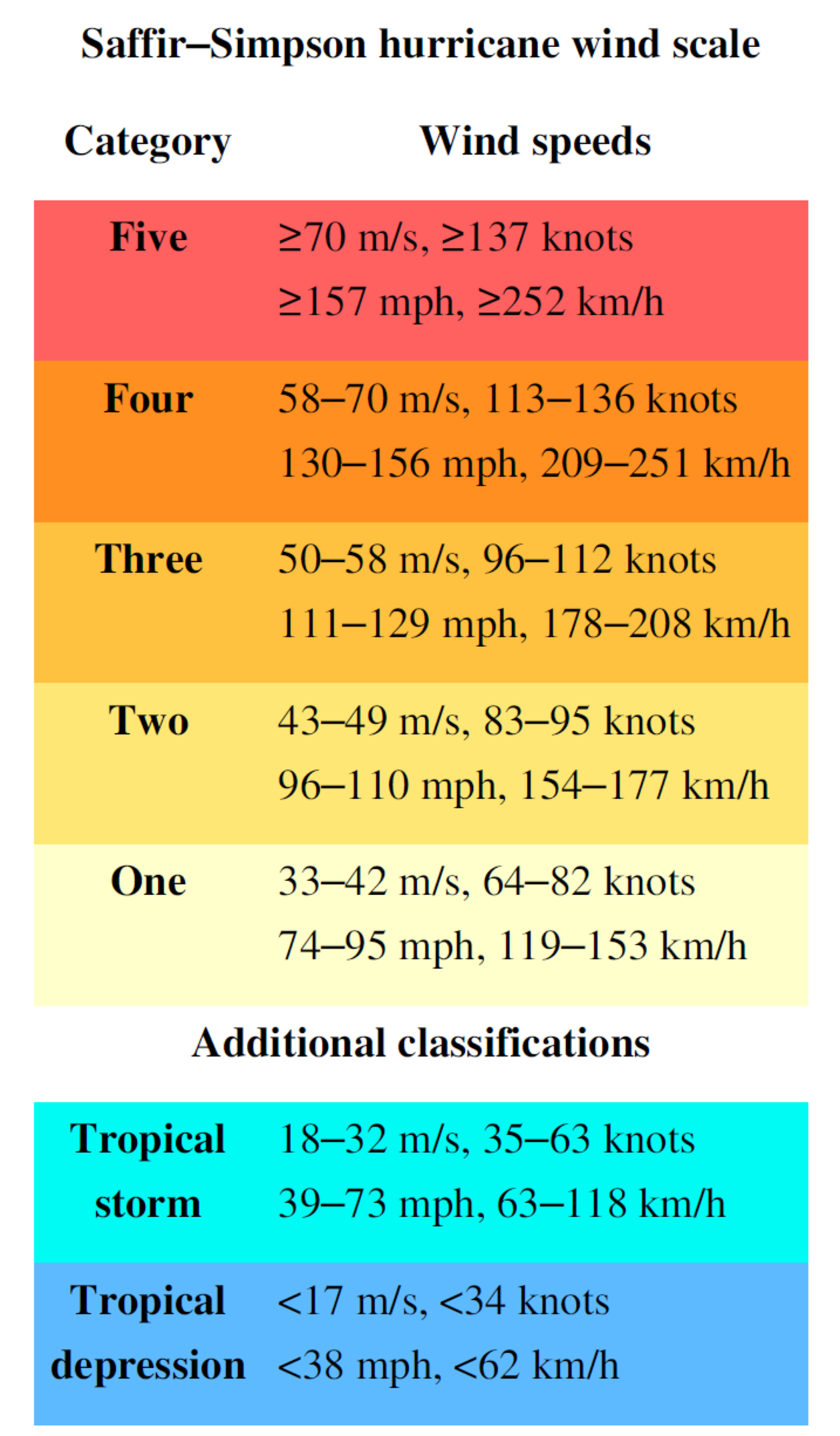
It’s a colossal cylinder of fury, extending from the warm ocean surface all the way up to the frigid edge of space. It’s like a weather skyscraper built by Mother Nature on a particularly bad day.
The Energy Bill Must Be Astronomical
And finally, let's talk power. The energy a hurricane churns out is simply mind-bending. Scientists have estimated that a mature hurricane can release the energy equivalent of a 10-megaton nuclear bomb every 20 minutes. Let me rephrase that: Every. Twenty. Minutes. For days. Or even weeks.
That's hundreds, possibly thousands, of atomic bombs' worth of energy every single day. Your average gas guzzler couldn't even dream of that kind of output. Your entire city's power grid, running at full tilt, is a mere flicker compared to this atmospheric powerhouse. It’s enough energy to power the entire United States for about six months!

This isn't just a strong breeze; it's a cosmic engine fueled by warm water, defying our comprehension with its sheer, unadulterated might.
So, Next Time...
The next time you hear about a hurricane forming, try to picture it. Don't just see the little swirl on the map. Imagine a weather system that could swallow entire states whole, towering higher than the tallest mountains, and packing enough punch to make a nuclear arsenal look like a child's firecracker display.
It's truly one of nature's most spectacular, terrifying, and utterly humbling displays of raw power. And perhaps, knowing its true scale, you'll respect its potential just a little bit more. And maybe, just maybe, buy that extra gallon of water.