
What Is The Process Of Petroleum
Ever filled up your car, fired up the grill with propane, or even just used a plastic cutting board, and paused to wonder: where does all this stuff really come from? We're talking about petroleum, the ultimate hidden ingredient in so much of our modern world. It's not just about gasoline; it's the backbone of countless products we interact with daily. So, let's take a chill, easy-going stroll through the fascinating, millions-of-years-in-the-making journey of "black gold."
The Deep Sleep: How It All Began
Imagine a world long, long ago – we're talking way before dinosaurs, even. Picture ancient seas teeming with tiny life: plankton, algae, and other microscopic organisms. When these little guys lived out their days, they'd sink to the seabed. Over time, layers upon layers of sediment – sand, mud, silt – covered them up, acting like a giant, geological blanket.
Fast forward millions of years, and this blanket got thicker, heavier, and hotter. The immense pressure and heat from being buried deep within the Earth's crust began to work their magic. It wasn't a quick bake, more like a super slow-cooker. The organic matter transformed, first into a waxy substance called kerogen, and then, with even more heat and time, into the liquid gold we know as crude oil and natural gas.
Must Read
Think of it as Earth's very own incredibly slow, incredibly powerful compost pile, turning ancient sunshine into modern energy. Pretty wild, right?
The Great Hunt: Finding the Treasure
So, we know it's down there, but how do we find it? It's not like there's a giant "X marks the spot" on the ocean floor. This is where the clever folks called geologists come in. They use sophisticated techniques like seismic surveys, bouncing sound waves deep into the Earth to create maps of underground rock formations. They're basically giving the Earth an ultrasound to find potential oil and gas traps.
Once a promising location is identified, that's when the heavy machinery rolls in – or rather, floats in. Massive drilling rigs, whether towering over land or majestically floating offshore, are dispatched. These aren't just big drills; they're complex engineering marvels, designed to bore miles beneath the surface, navigating through different rock layers to reach the precious reservoir. It's a bit like threading a needle from a skyscraper, but underground!
The Ascent: From Depths to Daylight
When a drill hits an oil reservoir, it's often under immense natural pressure, which can sometimes push the oil right up to the surface. But more often, especially as fields mature, powerful pumps are needed to coax the crude oil out of its ancient resting place and bring it to the surface.
Once extracted, this raw crude oil isn't quite ready for your car's engine. It needs a ride! It’s transported via a vast network of pipelines (the circulatory system of the oil world), massive supertankers crisscrossing oceans (some are longer than three football fields!), and even trains and trucks. It's a logistical ballet on a global scale, ensuring this valuable resource gets where it needs to go.
The Alchemy: Turning Crude into Cool Stuff
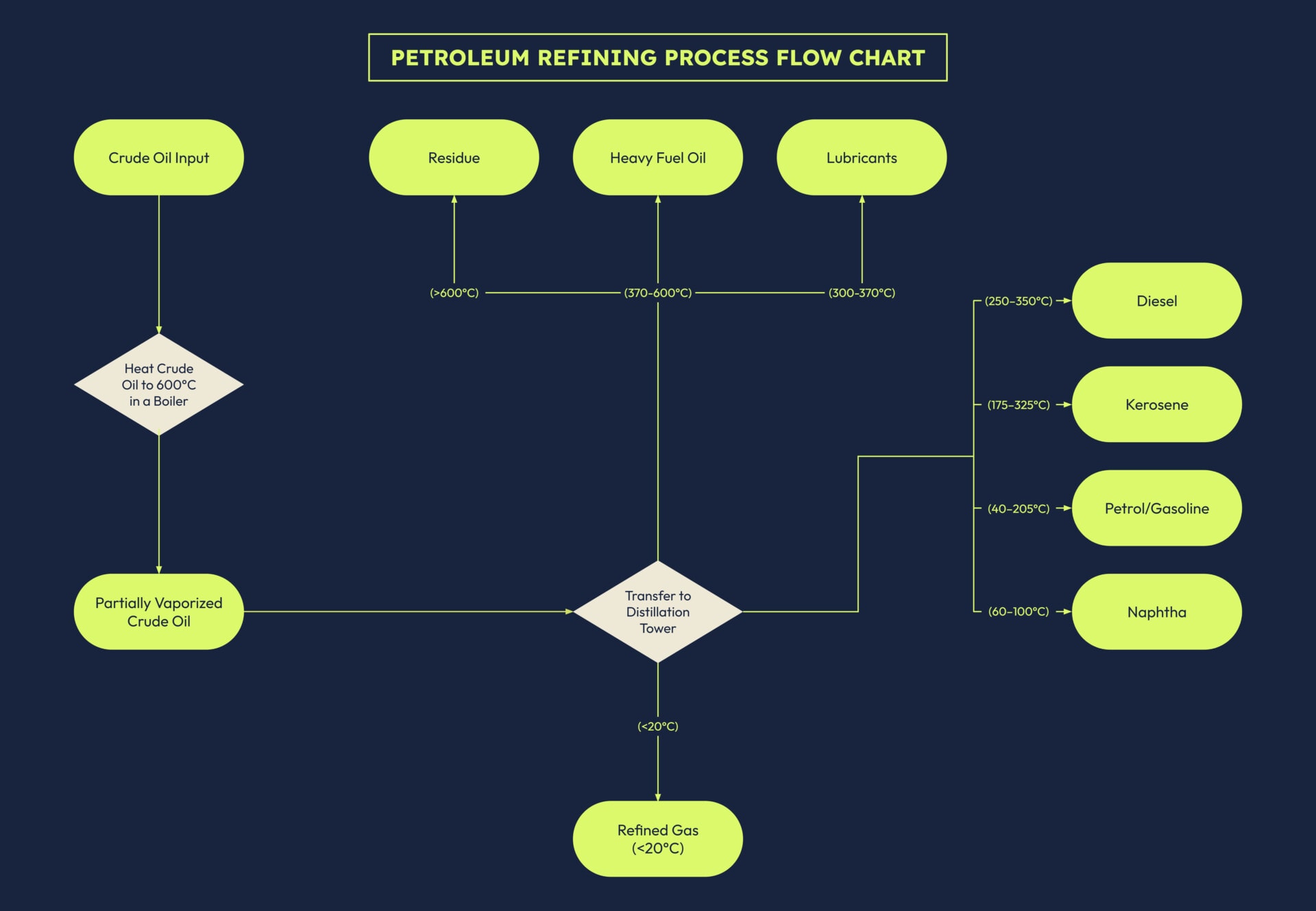
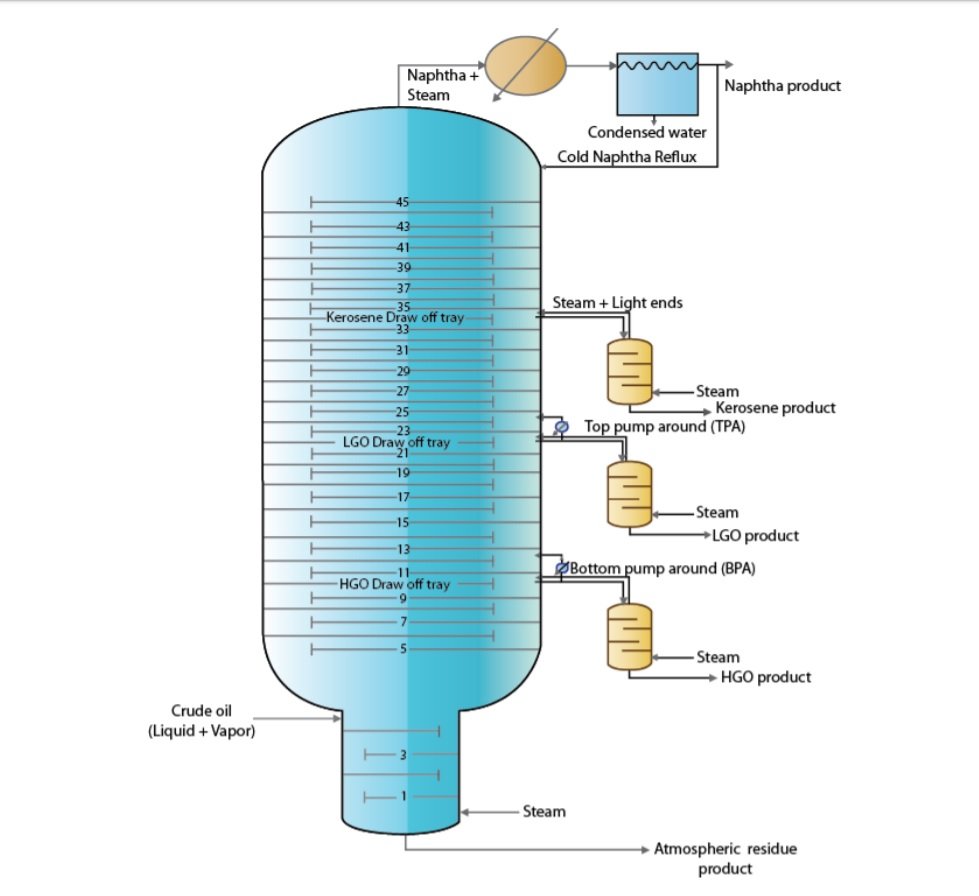
Now, here's where the magic really happens: the refinery. Imagine crude oil as a thick, dark, unappealing soup. It’s a mix of thousands of different types of hydrocarbons, all jumbled together. The refinery's job is to separate them. This is primarily done through a process called fractional distillation.
The crude oil is heated to extreme temperatures and then fed into a tall, cylindrical structure called a distillation column. As the heated oil vaporizes and rises, it cools. Different hydrocarbons condense at different temperatures, allowing them to be collected at various levels of the column. Think of it like a massive, sophisticated tea kettle separating different steam components.

From this "soup," we get an incredible array of products: light gases (like propane and butane), gasoline (for your car!), jet fuel (for your next vacation!), diesel (for trucks and buses), lubricants, heating oil, and asphalt for roads. And here's the kicker: the byproducts from this process are also fundamental to creating plastics, fertilizers, pharmaceuticals, and synthetic fibers. That sleek phone case? Your toothbrush? Your running shoes? All likely have petroleum components. It's truly a material marvel!
A Moment of Reflection
From microscopic organisms dying millions of years ago to powering our daily commutes and making countless products, the journey of petroleum is nothing short of incredible. It's a testament to Earth's geological processes and human ingenuity.
Next time you fill up your tank or pick up a plastic item, take a moment to appreciate the incredible, ancient journey it has taken. Understanding its origins helps us grasp the sheer scale of the energy and resources that underpin our modern lives, prompting us to think a little more mindfully about how we use them. Who knew a drop of oil had such a grand story?
