
What Is The Next Named Hurricane
Ever sat around, sipping your latte, and suddenly thought, "Gee, I wonder who's next in line for the infamous hurricane spotlight?" Like, is it Brenda? Or maybe a truly menacing Todd? You're not alone, my friend. It's a question that pops up every hurricane season, usually right after the first named storm decides to throw a party on the coastline. But here’s a little secret: figuring out the next named hurricane isn't quite as dramatic as guessing the next winner of a reality TV show. It's actually, dare I say, almost… predictable?
No, really! We don't have meteorologists huddled in a dimly lit room, pulling names out of a hat blindfolded, giggling as they select "Hurricane Bartholomew the Magnificent." That would be far more entertaining, wouldn't it? Instead, the process is a lot more organized than your average sock drawer.
Who's In Charge of This Naming Shenanigan Anyway?
The global authority on all things weather-related is the World Meteorological Organization (WMO). These are the folks who, every few years, probably over a very strong cup of coffee, convene to create pre-determined lists of names. Yes, lists, plural! Because different parts of the world get different storms, they get different naming conventions. We're primarily talking about the Atlantic basin here, which includes the Atlantic Ocean, Caribbean Sea, and Gulf of Mexico, because that's where most of us are usually keeping an eye.
Must Read
Think of it like a rotating guest list for a party that nobody really wants to attend. Each list contains 21 names, alphabetically ordered, alternating between male and female. So, if the first storm of the year is Alberto (a fine, upstanding name), the second will be Beryl (a wonderfully classic choice), then Chris, then Debby, and so on. It's like a meteorological roll call, and each storm patiently waits its turn. Well, maybe not patiently, they do tend to be a bit tempestuous.
So, How Do We Know Who's Next?
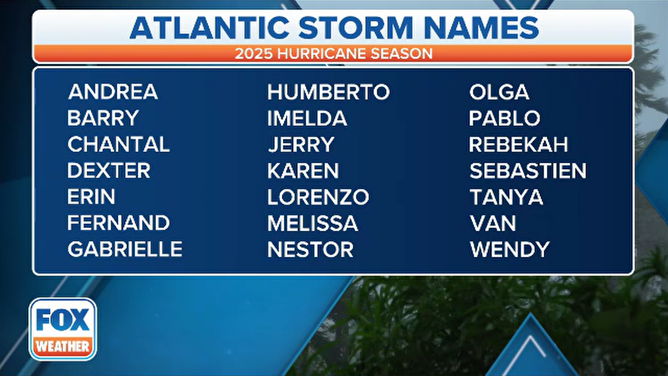
This is where the magic (or rather, the meticulous planning) happens. The WMO has six different lists for the Atlantic basin, and these lists rotate every six years. So, the 2024 list will be used again in 2030, the 2025 list in 2031, and so forth. It's a brilliant system that saves everyone a lot of headache. Imagine having to come up with new names every single year! We'd be down to "Hurricane Xylophone" and "Tropical Storm Zorp" eventually.

The actual name is assigned once a tropical disturbance reaches tropical storm strength. Before that, it's just a depression or a mere wave, unceremoniously un-named, like a struggling band before their big break. But hit 39 mph sustained winds, and poof! You get a name! It's like a meteorologist's version of a sweet sixteen, just with more wind and less cake.
For example, if we were in, say, the 2024 hurricane season (which, spoiler alert, runs from June 1st to November 30th), and Hurricane Alberto just finished doing its thing, then the very next storm to reach tropical storm status would be named Beryl. Simple as that! You just look at the list, find the last name used, and read the next one down.
The Hall of Fame (and Shame)
Now, not all names get to live on in rotation. Some names, bless their cotton socks, just do too much. They cause such catastrophic damage and loss of life that they are retired permanently from the list. This isn't just because they were particularly grumpy; it's out of sensitivity and to avoid confusion in future discussions about historic storms. Think of it like a jersey number hanging in the rafters, but for causing billions in damage. Names like Katrina, Sandy, Maria, and Irma will never be used again. Their destructive legacies ensure they get a permanent, albeit unwelcome, place in history. The WMO then replaces these retired names with new, innocuous ones, probably hoping they'll behave better.
So, the lists aren't entirely static, but they only change if a storm is particularly naughty. If a season is unusually active and all 21 names from the primary list are used, they used to dip into the Greek alphabet (Alpha, Beta, Gamma, etc.). But since 2021, they’ve switched to a supplemental list of names. Because let's be honest, "Tropical Storm Zeta" just doesn't roll off the tongue quite like "Hurricane Fiona," does it? Plus, Greek letters caused some confusion, especially when trying to compare storms across different years.
So, Who Is The Next Named Hurricane (Hypothetically)?
Well, to truly answer "What is the next named hurricane?" you’d need to:
- Know the current year.
- Know the last name used for a tropical storm or hurricane in your specific ocean basin (e.g., Atlantic).
- Then, simply consult the WMO’s official list for that year!
For instance, let’s peek at the 2024 Atlantic hurricane season list (the same list will be used again in 2030, assuming no names get retired):

Alberto, Beryl, Chris, Debby, Ernesto, Francine, Gordon, Helene, Isaac, Joyce, Kirk, Leslie, Milton, Nadine, Oscar, Patty, Rafael, Sara, Tony, Valerie, William.
So, if we just had Hurricane Chris make landfall, then the next one would be Debby. If it’s early in the season and we’ve only seen Alberto, then Beryl is patiently waiting in the wings. It's a literal lineup!
There you have it. The mystery of the next named hurricane isn't some complex astrological prediction or a clandestine lottery. It's a methodical, pre-planned sequence designed to keep us all informed and, dare I say, slightly amused by the sheer variety of human names bestowed upon nature's most powerful tantrums. Now you can impress your friends at the café with your profound knowledge of meteorological nomenclature. Just try not to sound too excited about who's next; after all, it is still a hurricane we're talking about!