
What Is The Most Common Cause Of Power Failure
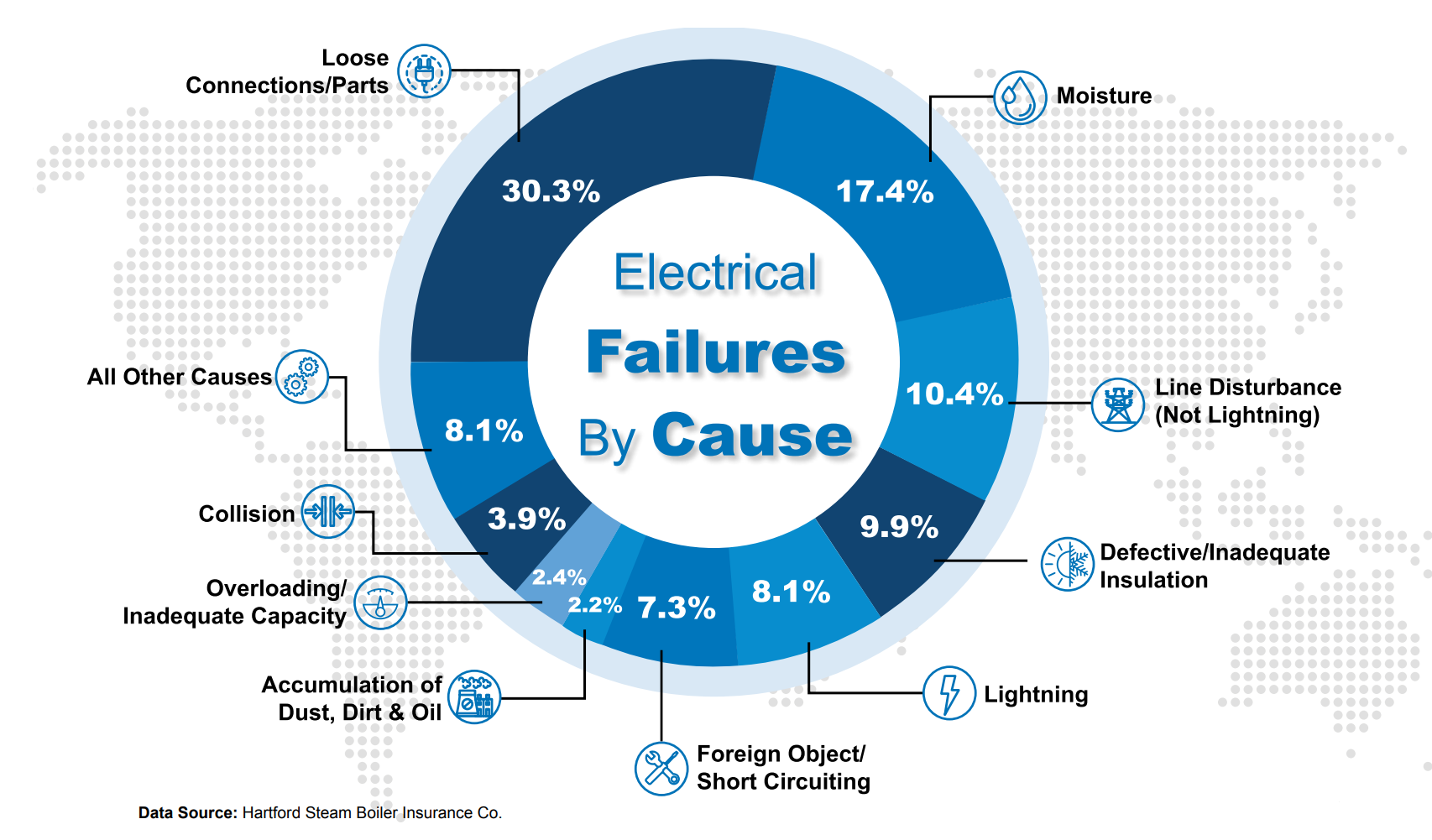
Ever sat in the dark, surrounded by the eerie silence of your fridge slowly defreezing? Yeah, power outages. They're annoying, inconvenient, and sometimes, downright scary!
So, What Plunges Us into Darkness?
You might picture a supervillain with a giant laser, zapping the power grid. Or maybe a rogue squirrel with a vendetta against transformers. While those are entertaining, the truth is far less dramatic.
The most common culprit is actually... drumroll please... weather!
Must Read
Mother Nature's Little Pranks
Seriously! Blame the sky. Think of it as Mother Nature's way of saying, "Hey, remember who's in charge here?" through dramatic light shows, gusty winds, and icy tantrums.
We're talking about storms – the full package: lightning, wind, rain, snow, and even just plain ol' ice. They're all surprisingly good at messing with our electricity.
Wind: The Unseen Menace
Okay, so wind might seem harmless enough. A gentle breeze is nice, right? But imagine that breeze turning into a raging gale, tearing through trees like they're made of paper.
Those trees, now airborne missiles, often target power lines with pinpoint accuracy. CRASH! Darkness ensues. Blame the wind!
It's not just full-blown hurricanes, mind you. Even a moderately strong wind can bring down weakened branches or entire trees, causing widespread outages.
Ice Storms: The Silent Assassin
Ice storms are particularly nasty. Rain falls and freezes on contact, coating everything – trees, power lines, even your car – in a thick layer of ice.
All that extra weight puts immense strain on power lines. They start to sag, snap, and fall, leaving thousands without power. Imagine a delicate spiderweb, only made of electricity, slowly collapsing under an icy burden.

It's a slow, creeping disaster, and it's surprisingly common in many parts of the world. Brrr! Let's just stay inside and hope the lights stay on.
Lightning: The Spark That Starts It All
Lightning is the rockstar of weather-related outages. A single bolt can carry millions of volts, and when it hits a power line or substation, things get very exciting (and by exciting, I mean dark and frustrating).
Think of it like this: your electrical system is a carefully balanced ecosystem. A lightning strike is like introducing a giant, fire-breathing dragon into that ecosystem. Not good!
The surge of electricity can overload transformers, fry circuits, and generally wreak havoc on the entire grid. It's like a power surge, but on a scale that would make your surge protector weep.
Rain & Flooding: The Soggy Saboteur
Heavy rain can also cause problems. Excessive rainfall can saturate the ground, making trees more likely to uproot and fall onto power lines. A bit like pulling a weed out of a garden.
Flooding is even worse. Water and electricity don't mix, as anyone who's ever dropped a hairdryer in the bathtub knows. (Please don't do that!).
Substations, which are crucial components of the power grid, are often located in low-lying areas. If they get flooded, they can shut down entirely, leaving entire communities without power.
Beyond the Weather: Other Usual Suspects
While weather is the reigning champion of power outage causes, it's not the only contender. There are a few other usual suspects to consider.
Equipment Failure: When Machines Get Tired
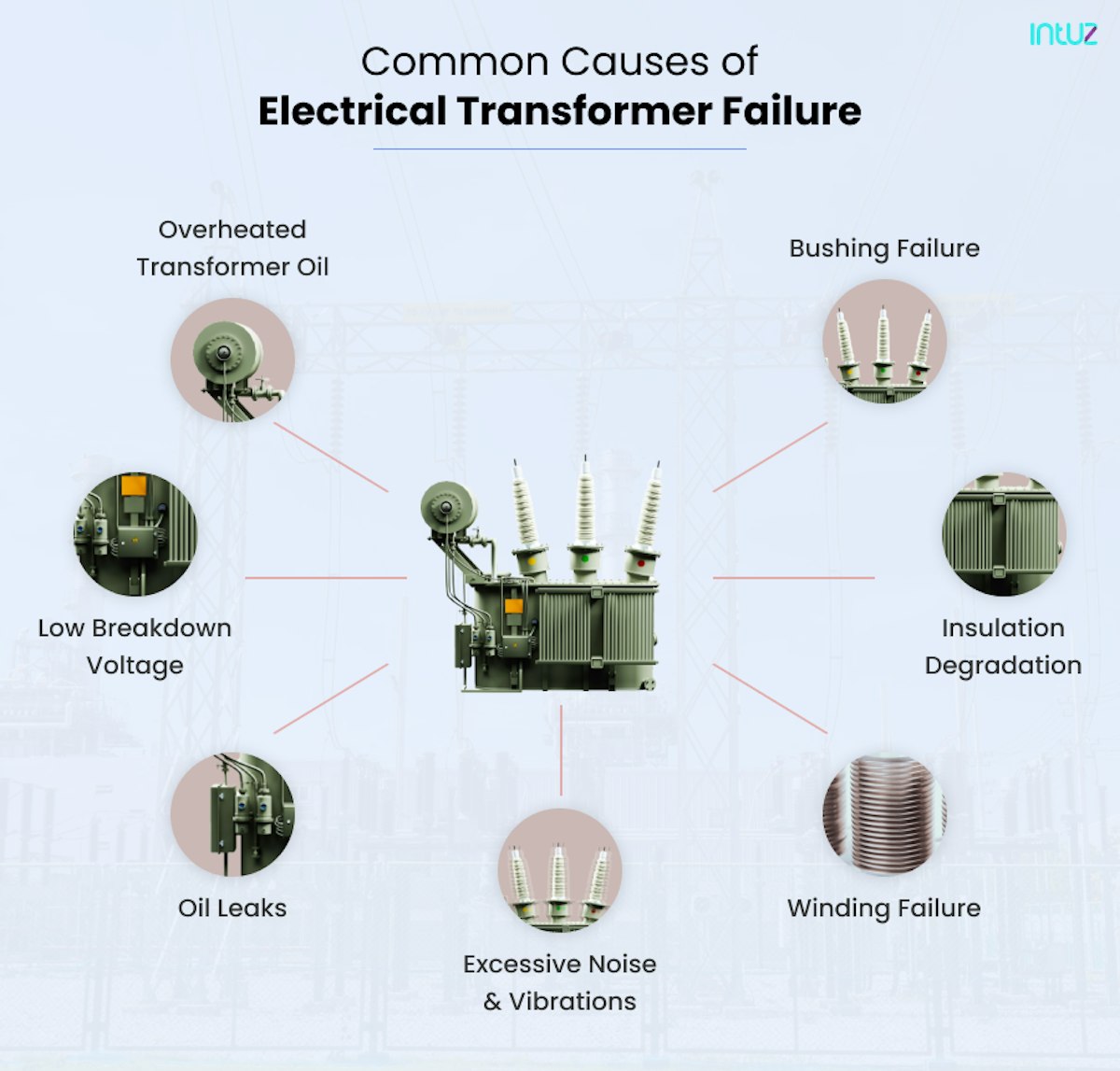
Power grids are complex systems with thousands of components. Transformers, switches, circuit breakers, and miles of power lines – all of them are subject to wear and tear. It's a massive game of electrical dominoes.
Over time, equipment can fail due to age, corrosion, or just plain bad luck. When a key component breaks down, it can trigger a chain reaction, leading to a widespread outage.
Think of it like your old car. Eventually, something's going to break down, and you'll be stranded on the side of the road. Except instead of a car, it's the entire electrical grid, and instead of you, it's everyone in your neighborhood.
Human Error: Oops!
Believe it or not, human error can also play a role in power outages. Construction crews accidentally digging into underground cables are a surprisingly common cause.
It's a bit like that time you tried to hang a picture and accidentally hammered through a water pipe. Except instead of a flooded bathroom, it's a power outage for the whole block. Ouch.
Incorrect operation of equipment or inadequate maintenance can also contribute to outages. We're only humans after all, mistakes happen!
Animals: The Furry (and Feathered) Foes
Okay, I mentioned squirrels earlier, and while it might seem like a joke, animals really do cause a surprising number of power outages. Especially in the suburbs and the countryside.
Squirrels, birds, snakes, and even raccoons have been known to climb onto equipment and inadvertently create short circuits. It's not their fault, of course, they're just trying to explore. But it can still leave you in the dark.
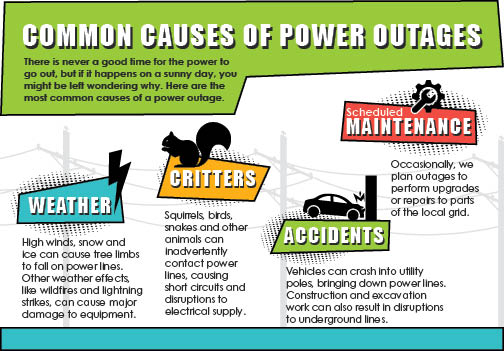
Imagine a squirrel mistaking a transformer for a giant, metal nut. Zap! No more power. It's a tough life for both the squirrel and the homeowner.
What Can You Do? A Few Bright Ideas
So, you now know the main culprits behind power outages. But what can you actually do about it? Aside from yelling at the sky during the next thunderstorm, here are a few tips.
Be Prepared: The Emergency Kit is Your Friend
Having an emergency kit is always a good idea. Fill it with flashlights, batteries, a first-aid kit, non-perishable food, and water. Think of it as your personal "power outage survival pack."
This way, when the lights go out, you'll be ready to face the darkness like a seasoned pro. And you won't have to stumble around looking for candles in the dark.
Don't forget a battery-powered radio to stay informed about the outage and any updates from your local utility company. A fully charged power bank for your phone is also a great idea!
Protect Your Electronics: Surge Protection is Key
Surges are a big danger. Use surge protectors to safeguard your sensitive electronics from power spikes that can occur when the power comes back on after an outage.
It's a small investment that can save you a lot of money in the long run. After all, replacing a fried computer is far more expensive than buying a surge protector.
Unplugging sensitive electronics during a thunderstorm is also a good idea, just to be extra safe. It's like putting your valuables in a safe during a robbery.

Report Outages: Be a Good Neighbor
If you experience a power outage, report it to your local utility company. This helps them identify the problem and restore power more quickly.
They can't fix what they don't know about, so be a good citizen and let them know what's going on. Plus, knowing that you've reported the outage might make you feel a little bit better, even if it doesn't bring the lights back on immediately.
And who knows, maybe you'll even get a thank-you note from the utility company. (Okay, probably not, but it's nice to dream!).
Stay Informed: Knowledge is Power (Literally!)
Follow your local utility company on social media or sign up for text alerts. This way, you'll receive updates about outages in your area and estimated restoration times.
Being informed can help you plan ahead and make informed decisions about what to do during an outage. Plus, it can help you avoid spreading misinformation or panicking unnecessarily.
Think of it like following the weather forecast before a big storm. Knowing what's coming can help you prepare and stay safe.
So, there you have it! The most common cause of power failure? It's weather! But remember to be prepared for anything, keep your sense of humor, and blame the squirrels... just a little.
Stay safe, stay informed, and may your lights always shine bright!