What Is The Main Use Of Coal
Hey there, ever flipped a light switch without a second thought? Most of us do! We plug in our phones, watch TV, and keep our fridges humming along, rarely pausing to consider the source of that invisible magic. But where does all that electricity come from? Today, we're going to peek behind the curtain at a resource that has powered much of our modern world for centuries: coal. Now, before you picture soot-covered miners and steam trains, let's explore its primary role today – it's actually quite fascinating and surprisingly central to our daily lives, even as we look towards greener futures.
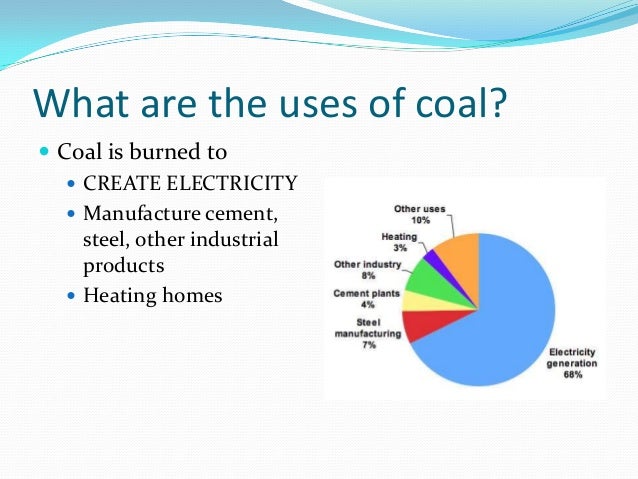
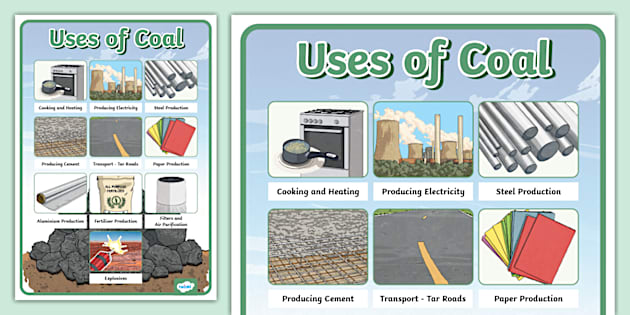
So, what's coal's big job in the 21st century? Overwhelmingly, its main use is for generating electricity. That's right, the power keeping your phone charged and your fridge cold often starts with a lump of black rock. The process is pretty neat: coal is burned to heat water, creating superheated steam. This steam then spins massive turbines, which in turn power generators, creating the electricity that zips along power lines to your home. Historically, coal has been a go-to because it's been relatively cheap and abundant in many parts of the world, offering a reliable and consistent source of power, often called 'baseload' electricity, which can be kept running steadily around the clock. It’s also used in some industrial processes, like making steel and cement, providing the intense heat needed for these materials.
How does this touch your daily life? Well, if you live in a region that still relies on coal-fired power plants, then a significant portion of the energy you consume – for everything from charging your laptop to heating your home – originates from coal. It’s the silent workhorse behind much of our modern infrastructure. In an educational context, understanding coal's role helps us grasp history, particularly the Industrial Revolution, and how societies developed. In science class, it's a prime example for discussing energy conversion (chemical to heat to mechanical to electrical) and the principles of thermodynamics.
Must Read
Want to explore this a bit more yourself? It’s easier than you think! One simple way is to look at your electricity bill or your energy provider's website. Sometimes, they'll show a breakdown of where your power comes from – you might be surprised to see coal listed alongside natural gas, nuclear, and renewables. Another tip is to simply cultivate a sense of curiosity about where things come from. Next time you flip a switch, just take a moment to ponder the journey that energy took to reach you. You could also do a quick online search for "power plants near me" to see what types of facilities are in your area. Many science museums have exhibits on energy generation, offering a hands-on way to understand how these massive systems work. It’s all about appreciating the incredible engineering and resourcefulness that keeps our modern world lit up!
.jpg)