
What Is The Main Purpose Of Welding Pipe Downhill

Ever watched a plumber installing pipes and wondered about the magic they're working? Well, sometimes, that magic involves welding those pipes in a way that's kind of like a downhill ski run. Seriously!
What's This Downhill Welding All About?
So, imagine you're a tiny welder, clinging to the side of a giant pipe. You've got your welding torch, and instead of going up the pipe to make your weld, you're heading down. That's downhill welding in a nutshell. We are not talking about skiing.
The main goal? Speed! It's like trying to win a race to complete the weld.
Must Read
The Need for Speed (and Strength!)
Why the rush? Think about those massive oil pipelines stretching across the country. Imagine having to weld every single joint going up. You'd be there for, like, ever. Definitely missing all the good TV shows.
Downhill welding lets welders cover a lot of ground, quickly joining sections of pipe together. This is vital when building big infrastructures.
But it is also important to note that speed is not the only factor involved, and welding must also be strong and reliable!
Think Big (Pipes, That Is)
Let's zoom in on where this technique shines. We're talking about projects of a grand scale. Pipelines are the stars of the show here.
Think of those massive projects that transport oil, gas, and other crucial resources across vast distances. Downhill welding is often the go-to method, because of time and cost-saving.
Anyhow, this is a big help when the goal is to have a strong and reliable solution.
Inside the Pipeline World
Imagine a construction site spanning miles and miles. Every weld counts. Every minute counts.
Downhill welding enables teams to efficiently join pipes, accelerating the overall pace of construction. No need to wait forever until the project is done.

It's all about efficiency and getting those vital resources flowing to where they're needed most.
More Than Just Speed: Other Perks
Okay, so speed is a huge draw. But downhill welding has a few other tricks up its sleeve. Think of it as a multi-talented welding superstar.
One of these tricks is that downhill welding is easier to learn. It's kind of like learning to ride a bike. Once you get the hang of it, you're cruising!
But just a reminder, that quality of the weld cannot be ignored!
Lighter Gear, Easier Maneuvering
Compared to some other welding methods, downhill welding often uses lighter equipment. This is a major win for welders who are working in the field, often in remote and challenging locations.
Lighter equipment means less strain on the body. It means easier maneuvering around the pipe, and it also means less back pain at the end of a long day.
Happy welder, happy weld... or something like that.
The "Cool" Factor (Literally)
Here's another slightly nerdy, but genuinely cool, benefit. Downhill welding tends to put less heat into the pipe itself. Think of it as a gentler approach to joining metal.

Why does that matter? Well, excessive heat can warp the pipe, weaken the metal, and create all sorts of problems down the line. No pun intended.
Downhill welding's cooler approach helps to minimize these risks, leading to stronger and more reliable welds.
The Catch: It's Not Always the Answer
Now, before you get the idea that downhill welding is the ultimate solution to every pipe-joining problem, let's pump the brakes a little. Like any welding technique, it has its limitations. It's not a one-size-fits-all kind of deal.
The biggest one is strength. Downhill welds tend to be weaker than welds made using other methods, especially when dealing with thicker pipes. So, if you're building a skyscraper or something that needs super-strong welds, downhill welding might not be the best choice.
Basically, if strength is paramount, other welding methods may be more suitable.
Thickness Matters
Downhill welding is generally better suited for thinner pipes. When pipes get super thick, other methods create stronger bonds.
It's all about picking the right tool for the job. You wouldn't use a hammer to screw in a screw, right? (Okay, maybe some people would... but you shouldn't!).
The same principle applies to welding. Choose the right technique to get the best results.
The Skill Factor
Downhill welding can be easier to learn, but that doesn't mean it's a walk in the park. It still requires skill and practice to get it right. Don't expect to pick up a welding torch and become a pro overnight.

There is some level of expertise required to properly use the technique.
It's also necessary to keep in mind the requirements for the equipment.
So, Why Downhill? To Recap…
Let's wrap it all up and reinforce the main idea. Downhill welding is primarily used for speed and efficiency, especially in large-scale projects like pipeline construction. The technique is also easier to use and maintain.
Think of downhill welding as the "speed racer" of the welding world. It's all about getting the job done quickly and efficiently. It is also important to note that technique has some limitations in terms of strength and thickness.
It's not always the strongest, but it's often the fastest, especially when welding thinner pipes over long distances.
In a Nutshell...
So, the next time you see a pipeline being built, you'll know that there's a good chance someone is using the downhill welding technique. You’ll know that the welders are in the process of making the pipes in a fast and efficient way.
You'll know that they're not just randomly sticking metal together. They're using a specific method to get the job done quickly and efficiently.
Now you know more than the average Joe about pipe welding!
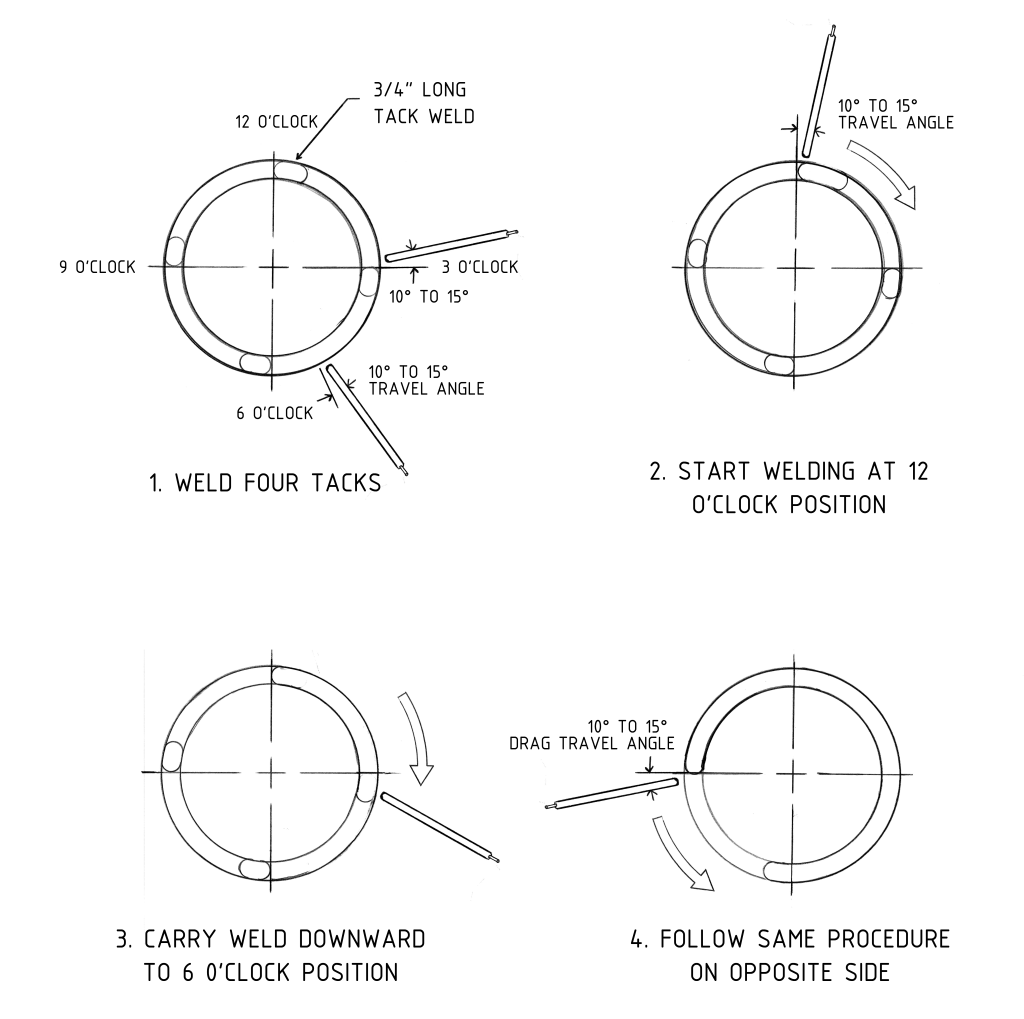
Beyond Pipelines: Other Uses
While pipelines are the primary domain of downhill welding, the technique isn't exclusively used for them. It pops up in other areas where speed and efficiency are key.
Think about industrial settings where lots of pipes need to be joined quickly. It might be a good solution.
It is important to note that thickness and strength must also be considered.
Construction Sites
Sometimes, on construction sites, lighter pipes and structures may benefit from the speed of downhill welding. It can help to keep projects on schedule.
When welding supports, railings, or smaller piping systems, downhill welding can be a fast and cost-effective solution. It is important to check if the technique fits the needs of the project.
It's all about finding the right fit for the job.
The Future of Downhill Welding
As technology advances, downhill welding is likely to evolve. New techniques and materials will continue to improve the strength and efficiency of welds.
The technique might get stronger and more durable.
Who knows, maybe one day, we'll have robots doing all the welding!