
What Is The Mah On A Battery

Alright, spill the beans. You’ve definitely seen it. That cryptic little "mAh" printed on your phone battery, your wireless earbuds, maybe even your remote control. Did you ever wonder if it was some secret handshake code for battery enthusiasts? Or perhaps a magical spell to keep your devices alive?
Well, buckle up, buttercup, because we’re about to decode this tiny, mighty acronym! It’s not just a boring technical spec; it's the secret sauce that tells you how long your digital life can party without needing a plug.
So, What's the Big Deal with mAh?
Let's get straight to it. mAh stands for Milliampere-hour. Say it with me: Mill-ee-am-pair-our. Sounds super fancy, right? But honestly, it’s just a cool way to measure how much electrical charge a battery can hold.
Must Read
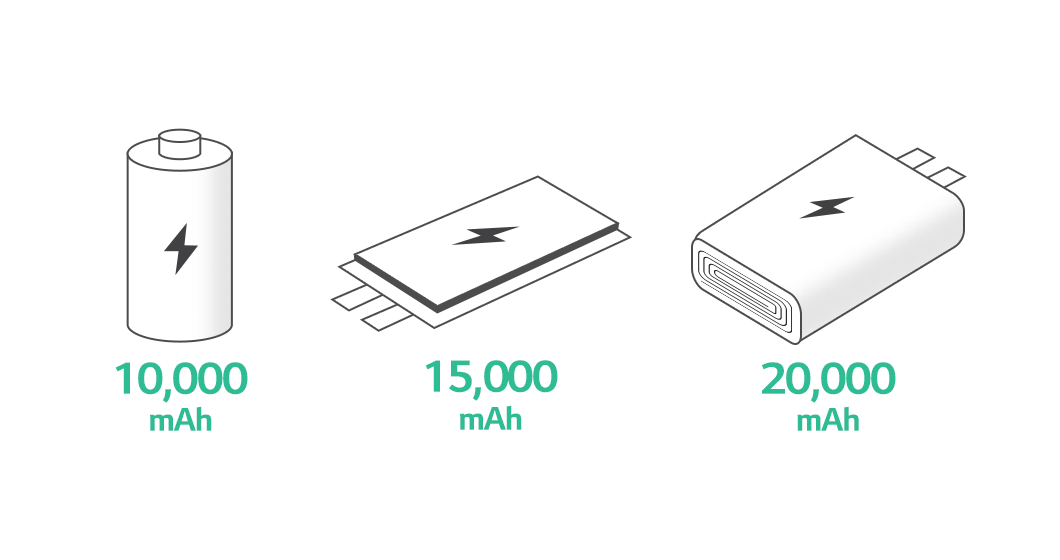
Think of your battery like a tiny, super-efficient fuel tank for your gadgets. The mAh number? That’s its fuel capacity! A bigger number means a bigger tank, which means more juice for your device. More juice = more fun, less anxiety!
Why Does This "Fuel Tank" Matter?
Imagine you’re comparing two phones. One has a 3,000 mAh battery, and the other boasts a whopping 5,000 mAh. Which one will last longer when you're endlessly scrolling through dog videos or lost in a gaming marathon? You guessed it! The 5,000 mAh one is the marathon runner, while the 3,000 mAh is more of a quick sprinter.
This isn't just about phones, though. Ever wonder why your little earbuds seem to die faster than a forgotten houseplant? Check their mAh! They’ve got tiny batteries, often just 50-100 mAh per bud. That’s why their charging case, with its bigger mAh, is like their personal, portable energy drink.
The Quirky Side of mAh!
Here’s a fun fact: the "milli" in mAh means one-thousandth. So, one Ampere-hour (Ah) is equal to 1,000 mAh. Why use "milli"? Because most of our everyday gadgets use such small amounts of power that describing them in full Ampere-hours would give us super tiny, annoying decimal numbers. Who wants to say "0.05 Ah" when you can say "50 mAh" and sound way cooler?
It's like measuring a tiny ant's weight in kilograms – technically possible, but totally impractical and a bit silly!

Did you know the earliest portable batteries were clunky, lead-acid behemoths? We've come a long way from carrying a car battery in our pocket just to make a call! Modern lithium-ion batteries pack an incredible amount of mAh into a shockingly small and lightweight package. It's truly a marvel of tiny engineering.
How Long Will It REALLY Last? (The "Hour" Part)
The "hour" in Milliampere-hour tells us something crucial. If a battery is rated at, say, 3,000 mAh, it means it can theoretically supply 3,000 milliamps of current for one hour. Or, it could supply 1,500 milliamps for two hours, or 300 milliamps for ten hours.
It’s like saying your car has a 50-liter fuel tank. If you burn 5 liters an hour, it lasts 10 hours. If you burn 10 liters an hour (pedal to the metal!), it only lasts 5 hours. Your device’s power consumption is like the gas pedal!
So, a high mAh number is fantastic, but how quickly your device sips that power also matters. A super-efficient phone might last longer on 4,000 mAh than a power-hungry gaming beast does on 5,000 mAh. It's a dance between battery size and device efficiency!
Don't Confuse It with Voltage (V)!
Quick detour! You might also see a "V" (for Volts) on your battery. Think of Volts as the pressure or oomph behind the electricity, like the water pressure in a hose. mAh, on the other hand, is the volume of water in the tank. Both are super important, but they measure different things. They're a team, not competitors!
Why This Is Actually Kinda Fun
Understanding mAh isn't just about technical jargon. It empowers you! When you’re shopping for new gadgets, you can now confidently compare battery life like a pro. No more guessing games! You'll be the one at the dinner party casually dropping knowledge about battery capacities. "Oh, my new smartwatch has a surprisingly decent 300 mAh, so it lasts all day, unlike some of those wimpy 150 mAh ones." Impressive!

It's like finally understanding a secret language that's been hiding in plain sight. It gives you a little peek into the invisible world of electricity powering your everyday life.
The Takeaway?
So, the next time you spot that "mAh" on a battery, give it a knowing nod. You're no longer staring at a mystery code. You're looking at the fuel tank capacity of your favorite device, ready to power your adventures, your endless scrolls, and your impromptu dance parties.
Go forth and embrace the power of Milliampere-hour! Your gadgets (and your sanity) will thank you.