What Is The Lowest Common Factor Of 12 And 15
Have you ever wondered how to share a pizza perfectly, ensuring everyone gets an equal slice? Or perhaps how to schedule events so they align nicely? That's where the concept of the Lowest Common Multiple (LCM) comes into play! It might sound like math jargon, but it’s a super useful tool that can simplify many everyday situations. In this article, we’ll explore the LCM of 12 and 15, uncovering why it's relevant and even a bit fun to learn.
So, what exactly is the Lowest Common Multiple? Simply put, it’s the smallest positive number that is a multiple of two or more given numbers. Think of it like finding the smallest overlapping point in their multiplication tables. It’s a foundation in number theory and helps us understand the relationships between numbers.
Why bother learning about it? Well, the LCM has several practical benefits. Its primary purpose is to find a common denominator when adding or subtracting fractions. Imagine you’re trying to add 1/12 and 1/15. Figuring out the LCM of 12 and 15 allows you to easily convert both fractions to have the same denominator, making the addition straightforward. This alone makes it a valuable skill in math class!
Must Read
Beyond fractions, the LCM pops up in all sorts of unexpected places. In scheduling, for example, imagine you have a friend who visits every 12 days and another who visits every 15 days. The LCM of 12 and 15 tells you how many days will pass before they both visit on the same day. This is incredibly useful for coordinating events or understanding cyclical patterns. Another example could be in a factory setting. Suppose one machine completes a cycle in 12 seconds and another in 15 seconds. Understanding when they will both be at the start of their cycles simultaneously can help optimize the production line.
Now, let's get down to finding the LCM of 12 and 15. There are a couple of ways to do this. One method is to list the multiples of each number:
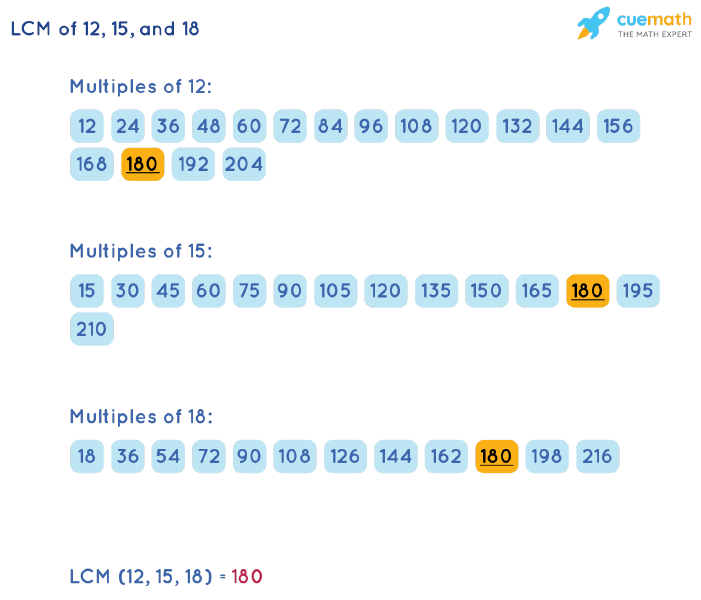
- Multiples of 12: 12, 24, 36, 48, 60, 72...
- Multiples of 15: 15, 30, 45, 60, 75...
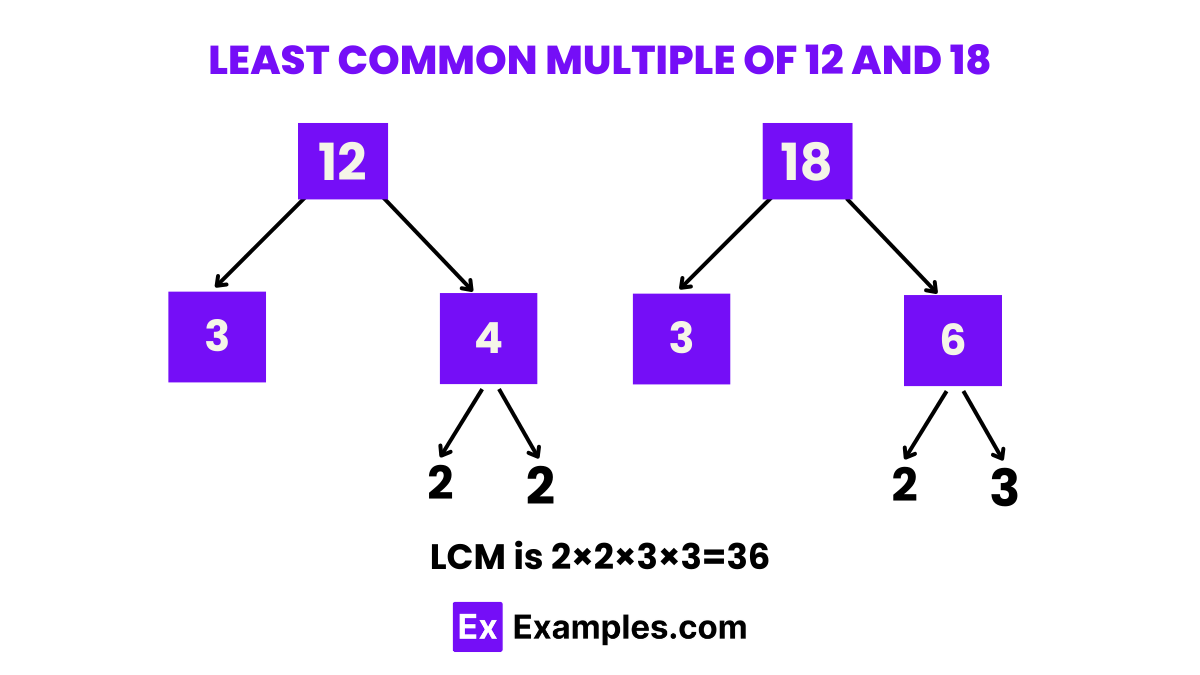
- 12 = 2 x 2 x 3 = 22 x 3
- 15 = 3 x 5

Want to explore further? Try finding the LCM of other pairs of numbers. You can use online calculators to check your answers. Challenge yourself with larger numbers to practice prime factorization. Look around you – can you identify any situations in your own life where understanding the LCM might be helpful? Playing with numbers and applying these concepts is the best way to solidify your understanding.
Ultimately, understanding the Lowest Common Multiple isn't just about memorizing a math concept. It’s about developing your problem-solving skills and seeing the underlying patterns in the world around you. So, embrace the challenge, and have fun exploring the fascinating world of numbers!