
What Is The Least Common Multiple Of 5 And 20
Okay, let's talk numbers. Specifically, the Least Common Multiple of 5 and 20. Sounds intimidating, right? Like something you'd run screaming from in a math class?
Well, hold your horses. It’s actually pretty straightforward. But first, an unpopular opinion: I think math gets a bad rap. It’s like broccoli. Everyone says they hate it, but secretly, some of us...well, maybe not secretly love it, but appreciate its usefulness.
Anyway, back to 5 and 20. We’re hunting for a number. A special number. It needs to be divisible by both 5 and 20. Cleanly divisible. No leftovers. Think of it like sharing cookies. You want everyone to get a whole cookie, not some crumbly, broken mess.
Must Read
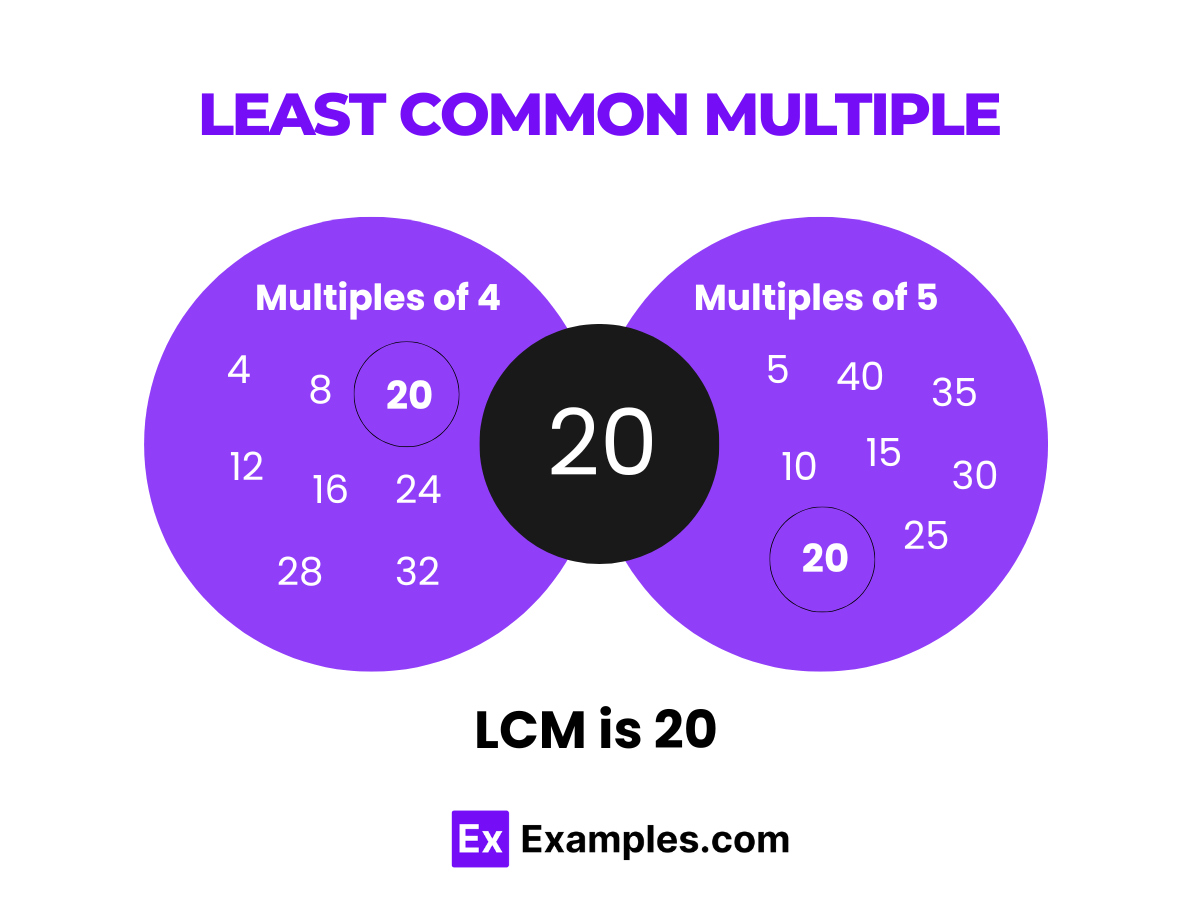
So, what could it be? Let's start with multiples of 5. We have 5, 10, 15, 20, 25, 30... and so on. Now, let's look at multiples of 20. We have…well, just 20. Then 40. Then 60. You get the picture.
See anything familiar?

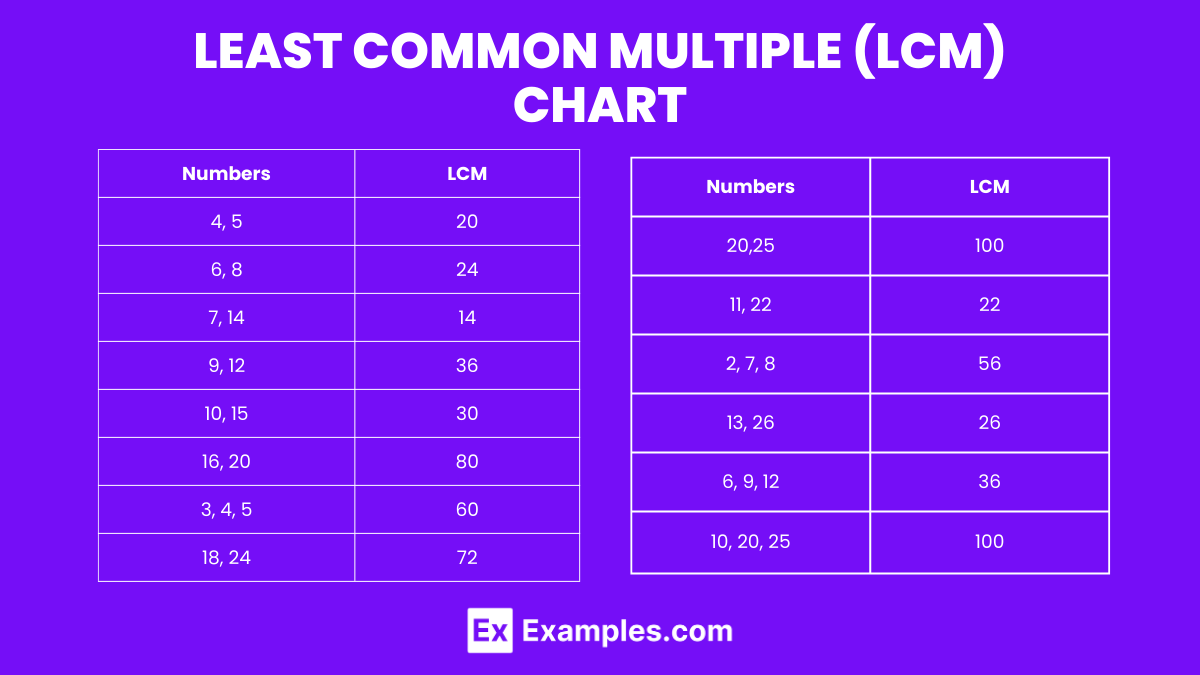
Yep. 20 shows up in both lists. Ta-da! That's it. The Least Common Multiple of 5 and 20 is, drumroll please… 20.
Now, some of you might be thinking, "That was too easy!" And you're right. It was. That’s because 20 is already a multiple of 5. It's like finding your keys already hanging on the key rack. No frantic searching needed. Score!
A Brief Interruption: Why Bother?
Okay, I know what you're thinking now: "When am I ever going to use this in real life?" Valid question. It's not like you're going to walk into a grocery store and the cashier is going to quiz you on LCMs before you can buy your avocados. (Although, that would be a memorable shopping experience.)

But LCMs are secretly useful. Think about scheduling. Let's say you need to take your dog, Fido, for a walk every 5 days, and clean his cage every 20 days. The Least Common Multiple (20) tells you when both events will happen on the same day. So every 20 days, you’ll be juggling dog walking and cage cleaning. Fun times!
Or think about fractions. Trying to add 1/5 and 1/20? Finding the LCM is the secret ingredient to getting a common denominator and making those fractions play nice together.
So, yeah, LCMs have sneaky real-world applications. But mostly, they're just kind of neat.
Back to 5 and 20: The Underdogs
Let's give 5 and 20 some credit. They're not the flashiest numbers. They're not prime numbers causing a stir. They're just...reliable. 5 is a classic. 20 is practical (you can easily split a twenty-dollar bill). They’re the unsung heroes of the number world.
And finding their Least Common Multiple isn’t scary. It's actually…dare I say it… fun? Okay, maybe not “jumping-up-and-down-with-glee” fun, but definitely “mildly satisfying, like finally matching all your socks” fun.
So next time you see a 5 and a 20 hanging out, remember their special connection. They share a multiple. They're friends. And you, my friend, now know their secret.
And if anyone ever asks you the Least Common Multiple of 5 and 20, you can confidently say, "It's 20!" And then maybe wink. Because you're cool like that.
Now, if you'll excuse me, I need to go calculate the LCM of... just kidding! I'm going to watch TV.