
What Is The Least Common Multiple Of 30 And 40
Alright, gather 'round, friends! Let's talk numbers. Not just any numbers, mind you. We're diving into the fascinating, sometimes bewildering, world of the Least Common Multiple, or LCM for those in the know. Today's stars of the show? The dynamic duo: 30 and 40.
Now, I know what you're thinking: "LCM? Sounds like a disease I caught on vacation!" Fear not! It's much less unpleasant, and doesn't require any questionable creams. Think of it as a number puzzle, a mathematical scavenger hunt, a... well, okay, maybe it's not that exciting, but stick with me! I promise to make this as painless (and possibly as hilarious) as possible.
So, What Is This Least Common Multiple Thingamajig?
Simply put, the LCM is the smallest number that both 30 and 40 can divide into evenly. It's like finding the first time 30 and 40 can agree on a meeting point on the number line. Think of them as two trains leaving the station, each chugging along at a different speed (30 mph and 40 mph, respectively, if you want to get technical). The LCM is where they first meet up again.
Must Read
Imagine 30 and 40 are actually really stubborn goats. They both want to reach the same patch of delicious clover. The LCM is the location of that clover patch, and it represents the least amount of effort those grumpy goats need to expend to get there and start their clover feast!
Finding the LCM: Adventures in Divisibility!
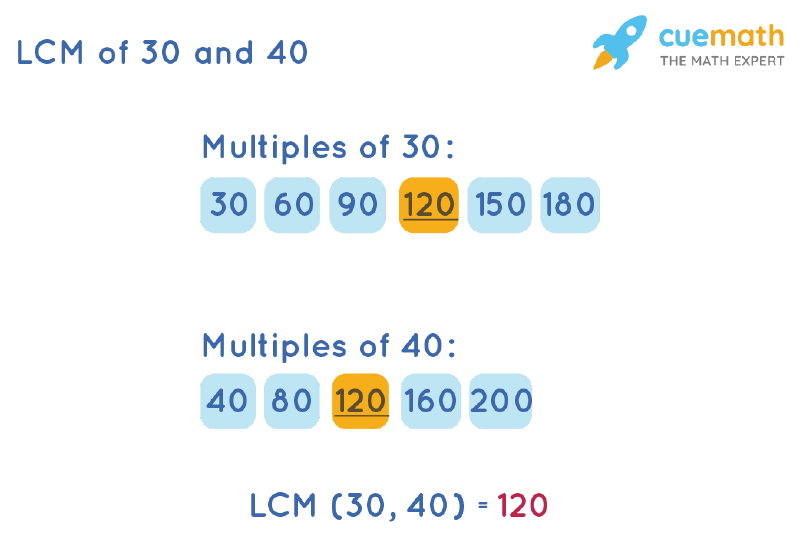
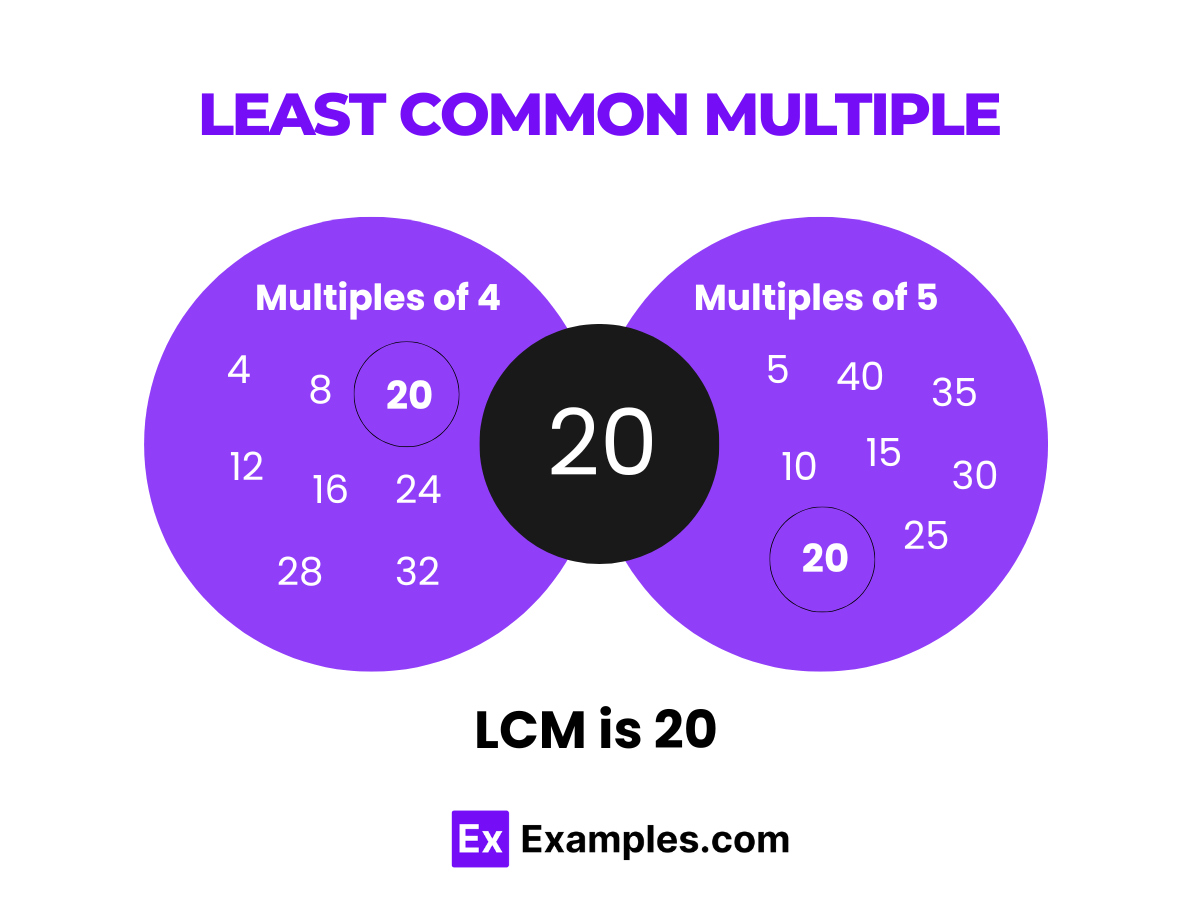
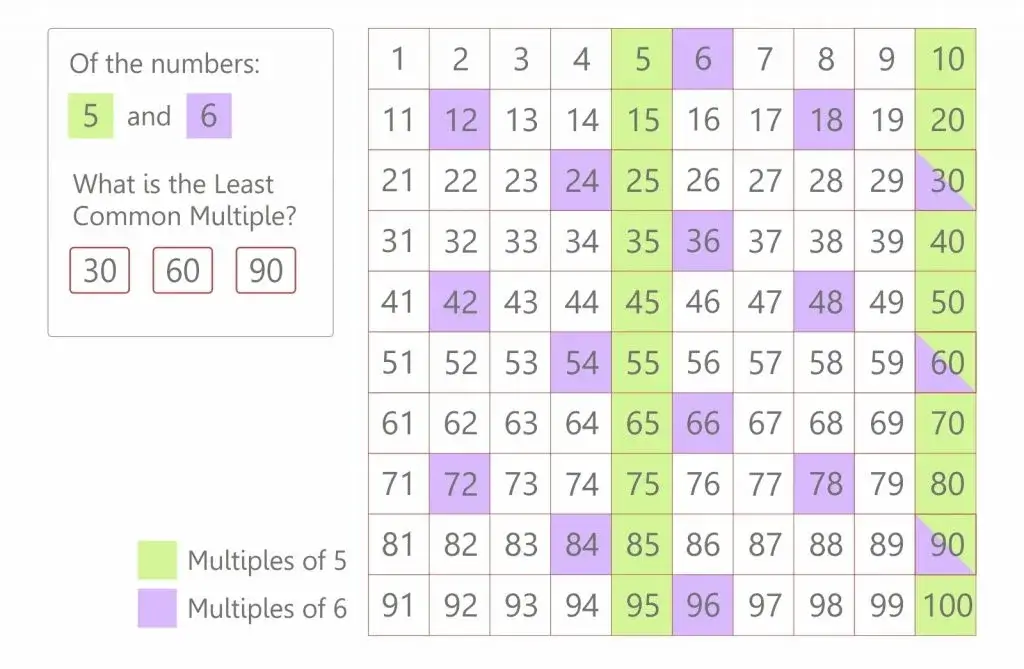
There are a few ways to track down this elusive LCM. One method involves listing out multiples. We're talking about writing down the 30 times table and the 40 times table until we find a number that appears on both lists.
30, 60, 90, 120... keep going, keep going...

40, 80, 120... Aha! We have a winner!
It’s like playing bingo, but with numbers instead of letters, and way fewer little old ladies. (Unless you're reading this at a bingo hall, in which case, my deepest apologies to the little old ladies.)
Therefore, 120 is a common multiple of 30 and 40. But hold your horses (or goats, depending on your preferred farm animal)! We need the least common multiple. In this case, 120 is indeed the smallest, so we're good!
Prime Factorization: The Superhero Approach
If listing multiples sounds too… pedestrian, we can call in the superheroes of number theory: prime factorization. This involves breaking down 30 and 40 into their prime building blocks.
Think of it like dismantling a LEGO castle to see which individual bricks were used. Prime numbers are the indivisible bricks; they can only be divided by 1 and themselves.
So:
- 30 = 2 x 3 x 5
- 40 = 2 x 2 x 2 x 5
To find the LCM, we need to include every prime factor that appears in either number, and with the highest power it appears. In other words, we take all the bricks we need to build either castle, making sure we have enough of each type.
We have one 3 (from the 30), three 2s (from the 40), and one 5 (from both). Thus, the LCM is 2 x 2 x 2 x 3 x 5 = 120. Ta-da!
Why Should I Care About the LCM? (The "Real-World" Bit)
Okay, so you've learned how to find the LCM of 30 and 40. But why should you care? Does knowing this tidbit of mathematical wizardry grant you superpowers? Will it suddenly make you irresistible to… well, anyone?
Probably not. But the LCM does have practical uses! For example, it can be handy when adding fractions with different denominators. Instead of dealing with monstrously large numbers, you can use the LCM as the common denominator, making your calculations much easier. Trust me, your sanity will thank you.
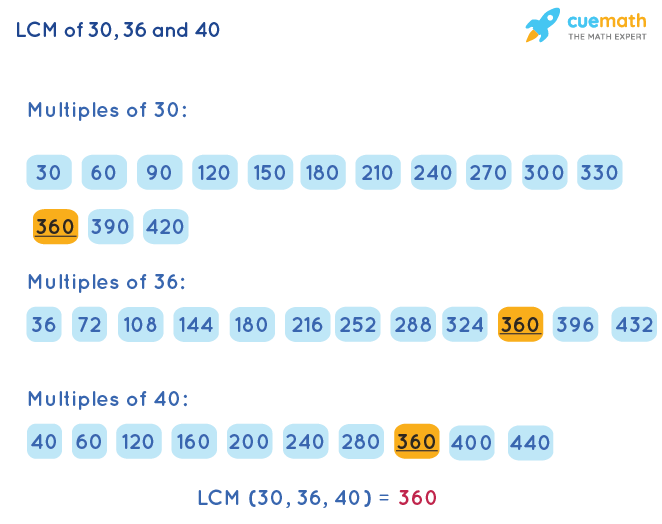
Imagine you're a pastry chef (we all have dreams, right?). You need to figure out how many batches of cookies to make to use up all your ingredients. If one recipe calls for 30 grams of chocolate chips and another for 40 grams, knowing the LCM can help you scale the recipes appropriately so you don't end up with mountains of leftover chocolate chips or, heaven forbid, a chocolate chip shortage.
In Conclusion (and a Really Bad Joke)
So there you have it: the not-so-secret life of the Least Common Multiple of 30 and 40. It's 120! It’s a number that's divisible by both, and it's the smallest number that fits the bill. It's a mathematical concept that’s surprisingly useful, even if you don't realize it.
Now, for that joke I promised (brace yourselves): Why did the two 4's skip lunch? Because they already 8!
Thanks for playing along! Now go forth and LCM with confidence! Or, you know, just order a pizza. That works too.