
What Is The Least Common Multiple Of 18 And 20
Okay, let's talk about the Least Common Multiple, or LCM, of 18 and 20. Now, I know what you might be thinking: "Math? Fun?" But trust me, the LCM is like a secret decoder ring for solving everyday problems, and cracking this code is surprisingly satisfying! It's all about finding the smallest number that both 18 and 20 can divide into evenly. So, buckle up; we're about to make math a little less scary and a lot more practical.
So, why should you care about the LCM? Well, for beginners, understanding the LCM builds a strong foundation in number theory. It helps you grasp concepts like factors, multiples, and divisibility rules, which are crucial for more advanced math down the line. Mastering the LCM can make fractions and algebra much easier to understand. For families, think about planning a party. Imagine you're buying hot dogs that come in packs of 18 and buns that come in packs of 20. The LCM of 18 and 20 (which we'll figure out soon!) will tell you the minimum number of hot dog and bun packs you need to buy to have exactly the same number of each. No leftover hot dogs or buns! And for hobbyists, like those into woodworking or tiling, understanding LCM is invaluable for planning layouts and ensuring materials fit together perfectly without waste.
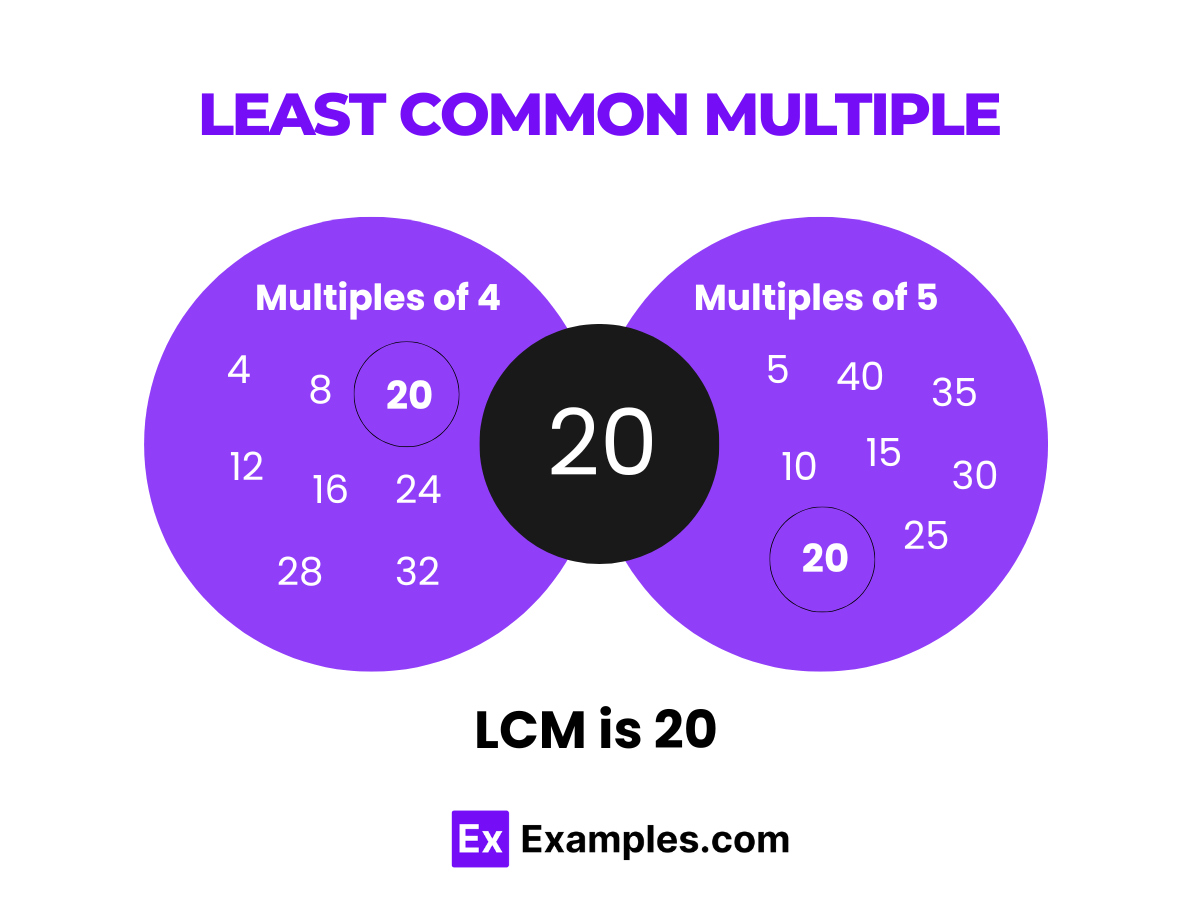
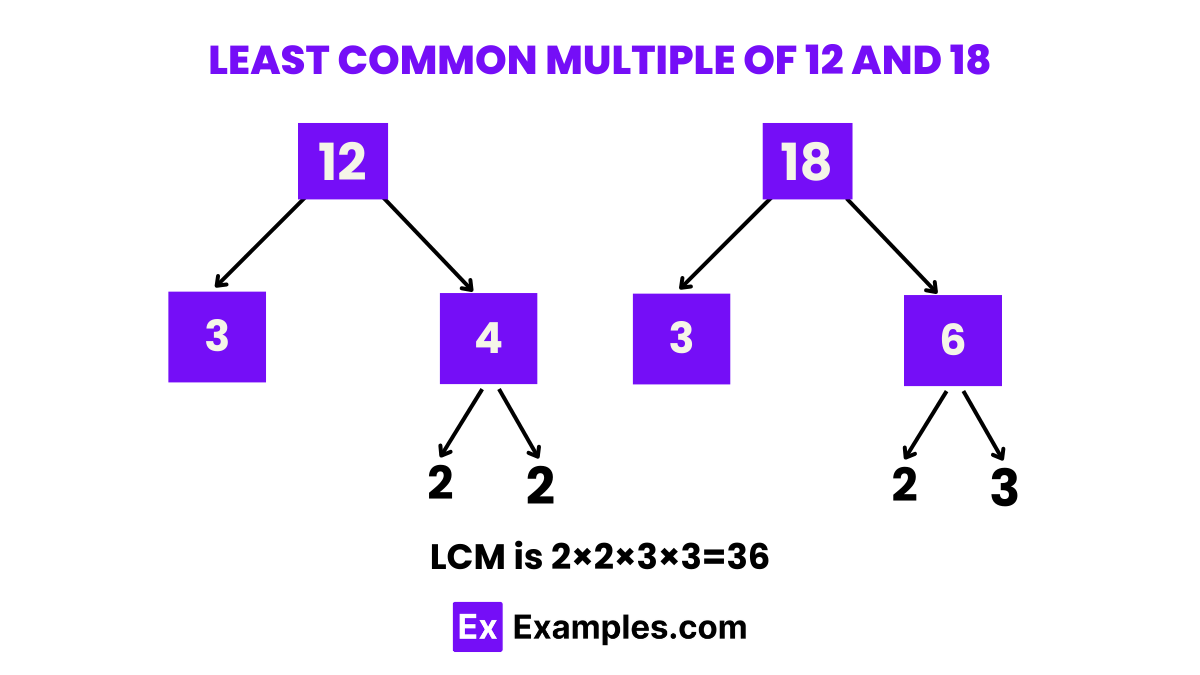
Let's find that LCM of 18 and 20! There are a couple of easy ways to do it. One way is to list out the multiples of each number until you find a common one. Multiples of 18: 18, 36, 54, 72, 90, 108, 126, 144, 162, 180... Multiples of 20: 20, 40, 60, 80, 100, 120, 140, 160, 180... Aha! We found a common multiple: 180. That's our LCM! Another method is prime factorization. Break down 18 into 2 x 3 x 3, and 20 into 2 x 2 x 5. Then, take the highest power of each prime factor: 2² x 3² x 5 = 4 x 9 x 5 = 180. Either way, the answer is 180!
Must Read
Let’s consider a variation. What if we were finding the LCM of 6 and 8? Using the listing method, multiples of 6: 6, 12, 18, 24... Multiples of 8: 8, 16, 24... The LCM is 24. Alternatively, using prime factorization, 6 = 2 x 3 and 8 = 2 x 2 x 2 = 2³. Taking the highest power of each prime factor: 2³ x 3 = 8 x 3 = 24. See? The process stays the same!
Ready to try it yourself? Here are a few practical tips. First, start with small numbers to get comfortable with the concept. Second, use a calculator if the numbers get large to avoid errors in multiplication. Third, practice, practice, practice! The more you work with LCM problems, the faster and more confident you'll become. Start with pairs of numbers and then try to find the LCM of three or more numbers. Don't be afraid to make mistakes; that's how we learn!
Finding the Least Common Multiple might seem like a dry math exercise, but it's actually a surprisingly useful skill that can simplify all sorts of real-world problems. Whether you're planning a party, tackling a DIY project, or just want to sharpen your math skills, understanding the LCM is a valuable tool to have in your toolbox. So, go ahead, give it a try! You might just find that you enjoy the satisfaction of solving these little mathematical puzzles.

/Activities/Guide62_LeastCommonMultiple-Example-1_v1.png)
