What Is The Law Of The Conservation Of Energy

Ever wondered where energy really goes when you turn off a light, or when a car stops moving? It’s not just poof, gone, never to be seen again! That's where the Law of the Conservation of Energy comes in. Think of it as the ultimate energy accounting principle of the universe. Understanding this law isn't just some abstract science lesson; it's a fundamental key to understanding how the world around us works. And let's be honest, unlocking the secrets of the universe, even in a small way, is pretty darn cool.
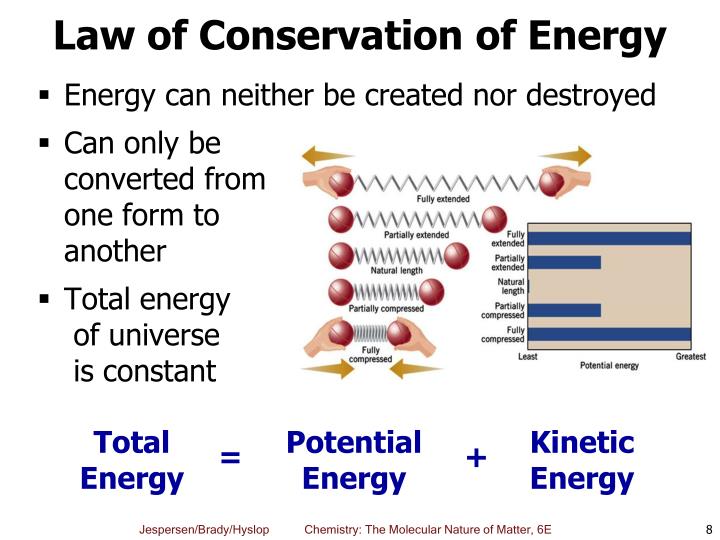
So, what exactly is this law? In simple terms, the Law of the Conservation of Energy states that energy cannot be created or destroyed, but it can be transformed from one form to another or transferred from one object to another. The total amount of energy in an isolated system remains constant. Think of it like this: you have a certain amount of money in your bank account. You can move that money around – from savings to checking, maybe invest it – but the total amount of money you have stays the same, unless you add or take some away. The universe is like that bank account, only with energy instead of money!
The purpose and benefits of understanding this law are numerous. Firstly, it helps us predict and explain natural phenomena. Knowing energy isn't lost, just converted, allows scientists and engineers to design everything from efficient engines to sustainable power sources. Secondly, it's crucial for understanding the limitations of what's possible. Perpetual motion machines? Nice idea, but impossible because energy is always being converted into less useful forms, like heat. The law of conservation of energy also helps us to better understand energy efficiency. It can help us in our daily lives to make better choices such as reducing unnecessary energy consumption and supporting renewable energy sources.
Must Read
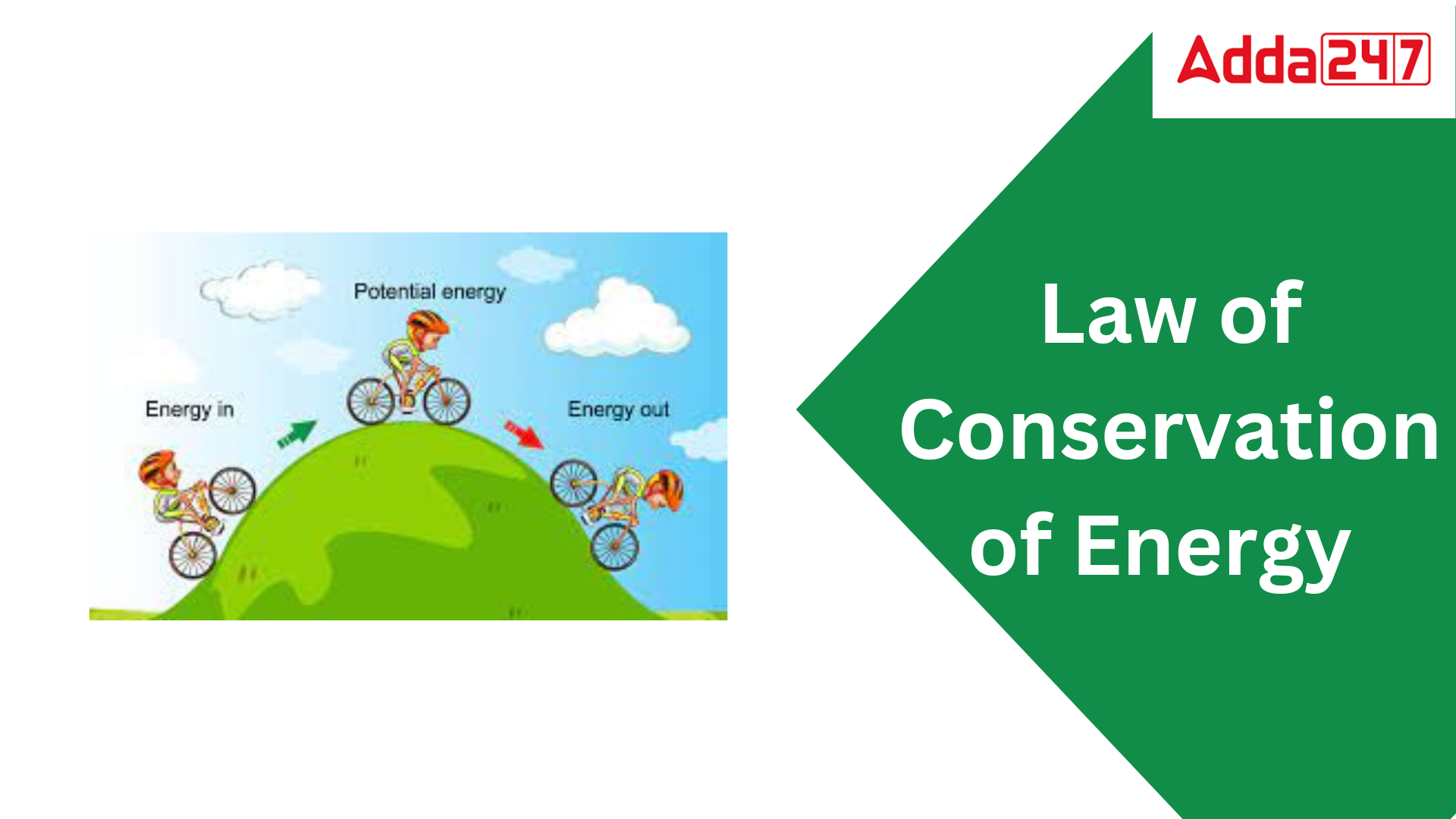
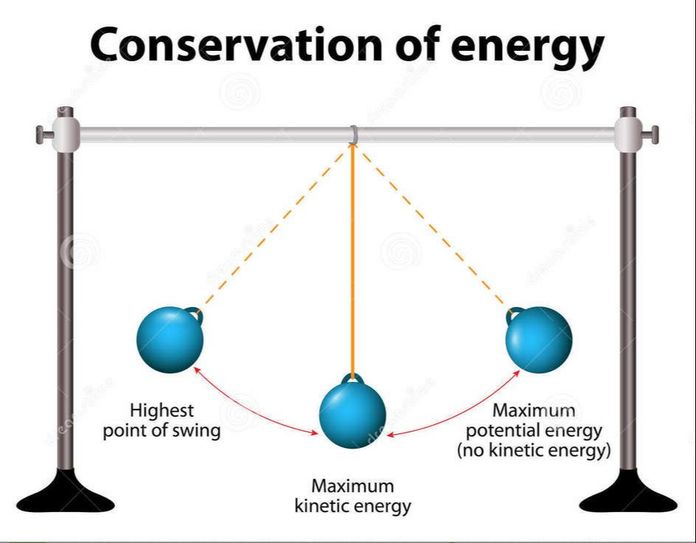
You see examples of the Law of Conservation of Energy every day. In education, physics students use it to solve problems related to motion, heat, and electricity. A classic example is analyzing a roller coaster. At the top of a hill, the coaster has maximum potential energy. As it plunges down, that potential energy is converted into kinetic energy, the energy of motion. At the bottom, most of the potential energy is now kinetic energy. In daily life, consider a light bulb. Electrical energy is transformed into light and heat. A car engine converts the chemical energy stored in gasoline into kinetic energy to move the car and thermal energy (heat). Even when you exercise, your body is converting the chemical energy in food into kinetic energy for movement and thermal energy to keep you warm.
Want to explore this concept further? Here are a few simple ideas: Bounce a ball. Notice how it doesn't bounce back to the same height each time? That's because some of the kinetic energy is being converted into sound and heat due to friction. Rub your hands together quickly. Feel the heat? You're converting mechanical energy (your hand movements) into thermal energy. Observe solar panels. They convert light energy from the sun into electrical energy. Understanding energy conservation is like having a superpower: the power to see the invisible transformations happening all around you!