What Is The Ideal Heat Temperature Inside A House
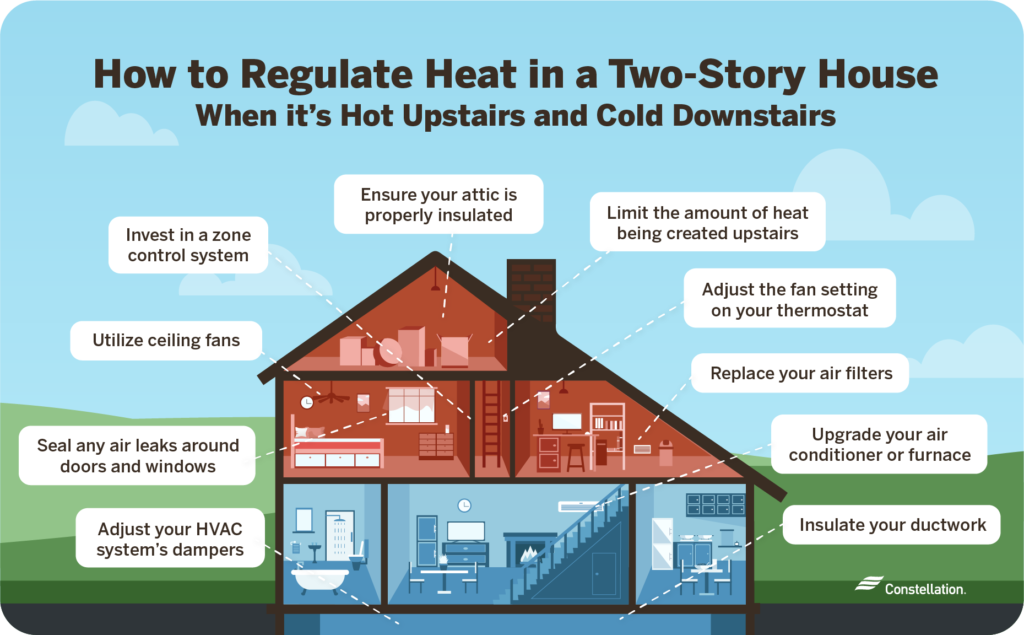
Ah, the eternal quest for the Goldilocks zone of indoor temperature. Not too hot, not too cold, but just right. It's a battle fought in households across the land, a silent war waged with thermostats as our weapons. Finding that sweet spot can feel like searching for a mythical unicorn that also pays your bills.
Think about it. You’re curled up on the couch, finally ready to binge-watch that show everyone’s been raving about. Suddenly, a shiver runs down your spine. "Ugh, Antarctica in here!" you mutter, reaching for a blanket that could double as a small horse. Or, conversely, you're trying to concentrate on work, and you feel like you're melting into your chair, imagining you're a human-sized popsicle on a particularly bad day. We've all been there, haven't we?
So, What's the Magic Number?
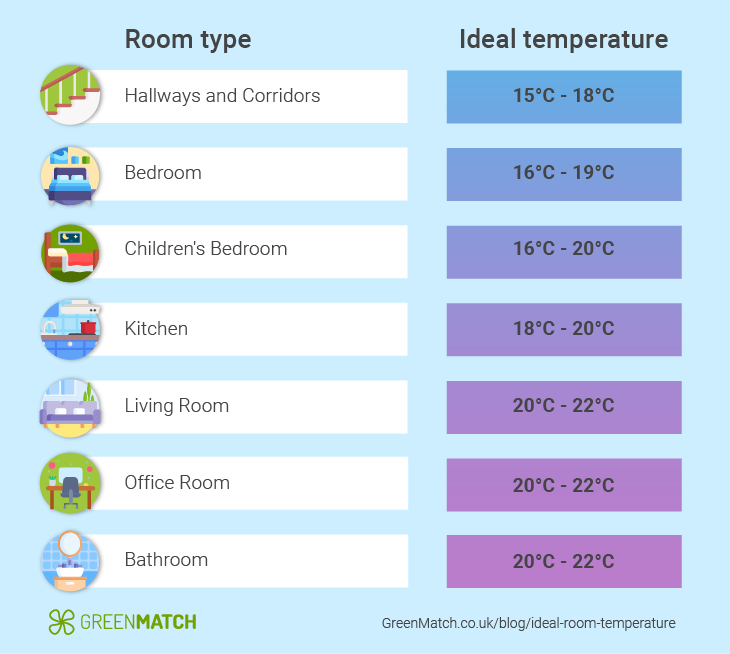
Generally speaking, most experts (and by experts, I mean people who get paid to think about this stuff) recommend a temperature between 68 and 72 degrees Fahrenheit (20-22 degrees Celsius) when you're home and awake. Think of it as the temperature equivalent of a perfectly brewed cup of coffee – warm, comforting, and ready to tackle the day (or, you know, that next episode).
Must Read
But here's the thing: that's just a guideline. A suggestion. A gentle nudge in the right direction. The ideal temperature is as unique as your fingerprint (or your taste in reality TV). What feels like a cozy paradise to one person might feel like a sweaty sauna to another.
I remember once visiting my Aunt Mildred. Her house was always set to what I lovingly referred to as "tropical rainforest" levels. I swear I saw a small frog hopping around near the thermostat. She claimed it was good for her circulation. I mostly claimed it was good for making me question my life choices.
Factors That Affect Your Thermal Nirvana
Several sneaky little factors can influence what feels like the perfect temperature for you.
Clothing: Wearing a polar bear suit indoors? Maybe you can get away with a cooler temp. Rocking a t-shirt and shorts in December? Crank up the heat, my friend.
Activity Level: Lounging on the couch requires a different temperature than, say, doing a high-intensity workout in your living room (although, why would you do that?).

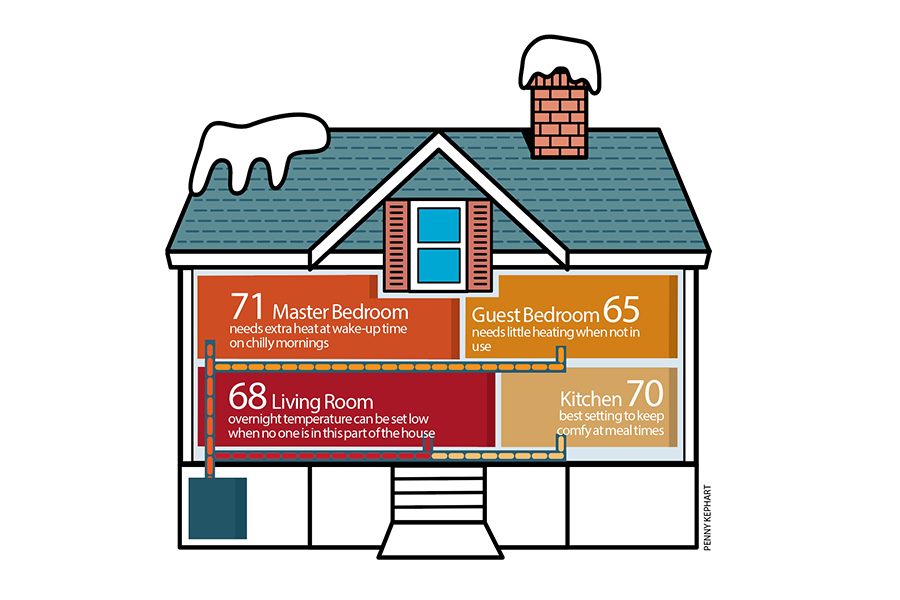
Time of Day: It’s perfectly acceptable (and even encouraged!) to lower the temperature when you’re asleep. Think of it as giving your furnace a little vacation. Plus, it can save you money on your energy bill! A win-win.
Personal Preferences: Some people just run hotter or colder than others. It’s a biological mystery, like why some people enjoy cilantro. (Seriously, what's up with that?)
The Thermostat Tango: A Dance of Compromise
If you live with other humans, you’re probably familiar with the "Thermostat Tango." It's a delicate dance of negotiation, compromise, and the occasional passive-aggressive note left near the thermostat ("Please don't turn it up to 'broiling,' thanks!").
The key is communication (gasp!). Try to understand each other's preferences and find a middle ground. Maybe one person wears an extra sweater, or the other cracks a window. Maybe you just agree to disagree and divide the house into temperature zones (the "cold zone" is usually the basement, occupied by teenagers).
Ultimately, the ideal heat temperature inside your house is the one that makes you feel comfortable, without bankrupting you or turning your home into a biohazard. Experiment, adjust, and remember that there's no one-size-fits-all answer. And hey, if all else fails, just move to a tropical island. Problem solved!