
What Is The Energy Transformation In A Windmill
Have you ever stood beneath a giant windmill, its blades whooshing overhead, and thought, "Wow, that's... wind. Doing stuff."? You're not wrong! But what that "stuff" is, and how it happens, is a surprisingly neat little story of energy doing a cha-cha.
From Blustery Breeze to Bright Lights
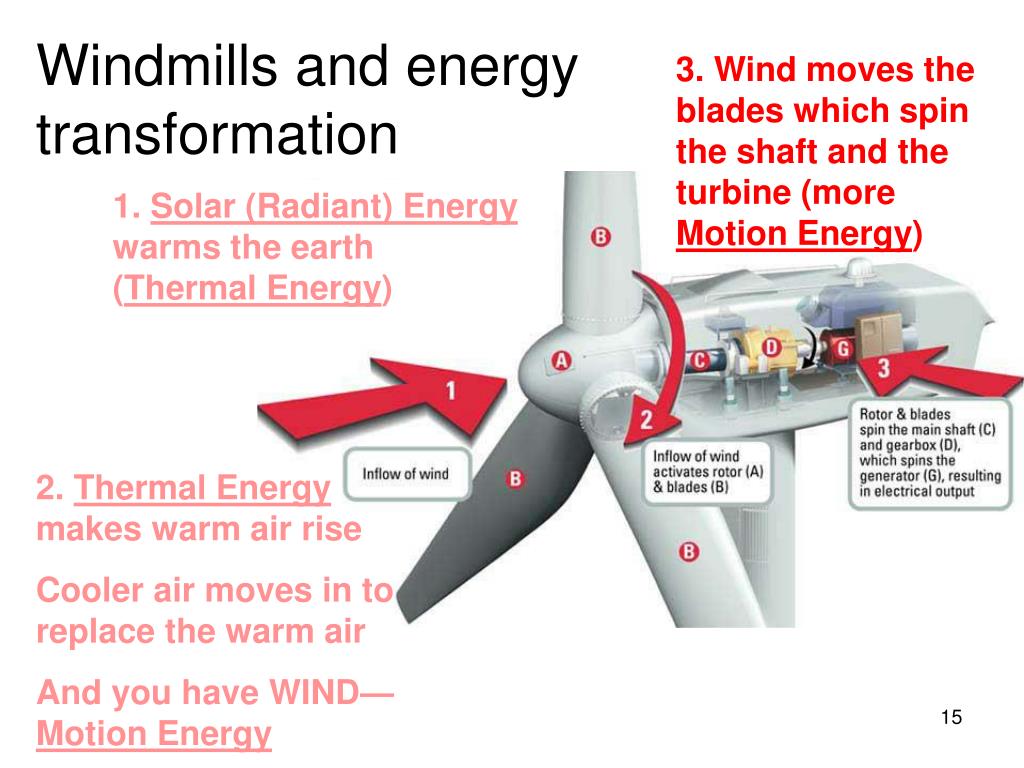
The basic idea is simple. Windmills, or wind turbines as the really serious folks call them, are essentially converting kinetic energy - the energy of motion - into something we can actually use, like electricity. Imagine trying to power your phone by flapping a newspaper really, really fast. That's kind of what the wind is doing, except it's way better at it and doesn't get tired.
The wind pushes against those giant blades. Now, those blades aren't just hanging out there for a scenic view. They're connected to a central shaft inside the turbine. As the wind pushes, the blades spin, and so does that shaft. Think of it like blowing on a pinwheel. The harder you blow, the faster the pinwheel goes. Same principle, just on a massively bigger (and infinitely cooler) scale.
Must Read
This spinning shaft is the key. It's directly linked to a generator. Now, a generator isn't some grumpy old guy yelling at the wind. It's a clever piece of machinery that takes mechanical energy - that spinning motion - and converts it into electrical energy.
The Generator's Secret Sauce
How does a generator pull off this magical transformation? Well, without getting too bogged down in the electron dance, it involves magnets and coils of wire. When a magnet spins near a coil of wire, it creates an electric current. That's electricity! It's like they're having a little magnetic party, and the byproduct is power for your Netflix binge.

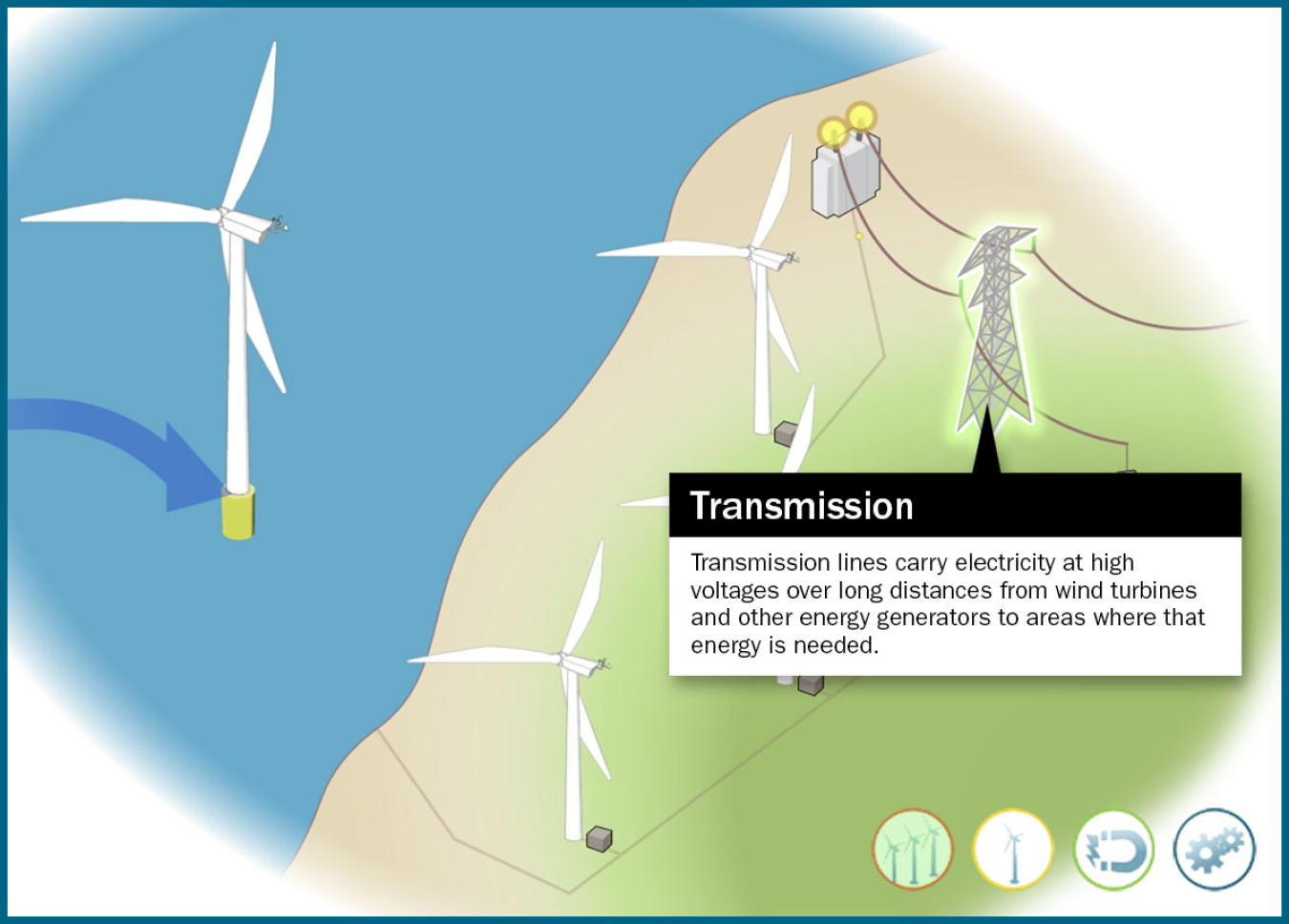
This electricity then travels down thick cables, through transformers (which are like energy translators, making sure the voltage is right), and into the power grid. From there, it's distributed to homes, businesses, and even that weirdly lit billboard you always see on the highway.
A Symphony of Conversions
So, to recap, we start with wind (kinetic energy), which spins blades (mechanical energy), which turns a generator (converting mechanical to electrical energy), which finally powers your toaster (using electrical energy to make delicious toast!). It’s a beautiful chain reaction, all powered by the air currents that are probably messing up your hair right now.
The Wind's Quirks and Charms
Of course, wind isn't always reliable. Some days it's roaring like a lion, and other days it's whispering like a shy kitten. This means wind turbines don't produce a constant stream of electricity. That's why wind power is often combined with other sources, like solar or even traditional power plants, to ensure a steady supply of energy.
But isn't it amazing to think that something as simple as the wind, something we often take for granted, can be harnessed to power our lives? It's a testament to human ingenuity and a reminder that the solutions to our energy needs might be swirling all around us, just waiting to be captured. So, next time you see a windmill, give it a little nod of appreciation. It's not just a pretty sight; it's a silent, spinning powerhouse, turning nature's breath into the electricity that keeps our world humming. And let's be honest, it's a lot quieter than that newspaper-flapping idea.
“The question is not, ‘Can they reason?’ nor, ‘Can they talk?’ but rather, ‘Can they suffer?’ And similarly, when it comes to energy, the question isn't 'Does it look cool?' But rather, 'Can it spin a turbine?'”
Because if it can spin a turbine, it can power your life!

