
What Is The Effect Of Temperature On Irradiance

Ever feel like the sun is just angrier on some days? Like it's personally offended you? You might be onto something! While the sun's inherent anger levels are debatable (probably non-existent, let's be real), the amount of solar power actually reaching us, which we call irradiance, is affected by temperature, though not in the way you might initially think.
The Sun's Temperature: A Constant (Sort Of)
Think of the sun like a giant, fiery oven set to "broil." It’s churning out energy like crazy, a process driven by nuclear fusion deep in its core. This core temperature is insanely high, and generally pretty consistent. So, if the sun's core temperature isn't changing drastically every Tuesday, why are some days brighter and warmer than others? The key isn't the sun's internal thermostat going haywire, but rather how temperature influences the kind of light it emits.
The Blackbody Radiation Curve: Party Tricks with Light
Here's where it gets a little bit physics-y, but stay with me! Scientists love to use a concept called blackbody radiation to describe how objects emit light based on their temperature. Imagine you're heating a metal rod. At first, it's just warm. Then, as you crank up the heat, it starts to glow red. Heat it even more, and it glows orange, then yellow, and eventually, if you could get it hot enough (don't try this at home!), it would glow blue-white. That color shift is all about temperature!
Must Read
The sun acts like a blackbody radiator, too! The hotter the object, the more energy it emits, and the shorter the wavelength of that energy. Shorter wavelengths mean more energetic light, like ultraviolet (UV) radiation. So, a hotter sun would theoretically emit more UV light, leading to some serious sunburns. But the sun’s temperature fluctuations are minimal, so this isn’t the main driver of daily irradiance changes.
The Earthly Filter: Atmospheric Shenanigans
The real party crashers affecting our daily dose of irradiance are right here on Earth: our atmosphere and its ever-changing temperature profiles. Think of the atmosphere as a bouncer at a club, deciding who gets in and who doesn't. On a clear, cold day, the air is often very dry and stable. This means fewer clouds, less pollution, and generally less stuff to block the sun's rays. More sunlight gets through! BAM! Higher irradiance!
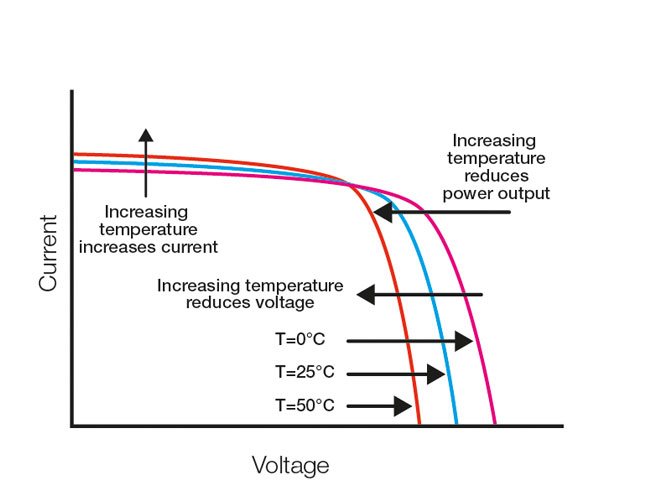
On the other hand, on a hot, humid summer day, the atmosphere is often thick with water vapor, pollutants, and developing thunderstorms. These factors can scatter and absorb sunlight, reducing the amount of irradiance reaching the ground. It's like the bouncer is having a bad day and just denying everyone entry!
Temperature Gradients: The Wind's Whims
Temperature differences in the atmosphere also create wind. Wind can stir up dust and pollutants, further scattering sunlight. A gentle breeze is nice, but a dust storm? Not so good for your solar panels (or your lungs!).

Imagine a scenario: A cold front moves in, bringing cooler, drier air and sweeping away all the smog. Suddenly, the sun feels brighter and the solar panels on your roof are singing a happy tune because they're producing more energy. That’s the effect of temperature on irradiance in action!
So, What's the Takeaway?
While the sun's own temperature plays a role in the type of light it emits, the temperature of our atmosphere has a much more dramatic and direct impact on the irradiance we experience here on Earth. Clear, cold days often lead to higher irradiance because the atmosphere is less obstructive. Hot, humid days? Not so much.
Think of irradiance like this:
"Irradiance is like sunlight's delivery service. Temperature (especially atmospheric temperature) is the traffic controller, guiding or hindering its progress."
So next time you feel like the sun is especially intense, remember it's not necessarily the sun being angrier. It's more likely the atmosphere being a better (or worse) filter for its rays. And maybe, just maybe, wear some sunscreen anyway, regardless of the irradiance. Safety first!

