
What Is The Difference Of Hurricane And Typhoon

Ever wondered what makes a hurricane and a typhoon different? It's not what you might think! Get ready to have your weather-related world rocked!
Spinning Giants: A Tale of Two Storms
Imagine two colossal storms, swirling with incredible power. One might be called a hurricane. The other, perhaps, a typhoon. But are they really that different?
The short answer? Not really! They are essentially the same beast. It's all about location, location, location!
Must Read
Location, Location, Location!
Think of it like ordering the same delicious pizza. You might call it a "pizza" in one place. Another place could call it a "pie." Same great taste, different name!
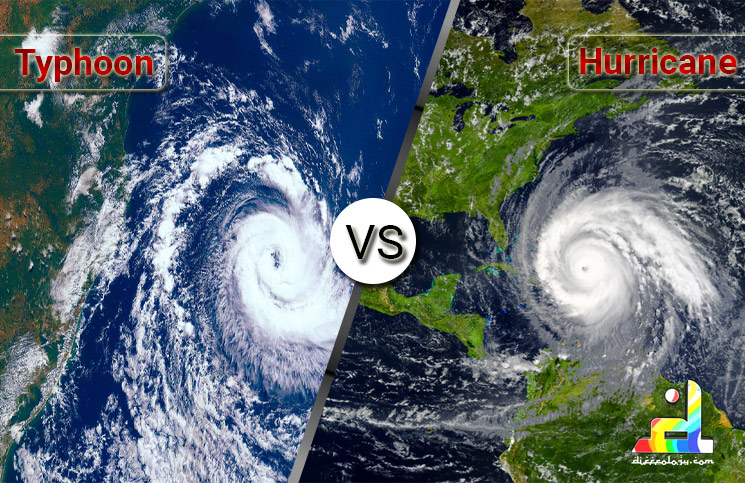
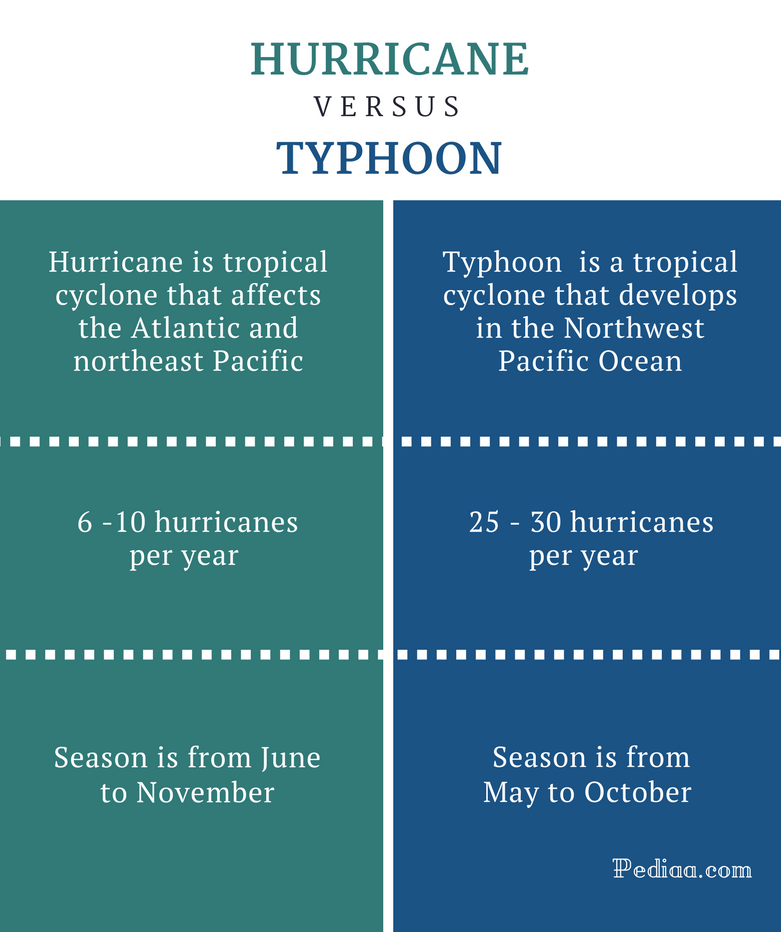
Hurricanes are those powerful storms that form over the Atlantic Ocean and the northeastern Pacific Ocean. They bring intense winds and torrential rain.
Now, picture the northwestern Pacific Ocean. That's where you'll find typhoons brewing. Same storm, different ocean, different name.
Wind Speed: The Common Language
Regardless of whether it's a hurricane or a typhoon, wind speed is the key. Once a storm reaches sustained winds of 74 miles per hour (119 kilometers per hour), it earns its title.
That’s when things get serious. Think flying debris and widespread damage!
Before reaching that wind speed, these storms are known as tropical storms. They are still dangerous, but not quite in the same league as a fully-fledged hurricane or typhoon.
Why the Different Names?
So, why the different names if they're the same thing? Well, it’s mostly historical and geographical.

Different regions developed their own terms for these storms over time. Think of it as different cultures giving different names to the same awesome force of nature!
It's like how different languages have different words for the sun. Same sun, different words!
The Science Behind the Swirl
These storms are not just random events. They are driven by warm ocean waters. Warm water is the fuel that powers these spinning giants.
As warm, moist air rises from the ocean surface, it cools and condenses. This process releases heat, fueling the storm's intensity.
The Earth's rotation also plays a crucial role. It causes the storm to spin, creating that characteristic swirling pattern we see in satellite images.
Measuring the Madness: The Saffir-Simpson Scale
To categorize hurricanes, we use the Saffir-Simpson Hurricane Wind Scale. It ranges from Category 1 to Category 5.
Category 1 storms have winds of 74-95 mph, while Category 5 storms pack winds of 157 mph or higher. That's serious business!

While the Saffir-Simpson scale technically applies to hurricanes in the Atlantic and eastern Pacific, similar scales exist for measuring the intensity of typhoons in other parts of the world.
From Tropical Depression to Monster Storm
These storms don’t just pop up overnight. They often start as tropical disturbances, areas of low pressure with disorganized thunderstorms.
If conditions are right, these disturbances can develop into tropical depressions. With continued favorable conditions, they become tropical storms and eventually hurricanes or typhoons.
It's like watching a tiny seed grow into a massive tree. It takes time, the right conditions, and a whole lot of energy!
The Impact of These Powerful Storms
Whether it's called a hurricane or a typhoon, these storms can have devastating impacts. They can cause widespread flooding, damage infrastructure, and even loss of life.
Coastal communities are particularly vulnerable. Storm surge, the abnormal rise in sea level during a storm, can inundate low-lying areas.
That's why it's so important to be prepared. Listen to weather forecasts, heed evacuation orders, and take steps to protect your home and family.
Tracking the Titans: The Role of Meteorology
Meteorologists play a vital role in tracking these storms. They use satellites, radar, and weather models to predict their paths and intensity.
Their forecasts help communities prepare for the impacts of these storms. They also provide valuable information to emergency responders.
Think of them as the storm detectives, constantly monitoring and analyzing the behavior of these powerful weather systems.
More Than Just a Name: Respect the Power
So, next time you hear about a hurricane or a typhoon, remember that they are essentially the same thing. It's all about location.
Don't get hung up on the name. Instead, focus on the potential for destruction and the importance of being prepared.
These storms are a powerful reminder of the forces of nature. They are a force to be reckoned with. Respect the power!
Staying Safe: Tips for Hurricane and Typhoon Season
Planning for storm season is essential. Start by creating a disaster preparedness kit. Gather food, water, medicine, and other supplies.
Know your evacuation routes. Listen to local authorities for guidance.
Trim trees and secure loose objects around your home. Protecting your property helps to minimize damage during the storm.
Embrace the Wonder (from a Safe Distance!)
While these storms can be incredibly dangerous, they are also fascinating. They are a testament to the power and complexity of our planet's weather systems.
Watching satellite images of these swirling giants is awe-inspiring. It's like looking at a living, breathing entity.
So, learn more about hurricanes and typhoons. Understand their impact. Prepare for their arrival. Appreciate the beauty and wonder (from a safe distance, of course!).
Dig Deeper: Expand Your Storm Knowledge
Want to learn more? Check out the websites of the National Hurricane Center and the Joint Typhoon Warning Center.
These resources provide up-to-date information on storm tracks, forecasts, and safety tips.
You can also find documentaries and educational videos that delve into the science behind these storms. Prepare to be amazed!