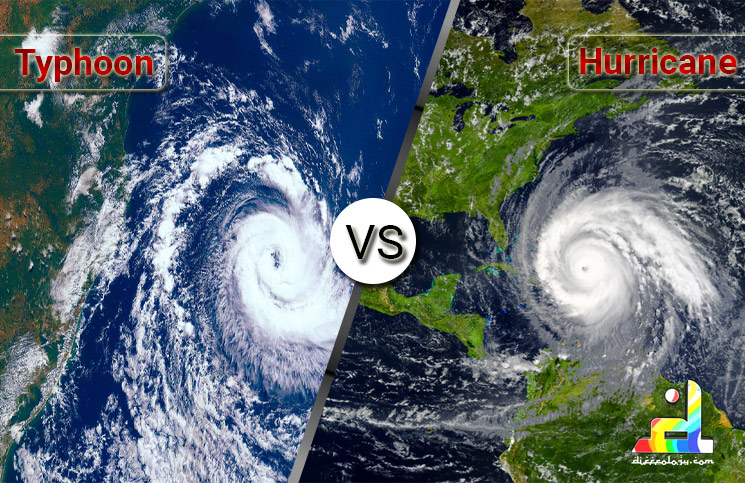
Okay, folks, gather 'round! Let's talk about nature's ultimate spinning tops – typhoons and hurricanes! Are they the same thing? Are they distant cousins? Are they just showing off with different names to confuse us? Well, hold onto your hats (literally, because these storms are windy!), because the answer is surprisingly simple.
Location, Location, Location!
Imagine you're throwing a party. You might call it a "shindig" if it's at your house, but if your friend throws the same party across town, they might call it a "hootenanny"! Same party, different name, right? That's basically what's going on with typhoons and hurricanes. They are, scientifically speaking, the same type of storm – a powerful, swirling tropical cyclone. The difference lies entirely in where these swirling dervishes decide to throw their watery party.
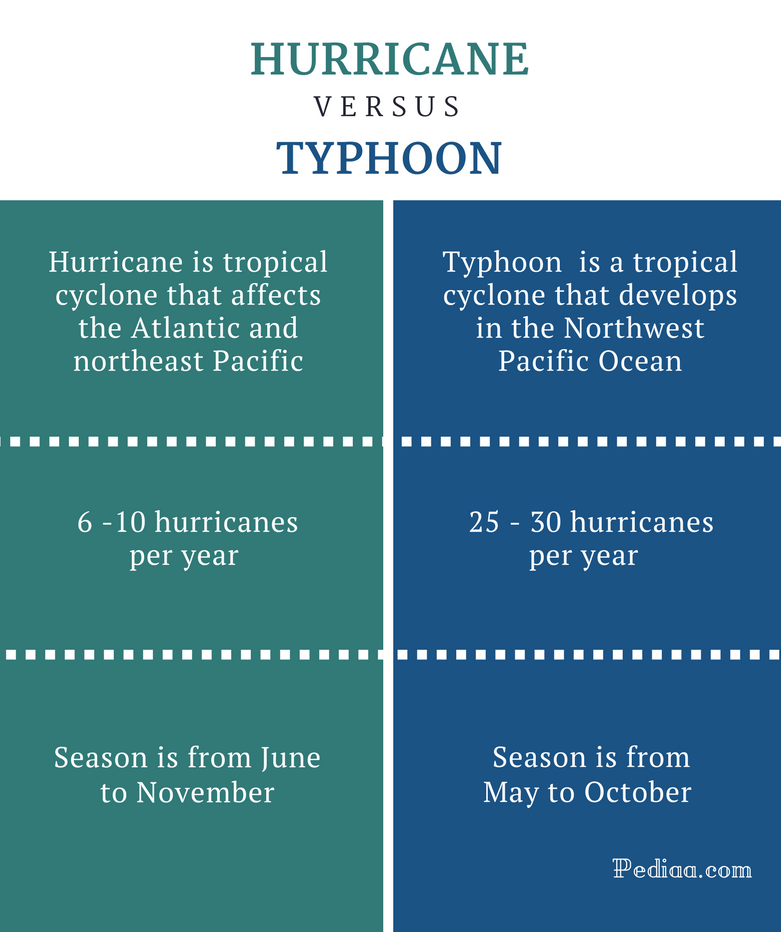
Think of the Earth as a giant globe. If that swirling storm shows up in the Atlantic Ocean or the northeastern Pacific Ocean (think the coasts of North and Central America), we call it a hurricane. So, Florida gets hurricanes, the Caribbean gets hurricanes, and even parts of Mexico get hurricanes. Got it? Good!
Now, if that same swirling storm pops up in the northwestern Pacific Ocean (think Asia, specifically near Japan, the Philippines, and China), we call it a typhoon. It's like the storm suddenly develops a taste for sushi instead of tacos. Same storm, different culinary preferences... and different name!
The "Cyclone" Umbrella
But wait, there's more! What if the storm is in the southern Pacific or Indian Ocean? Then, guess what? It's called a cyclone! Think of it like this: "cyclone" is the big, friendly umbrella term for all these swirling storms. It's the family name, and "hurricane" and "typhoon" are just the cool nicknames it uses depending on where it lives.
Difference Between Typhoon And Hurricane | Diffeology
So, to recap in a super easy way:
Hurricane: Atlantic and northeastern Pacific Ocean.
Typhoon: Northwestern Pacific Ocean.
What is The Difference Between a Hurricane, Typhoon, and Cyclone
Cyclone: Southern Pacific and Indian Ocean.
See? Not so scary, right? It's like having three different words for "soda" depending on where you are in the United States. (Pop? Soda? Coke? It's all the same fizzy goodness!)
Difference Between Hurricane and Typhoon | Definition, Season
Don't Underestimate Their Power!
Now, just because they have different names doesn't mean we should take them lightly. Hurricanes, typhoons, and cyclones are all incredibly powerful and can cause massive destruction. They bring strong winds, torrential rain, and devastating storm surges (that's when the ocean water gets pushed inland, flooding coastal areas). They are the kind of weather event that makes you want to stay inside with a huge mug of hot chocolate and a good book... or maybe ten good books!
Imagine trying to fly a kite in a hurricane. The kite would be ripped to shreds faster than you can say "Mary Poppins"! Or trying to build a sandcastle on a beach facing a typhoon... poof! Gone in sixty seconds! These storms are serious business. It's important to pay attention to weather warnings and follow safety guidelines if you live in an area prone to these events.
The Bottom Line
So, the next time you hear about a hurricane slamming into Florida or a typhoon barreling towards Japan, remember that they're basically the same beast – just with different passports. They're all part of the cyclone family, ready to remind us of the awesome (and sometimes terrifying) power of nature. And hopefully, now you can impress your friends with your newfound meteorological knowledge! Go forth and spread the word!