
What Is The Difference Cyclone And Hurricane
Ever heard the wind howling outside and wondered if it's just a blustery day, or something a little more...dramatic? Words like 'cyclone' and 'hurricane' often get thrown around when we talk about severe weather, but are they the same thing? Let's untangle this meteorological mystery with a sprinkle of fun facts and practical tips.
Location, Location, Location!
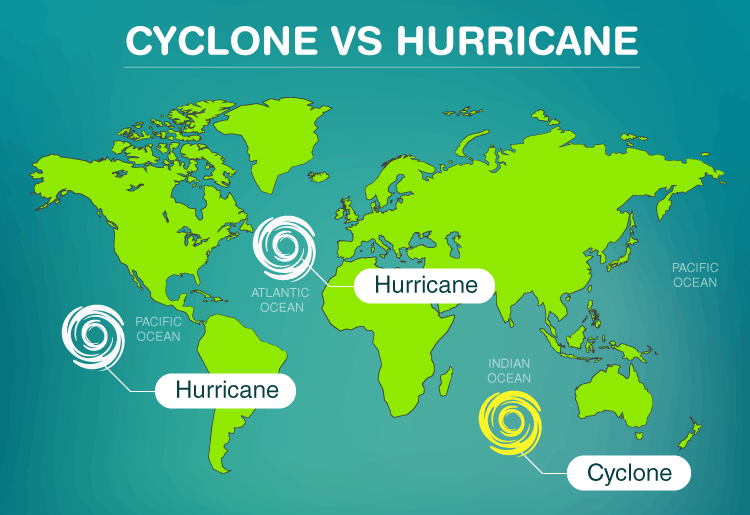
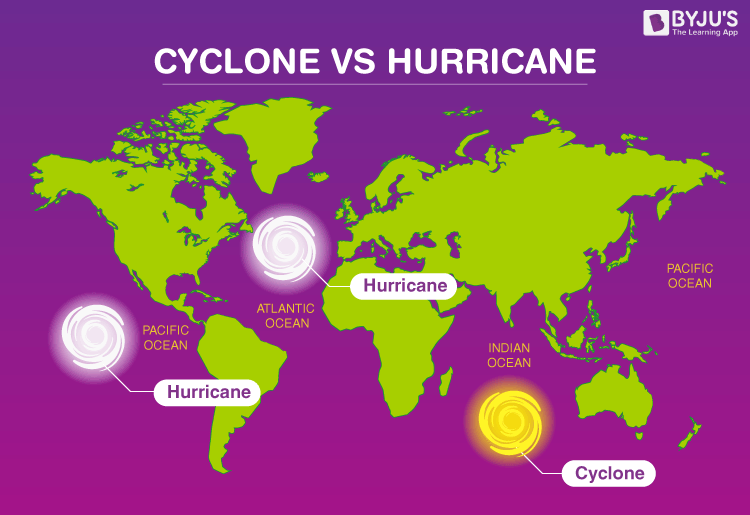
The key difference between a cyclone and a hurricane boils down to their geographical location. Think of it like this: these powerful swirling storms are all part of the same weather family, but they get different nicknames depending on where they form. It's like how your friend might be called 'Mike' at work, but 'Mikey' by his family.
A hurricane is a tropical cyclone that occurs in the Atlantic Ocean and the northeastern Pacific Ocean. So, if you're chilling on a beach in Florida, or surfing the waves in Mexico, and a big storm is brewing, chances are it's a hurricane.
Must Read
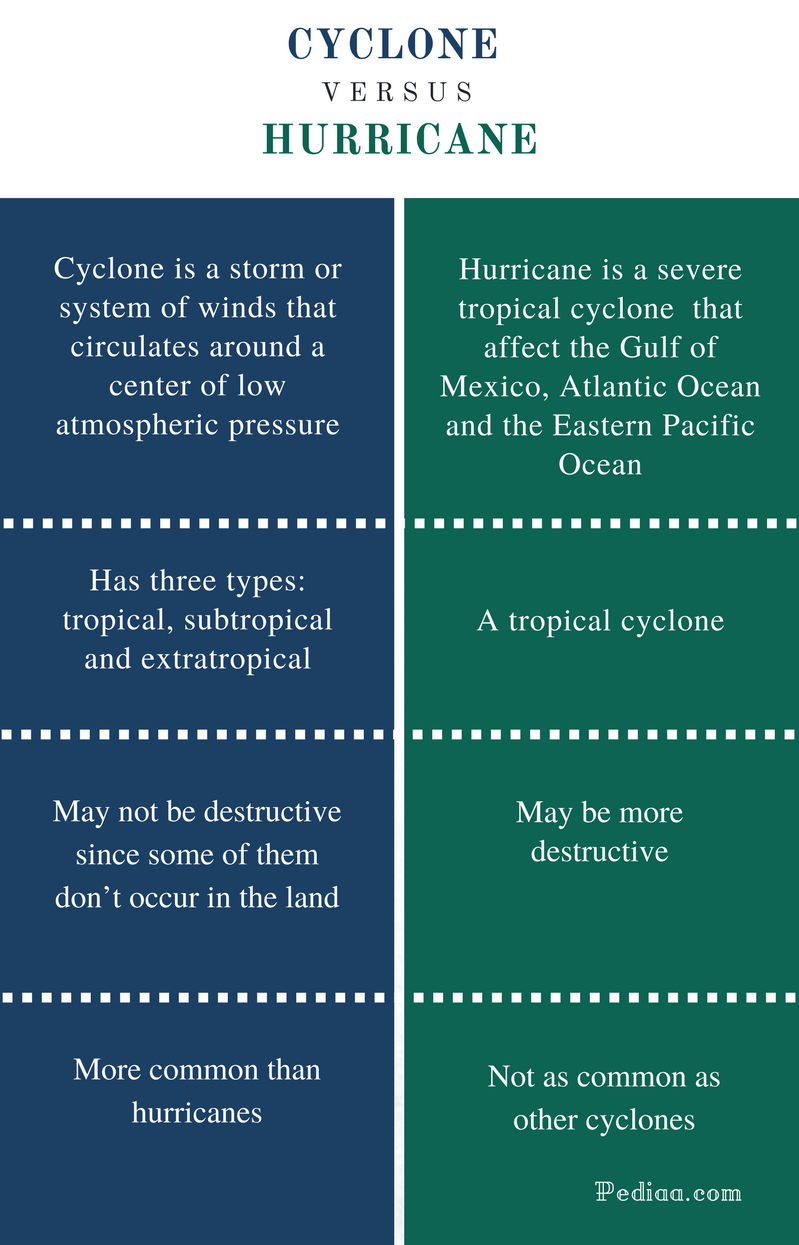
Now, journey across the globe to the Indian Ocean and the South Pacific Ocean, and you'll encounter cyclones. From Australia to India, these regions experience the same type of storm, just with a different label. The term 'cyclone' is a more general term. It actually describes any storm that has a rotating vortex of air, hence it being applicable to both hurricanes and typhoons.
Strength in Numbers: Measuring the Fury
Regardless of what you call them, these storms pack a punch. The intensity of both hurricanes and cyclones is measured by their sustained wind speeds. Hurricanes in the Atlantic and northeastern Pacific are classified using the Saffir-Simpson Hurricane Wind Scale, ranging from Category 1 (least intense) to Category 5 (most intense).
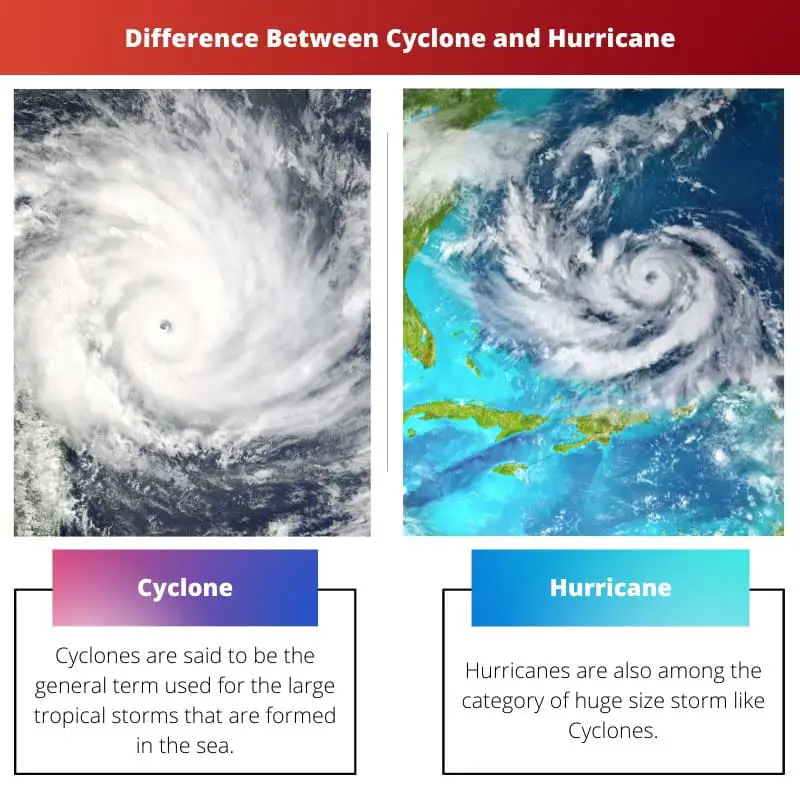
For cyclones in other parts of the world, different scales might be used, but the underlying principle remains the same: the higher the wind speed, the more dangerous the storm. Think of it as a universal language of weather warnings! For example, in Australia, the cyclone intensity is measured using categories 1-5, same with hurricanes.
Beyond the Name: Practical Tips for Weathering the Storm
Okay, so you know the difference between a hurricane and a cyclone. But what can you do when one's headed your way? Here are a few practical tips:
- Stay Informed: Keep an eye on weather forecasts and heed warnings from local authorities. Knowledge is power!
- Secure Your Home: Bring loose objects indoors, reinforce windows, and trim trees that could fall. Better safe than sorry.
- Stock Up on Supplies: Food, water, batteries, a first-aid kit – these are essentials for any emergency.
- Have an Evacuation Plan: Know where to go if you need to evacuate, and practice your plan with your family.
Fun Fact: The practice of naming tropical cyclones (including hurricanes) started to avoid confusion when reporting severe weather. Originally, they were named after saints or just given numbers! Now, there are rotating lists of names that alternate between male and female.
Cultural Connections: Storms in Art and Literature
The power and drama of these storms have captured the imaginations of artists and writers for centuries. From J.M.W. Turner's tempestuous seascapes to Shakespeare's "The Tempest," the raw energy of these weather events has served as a metaphor for human emotions and the forces of nature.
Consider how ancient cultures often personified weather phenomena as deities, both benevolent and destructive. These stories reflect humanity's long-standing relationship with, and respect for, the power of nature.
A Gentle Reminder
While learning the difference between a cyclone and a hurricane might seem like trivia, it's a reminder of the interconnectedness of our world. Weather patterns don't respect borders, and understanding these phenomena helps us be more prepared and resilient.
In our daily lives, we might not face a hurricane or cyclone, but we can apply the same principles of preparedness and awareness to other challenges. Being informed, having a plan, and staying connected to our community can help us weather any storm, big or small.
