
What Is The Difference Between Power And Work

Okay, so picture this: I'm at my local coffee shop, right? Buzzing like a caffeinated hummingbird, and I overhear these two guys arguing. One's a gym bro, flexing his biceps with alarming frequency, and the other's a… well, let's just say he looks like he spends more time contemplating the universe than doing bicep curls. They’re arguing about power versus work. So, naturally, I had to eavesdrop. And then, naturally-er, I decided to explain it all to you. Consider me your friendly neighborhood science explainer, armed with lattes and a questionable sense of humor.
Work: The Actual "Doing" Part
First, let’s tackle work. Think of it as the actual accomplishment. Like, physically moving something. If you push a boulder (or, you know, a stubborn shopping cart), you're doing work. If you successfully push that boulder (or finally wrestled that cart into a parking spot), even better! You've moved an object a certain distance using a force. High fives all around!
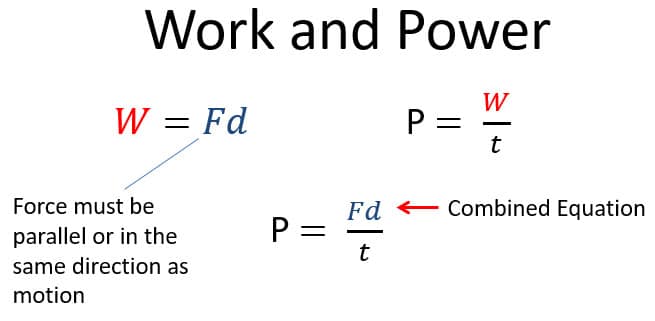
The official definition? Work is force times distance. Imagine trying to move that boulder. Let's say you pushed with all your might, like a particularly determined chihuahua, and managed to shove it forward a whole meter. Congratulations, you've done some work!
Must Read
But here's the kicker: if you push against that boulder all day, straining every muscle, sweating like you're in a sauna, but the boulder doesn't budge... you've done zero work. Zilch. Nada. All that effort, all that sweat… wasted! Technically, you only did work if the boulder actually moved! I know, it's brutal. Physics can be a harsh mistress.
Power: How Fast You Get It Done
Now, let’s crank things up to eleven (because ten is just too mainstream) and talk about power. Power is all about speed. It's how fast you can get that work done. Think of it as the efficiency rating on your superhero suit.

Let's go back to that boulder. If you and The Hulk both move that same boulder one meter, you've both done the same amount of work. But The Hulk probably did it in, like, a nanosecond. He's got serious power! You, on the other hand, might have taken a week, several energy drinks, and a motivational speech from your grandma. So, Hulk has much more power.
Formally, power is work divided by time. The faster you do the work, the more powerful you are. So, if you spend 10 seconds moving a box, and I spend 30 seconds moving the same box, you were more powerful than I was. Sorry, me. That just means I need more coffee (and maybe a personal trainer who isn't afraid to yell encouraging things at me while I attempt to lift weights).

Think of it like this: two cars can drive the same distance (same work done). One's a super-fast sports car, the other a beat-up old minivan. The sports car has way more power – it gets there faster! The minivan? It gets there eventually... while you're listening to polka music and wondering if you made a wrong turn somewhere in 1987. Both did the same amount of work (driving the same distance).
Putting It All Together: The Coffee Shop Showdown
So, back to my coffee shop drama. The gym bro was going on about how much "work" he does at the gym, lifting all those weights. And the other guy, Mr. Philosophical, was like, "Yeah, but how fast are you doing it? Are you maximizing your power output?"

The gym bro just glared. Clearly, he was all about the "work" – the sheer quantity of weights lifted. He was probably going for volume. He probably imagined that more work would mean he’d get swole faster.
But the philosophical guy had a point. If the gym bro spent all day slowly lifting weights, he might have done a lot of work, but his power output would be relatively low. A powerlifter, on the other hand, might lift fewer reps, but they’d do it with explosive speed, maximizing their power output.
Ultimately, it depends on your goals! If you're trying to build endurance, high work is key. If you're trying to build explosive strength, you have to be quick! It’s all about finding the balance between work and power that’s right for you.
In short:
- Work: The amount of energy transferred when a force causes displacement. Think of it as the 'what' was accomplished.
- Power: The rate at which work is done. Think of it as 'how fast' the work was accomplished.
So, next time you're pushing a grocery cart, lifting a box, or even just climbing the stairs, think about the work you're doing and the power you're exerting. And remember, even if you're moving at a snail's pace, at least you're doing something. Now, if you'll excuse me, I need another latte. All this explaining is hard work… which I’m doing very slowly, therefore with low power!