What Is The Difference Between Power And Energy

We love to binge-watch our favorite shows, don't we? There's something deeply satisfying about settling in for hours, lost in a compelling narrative, laughing with friends, or even just unwinding after a long day. But have you ever stopped to think about what powers that experience? It's not just the TV, the internet, or even the show itself, but the underlying concepts of power and energy that make it all possible.
These two terms, often used interchangeably, are actually distinct concepts that are crucial to understanding how our world works. Understanding the difference between them isn't just for physics buffs; it's about grasping the mechanics behind everyday conveniences and making informed decisions about our energy consumption. Think of it this way: knowing the difference between power and energy is like knowing the difference between the speed of your car and the distance you travel. Both are related, but they tell you different things.
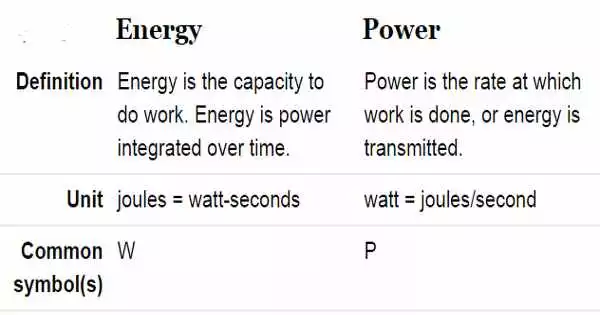
Power is the rate at which energy is used or transferred. It's how quickly you're consuming energy to do something. A light bulb's wattage (e.g., 60W) is a measure of its power. A higher wattage means the bulb uses more energy per second, resulting in brighter light. Similarly, your car's horsepower is a measure of its power – how quickly it can convert fuel into motion. Power is typically measured in watts (W) or horsepower (hp).
Must Read
Energy, on the other hand, is the capacity to do work. It's the total amount of "fuel" available. Think of it as the total amount of charge in a battery or the amount of gasoline in your car's tank. The unit we typically use to measure energy is the joule (J). But when it comes to electricity, we often use the kilowatt-hour (kWh) – which is the amount of energy used by a 1-kilowatt (1000-watt) device running for one hour.
Consider a simple example: that binge-watching session. Your TV has a certain power rating, say 100W. If you watch for 4 hours, the total energy consumed would be 100W * 4 hours = 400 watt-hours, or 0.4 kWh. That’s how much energy the TV used to entertain you for those four glorious hours!
These principles are applied everywhere. Solar panels generate power from sunlight, which then accumulates into energy stored in batteries. Your electric car's battery stores energy, which is then used by the motor to deliver power to the wheels. Understanding this difference can help you make smarter choices, such as opting for energy-efficient appliances (low power consumption) or investing in renewable energy sources to reduce your overall energy footprint.
So, how can you enjoy your powered activities more effectively? Start by paying attention to the energy efficiency of your devices. Look for energy star ratings when purchasing new appliances. Unplug devices when not in use to minimize "phantom power" consumption. Consider using smart power strips that automatically cut off power to devices when they are not needed. By understanding the interplay between power and energy, you can not only enjoy your favorite activities guilt-free but also contribute to a more sustainable future, all while perhaps learning a little something about the science that keeps our world running.