
What Is The Difference Between Planet And Star

Hey there, space explorer! Ever looked up at the night sky and wondered, "Wait, is that a planet? Or a star?" Don't worry, you're not alone! It's a question that's puzzled even the brightest minds (okay, maybe not the brightest brightest, but you get the idea!). Let's dive into the cosmic difference between planets and stars, and trust me, understanding this stuff makes staring at the sky way more fun.
Stars: The Fiery Furnaces of the Universe
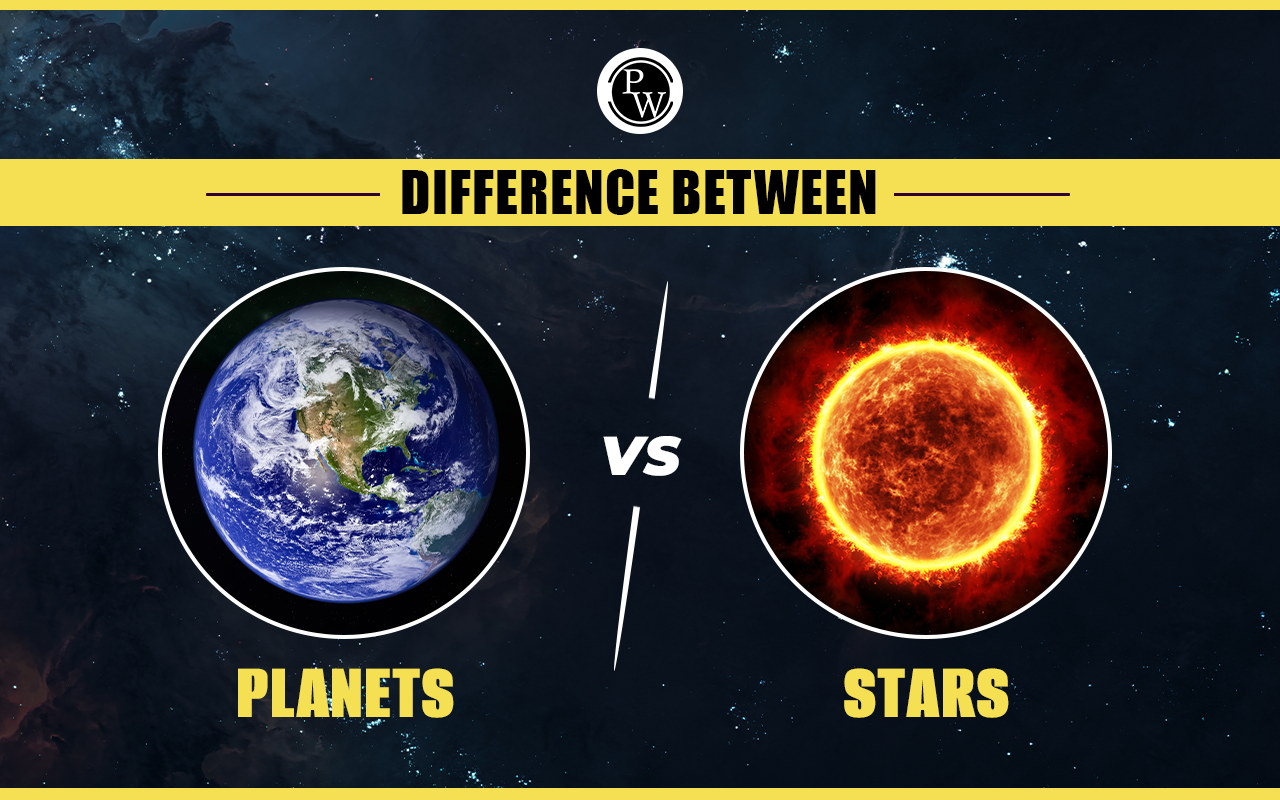
Think of stars as the ultimate cosmic power plants. They're giant, glowing balls of plasma, held together by their own immense gravity. What's plasma? Well, think of it as superheated gas where electrons have been stripped away from atoms – a truly wild state of matter! But the key thing is this: stars are self-luminous. They create their own light and heat through a process called nuclear fusion.
Yep, inside a star's core, hydrogen atoms are being smashed together to create helium, releasing enormous amounts of energy in the process. It's like a never-ending, self-sustaining explosion! And that's what makes them shine so brightly. Pretty cool, right?
Must Read
So, if it's giving off its own light, blazing with energy, and probably sounds like a roaring inferno if you were close enough (which you definitely shouldn’t try!), chances are, you're looking at a star.
Planets: Reflectors of Light and Dwellings of (Potential) Life
Now, let's talk about planets. Planets are fundamentally different. They're not giant balls of self-generated light. They're celestial bodies that orbit a star. Think of our own Earth – it orbits the Sun. See how that works?
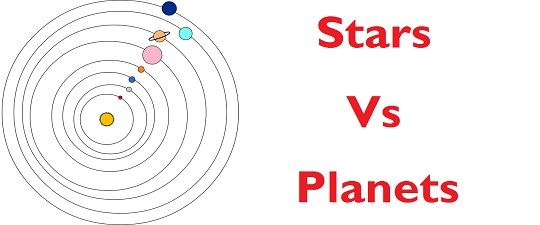
The crucial difference is that planets reflect light from their star. They don't produce their own. That's why you can see them in the night sky – they're bouncing sunlight back at you. So, a planet is more like a cosmic mirror, reflecting the brilliance of its parent star.
And here's the really exciting part: planets are where things get interesting. They're the places where life could potentially exist (or already does!). You need a stable environment, the right temperature, and maybe even a little bit of liquid water to get the party started. Stars are great for providing the energy, but planets are where the action happens.
Size Matters (and So Does Location!)
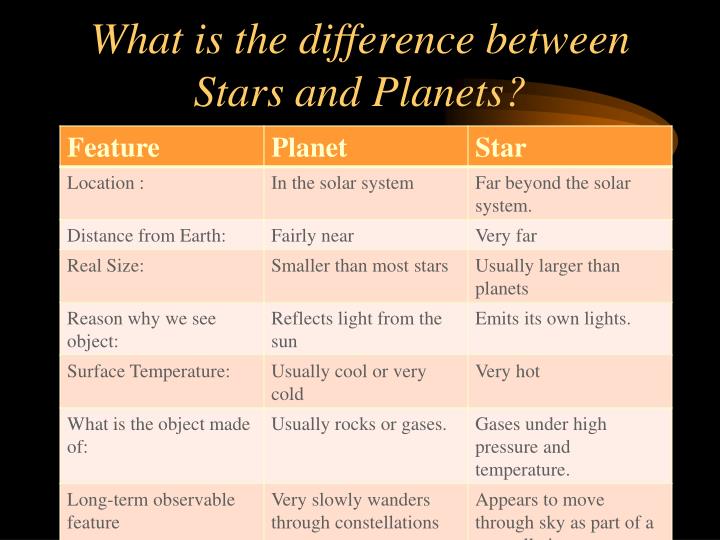
Okay, so stars are self-luminous, and planets reflect light. But what about size? Generally, stars are much, much bigger than planets. Our own Sun is absolutely massive compared to Earth. Think of it like this: you could fit over a million Earths inside the Sun! Whoa!
Also, consider the location. Planets orbit stars, right? So, if you see something whizzing around another object in the sky, it's a pretty good bet that you're witnessing a planet in action. (Of course, you need a pretty powerful telescope to see that directly!)
Putting It All Together: A Quick Cheat Sheet
Let's recap with a super-simple cheat sheet:
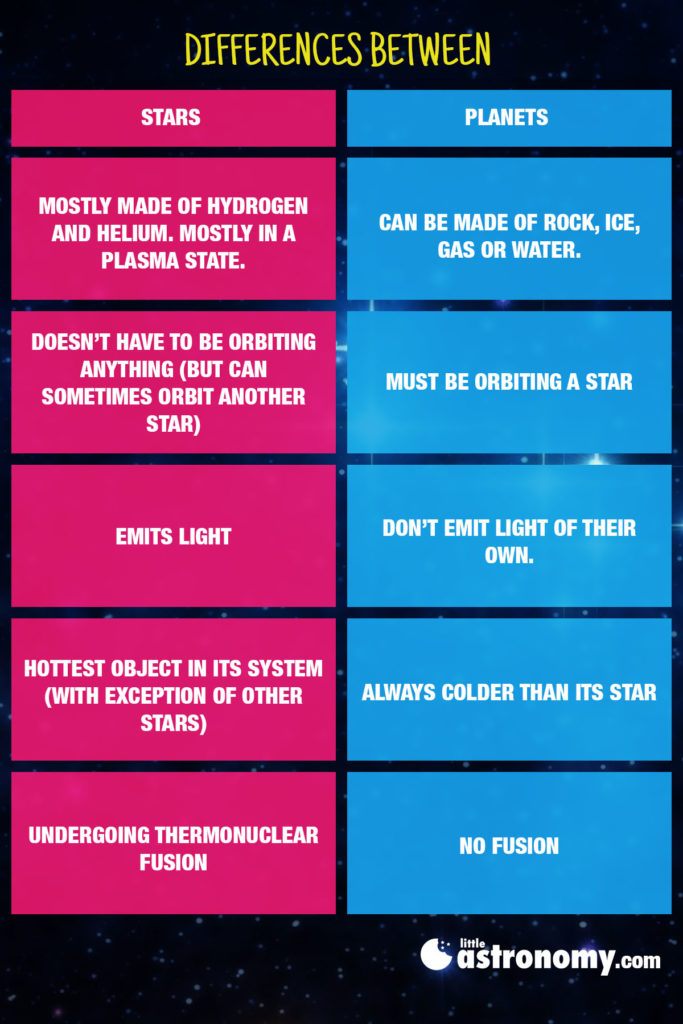
- Stars: Big, glowing, self-luminous balls of plasma that generate their own energy through nuclear fusion.
- Planets: Smaller (usually!), non-luminous objects that orbit stars and reflect their light. They're potentially habitable and way cooler than most people think.
See? It's not rocket science! (Although, rocket science does involve understanding this stuff, so… maybe it is a little bit rocket science.)
Why This Matters (and Makes Life More Awesome)
So, why should you care about the difference between planets and stars? Well, for starters, it's just plain cool! Understanding the universe around us makes you feel more connected to everything. Plus, knowing what you're looking at when you gaze up at the night sky adds a whole new layer of appreciation.
Imagine pointing out Jupiter to a friend and explaining that it's a giant gas planet with swirling clouds and a massive storm that's been raging for centuries. Instant cool points! Or telling someone that the light from that distant star they're seeing has been traveling through space for thousands of years. Minds blown! It’s seriously like having a superpower.
More importantly, thinking about planets and stars gets you thinking about the bigger picture. Where did we come from? Are we alone in the universe? These are some of the most fundamental questions humans have ever asked, and understanding the basic building blocks of the cosmos – stars and planets – is the first step towards finding the answers.
So go forth, look up at the sky, and marvel at the wonders of the universe! The more you learn, the more you realize just how amazing everything is. Seriously, the universe is waiting for you! Let’s see what it has to offer. Keep learning, keep exploring, and keep looking up!