
What Is The Difference Between Fusion And Fission
Fusion vs. Fission: A Nuclear Romp!
Ever wondered what makes the sun shine brighter than your Aunt Mildred's sequined jacket? Or how those power plants manage to keep our toasters toasting? The answer, my friend, lies within the fascinating world of nuclear reactions! But hold on, before you run screaming back to reality TV, let's break down the difference between the two main players: fusion and fission. Think of it as a nuclear dance-off, with each process showing off its unique moves!
Fission: The Nuclear Break-Up
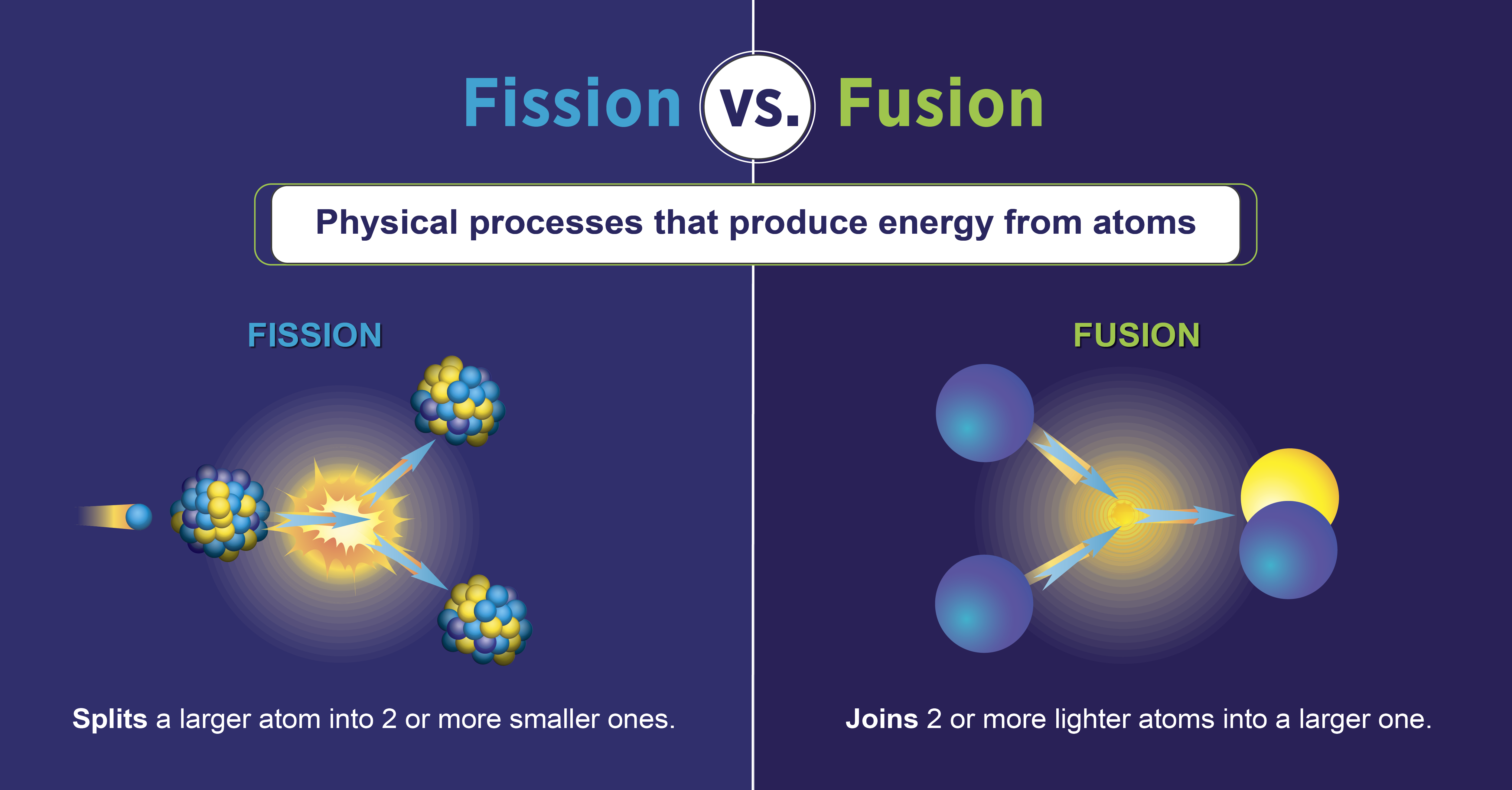
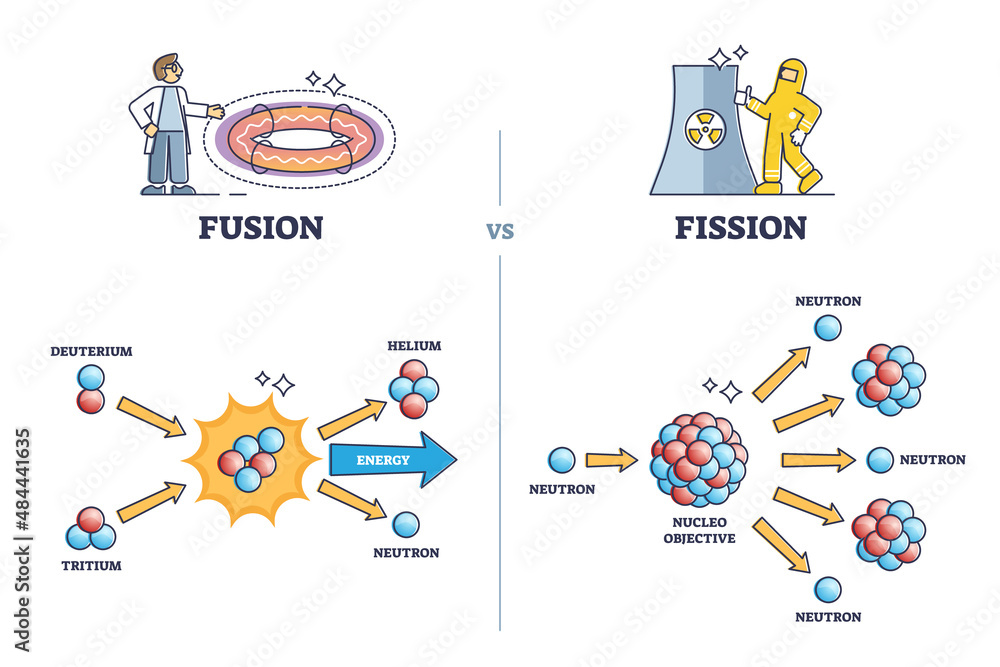
First up, we have fission. Imagine you have a really, really big, and frankly, kinda unstable relationship (like, say, a uranium atom). This atom is just itching to split! In fission, you basically take this large, unstable atom and BAM! You bombard it with a tiny neutron (think of it as a relationship counselor pushing things over the edge!). This causes the large atom to split into two smaller, more stable atoms. And wouldn't you know it, in the process, it releases a whole bunch of energy! This energy, my friends, is what powers nuclear power plants.
Think of it like this: you have a giant, precarious tower of Jenga blocks. Fission is like giving that tower a little nudge, causing it to collapse and sending blocks flying everywhere (representing the released energy!). It's a messy break-up, but hey, at least everyone (or every atom) is happier in the end... ish.
Must Read
The energy released during fission is truly remarkable. Just a tiny amount of uranium can generate a massive amount of power. That's why it's used in nuclear reactors to generate electricity. However, it's important to remember that fission also produces radioactive waste, which needs to be carefully managed. It's like the awkward aftermath of the Jenga tower collapse – someone's gotta clean up those blocks!
Fusion: The Atomic Marriage
Now, let's turn our attention to fusion. Instead of breaking things apart, fusion is all about bringing things together! Imagine two incredibly enthusiastic hydrogen atoms, just dying to become one. Fusion is the process of smashing these two light atoms together at ridiculously high speeds and temperatures (we're talking millions of degrees!). This intense collision forces them to fuse together, forming a heavier atom, like helium. And guess what? This union releases even MORE energy than fission!
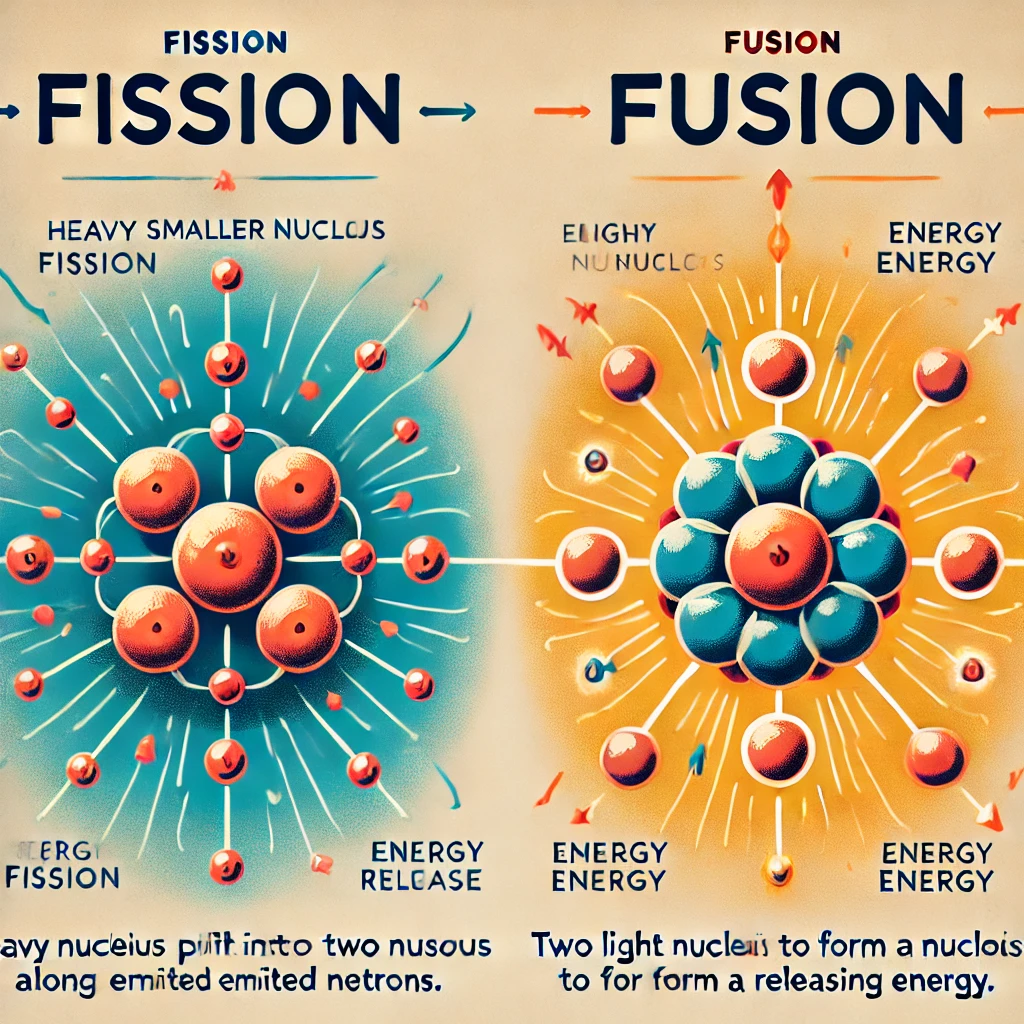
Think of it like this: you have two bouncy balls, and you slam them together so hard that they merge into one bigger, even bouncier ball! That's fusion in a nutshell. It's like the atomic version of a perfect marriage – two become one, and everyone's filled with energy!
The sun, and all the stars for that matter, are powered by fusion. Deep inside their cores, hydrogen atoms are constantly fusing together to create helium, releasing enormous amounts of energy in the form of light and heat. It's like a never-ending party, where hydrogen atoms are getting hitched and the universe is celebrating with fireworks!
The beauty of fusion is that it uses abundant and readily available fuels, like hydrogen, and produces very little radioactive waste. The byproduct is mostly helium, the stuff we use to fill balloons! So, in theory, fusion could provide a clean and virtually limitless source of energy. The catch? Achieving the ridiculously high temperatures and pressures needed to make fusion happen on Earth is incredibly challenging. Scientists are working hard to crack the code, but it's proving to be a tough nut to crack. Imagine trying to create a miniature sun in a lab – that's the scale of the challenge we're talking about!
The Nuclear Dance-Off: Who Wins?
So, who wins this nuclear dance-off? Well, it's not really a competition! Both fusion and fission are powerful processes with their own advantages and disadvantages. Fission is currently used in nuclear power plants, providing a significant portion of our electricity. Fusion holds the promise of a cleaner and more sustainable energy future, but it's still a work in progress. Who knows, maybe one day we'll even be able to harness the power of fusion to create our own miniature suns in our backyards (although the HOA might have something to say about that!).
In the meantime, let's appreciate the amazing power of the atom, and the brilliant scientists who are working to unlock its secrets. After all, understanding the difference between fusion and fission is just the first step in a nuclear adventure!
"The future is nuclear!" - Anonymous (and possibly slightly radioactive) Scientist
