What Is The Difference Between Fission And Fusion
Ever since hearing about them in sci-fi movies and comic books, people have been fascinated by fission and fusion. They sound so futuristic, so powerful, so... well, nuclear! But beyond the cool factor, understanding the basic difference between these two processes can be surprisingly beneficial, even if you're not a scientist.
Why should artists, hobbyists, or just generally curious folks care about fission and fusion? Because understanding these concepts opens up a whole new way of thinking about creation and destruction, about taking things apart and putting them back together. Think of it as a powerful metaphor for creativity itself! Artists can use these ideas to explore themes of transformation, energy, and the delicate balance of the universe. Consider a sculptor who uses found objects (fission - breaking down existing materials) and then welds them together into a new, unified piece (fusion - creating something new from the broken pieces). The concepts are applicable everywhere!
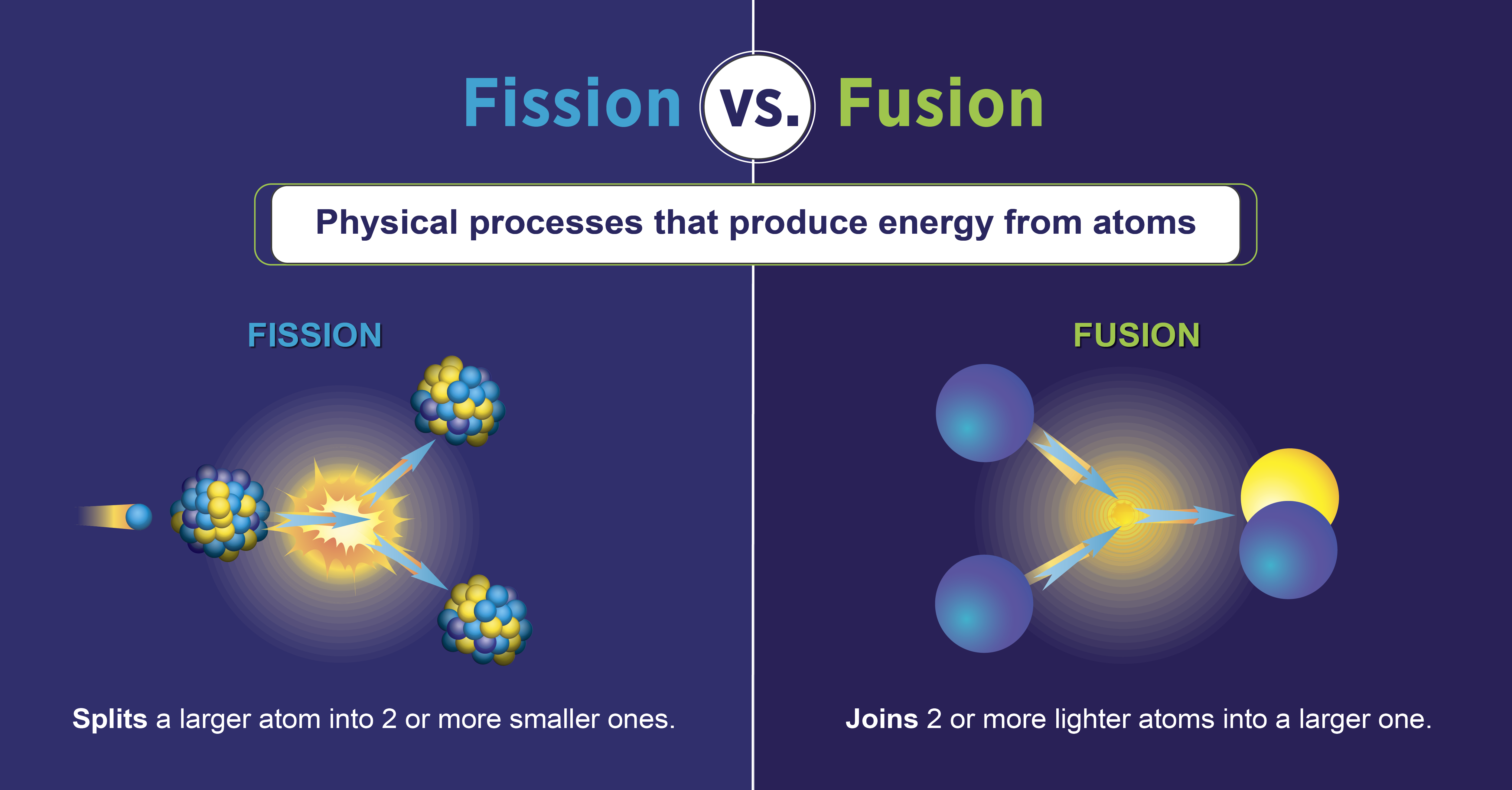
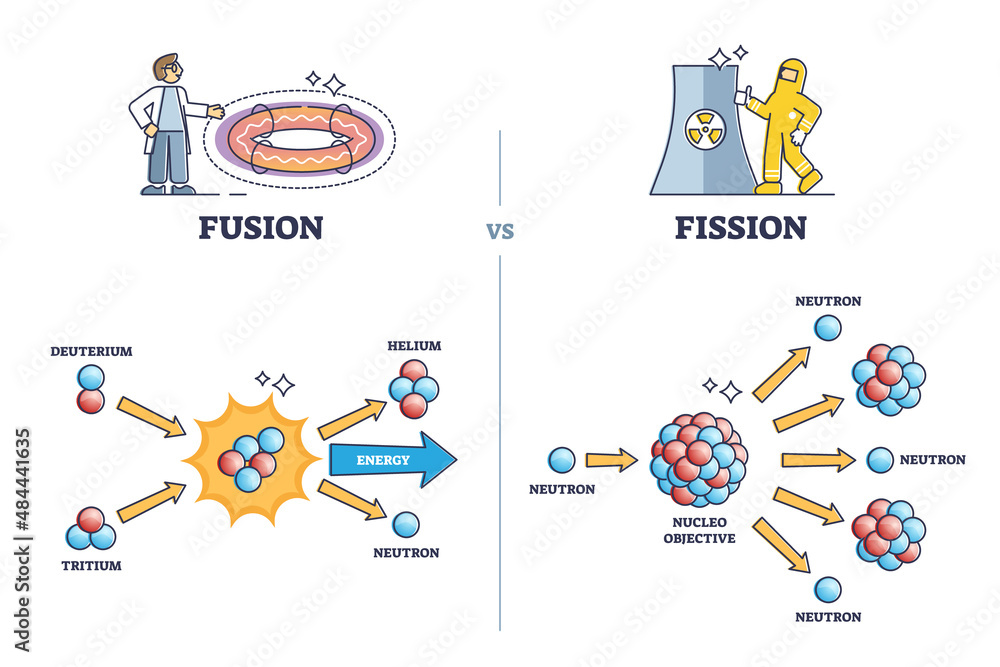
So, what is the difference? Simply put, fission is splitting, and fusion is joining. Fission is the process of splitting a heavy atom, like uranium, into smaller, lighter atoms. This process releases a tremendous amount of energy, which is what's used in nuclear power plants. Think of it like taking a big, complex Lego creation and smashing it into lots of smaller bricks. On the other hand, fusion is the process of forcing two light atoms, like hydrogen, to combine into a heavier atom, like helium. This also releases a huge amount of energy, and it's the process that powers the sun and other stars. Imagine taking two simple Lego bricks and forcing them together to make a bigger, more complex brick.
Must Read
Examples of how these concepts appear in art are abundant. Imagine a painter who deconstructs a traditional landscape (fission) by breaking it into abstract shapes and colors, then fuses them together (fusion) to create a completely new and modern interpretation. A musician might sample existing songs (fission) and then combine them in unexpected ways to create a new track (fusion). The possibilities are endless!
Want to explore fission and fusion at home? Well, you can't exactly split an atom in your kitchen! But you can use the principles as a creative prompt. Here are a few ideas:
- Fission Project: Take apart an old appliance (safely, of course!). Document each piece and consider how it could be repurposed.
- Fusion Project: Gather scraps of fabric, paper, or metal. Challenge yourself to create a collage or sculpture that combines these disparate elements into a cohesive whole.
- Creative Writing: Write a short story about a character who can manipulate matter through fission and fusion. What would they create or destroy?
Ultimately, understanding the difference between fission and fusion isn't just about science. It's about understanding the fundamental processes of creation and destruction that shape our universe, and that can, in turn, shape our own creativity. And exploring those ideas can be incredibly fun! It encourages us to think outside the box, to experiment with new ideas, and to see the world in a whole new light.