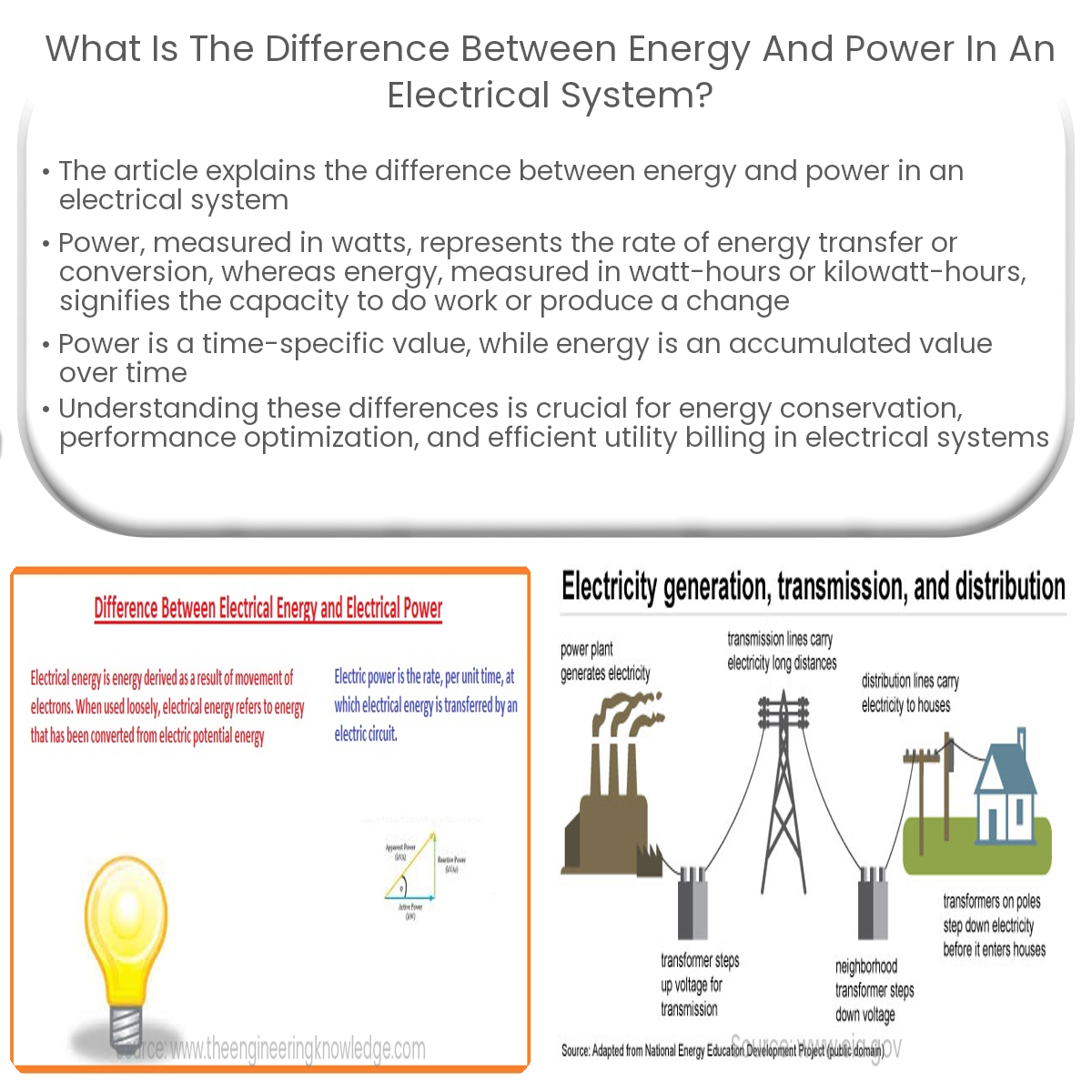
What Is The Difference Between Energy And Power

Ever find yourself throwing around the words "energy" and "power" like they're the same thing? It's a common mistake! They're definitely related, like cousins who see each other at family gatherings, but they're not identical twins. Let's break down the difference in a way that's super easy to understand, using everyday examples that will hopefully make you chuckle along the way. And trust me, understanding this difference is more useful than you might think!
Energy: The Ability to Do Stuff
Think of energy as the potential to do something. It's the "oomph," the "get-up-and-go," the inherent capability to make things happen. Imagine a fully charged phone battery. That battery is brimming with energy. It's just sitting there, full of potential. It could power your phone for hours, let you binge-watch cat videos, or help you win that crucial online game. But until you actually use it, it's just stored energy.
Here’s another one: a slice of pizza! That delicious slice is packed with calories – which, in the scientific world, are units of energy. That pizza has the potential to fuel your body, giving you the energy to run, jump, or maybe just take a really good nap. The pizza itself is the stored energy, waiting to be unleashed.
Must Read
Energy comes in many forms too! There’s kinetic energy (the energy of motion, like a speeding car), potential energy (stored energy, like that phone battery or a stretched rubber band), and thermal energy (heat, like the warmth from a cozy fireplace). So, energy is the overall ability to do work or cause change.
Power: How Fast You're Doing Stuff
Now, power is all about how quickly you're using that energy. It's the rate at which energy is transferred or used. Think back to that phone battery. The energy is the total amount stored, but the power is how quickly your phone is draining that energy. If you're just checking the time occasionally, your phone is using power slowly. If you're streaming a high-definition movie while playing a graphics-intensive game, your phone is using power like crazy! It's working hard and draining that battery much faster.
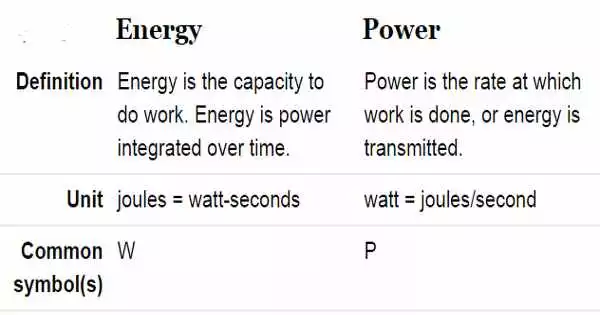
Remember that pizza slice? The energy it contains is the total amount of fuel for your body. Power, in this case, relates to how quickly you use that fuel during a workout. A short burst of intense exercise, like sprinting, requires a high power output – you're burning through the pizza's energy very quickly. A leisurely walk uses energy more slowly, requiring less power.
Think of it like this: imagine filling a swimming pool. The energy is the total amount of water you need to fill the pool. The power is how quickly you can fill it. You could use a garden hose (low power) and it would take ages. Or you could use a fire hose (high power) and fill it much faster. Same amount of water (energy), but a vastly different rate of filling (power).
Why Should I Care? (It's Actually Kind of Cool!)
Okay, so why is this distinction important in your everyday life? Well, understanding the difference between energy and power helps you make smarter choices, save money, and even impress your friends at parties (okay, maybe not parties, but you get the idea!).
For example, when you're buying light bulbs, you see both watts (power) and lumens (brightness, related to energy output). A lower wattage bulb can produce the same amount of light (lumens) as a higher wattage bulb, meaning it's more energy-efficient. You're getting the same job done (light) but using less energy per second (lower power). That translates to lower electricity bills! Boom! You're now a lighting expert!
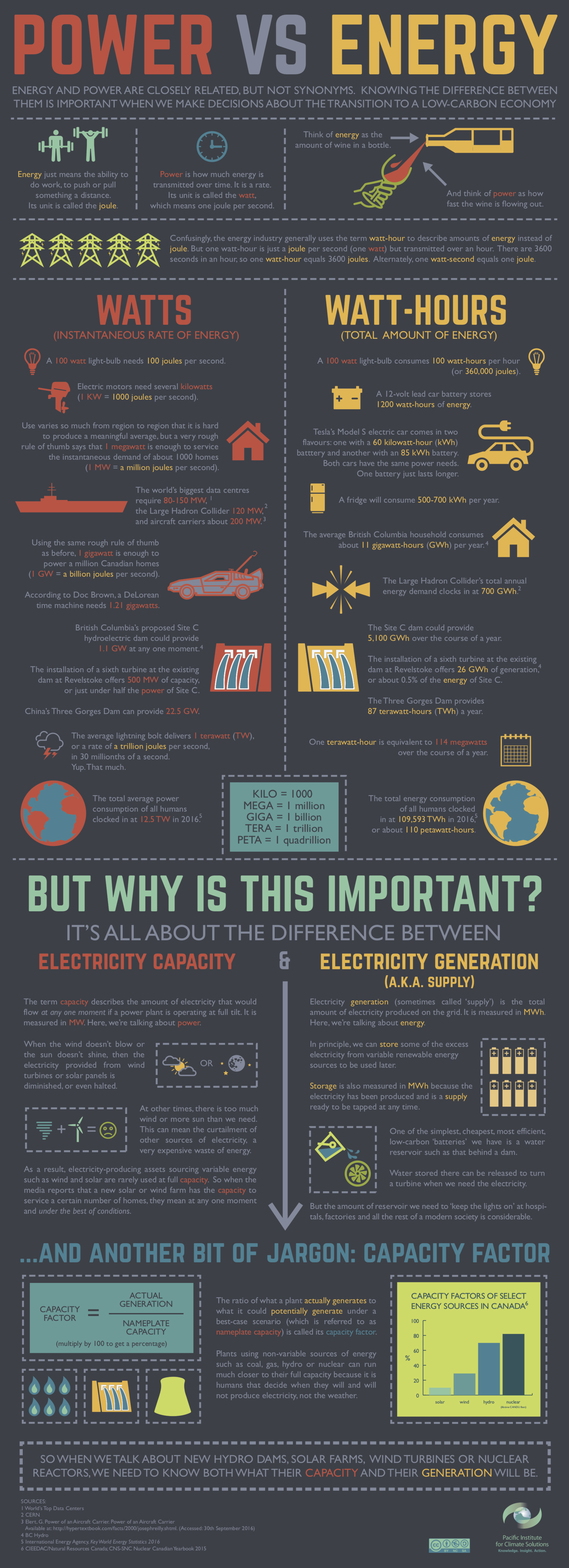
Think about your car, too. The fuel in your gas tank is energy. The car's engine turns that energy into motion. A car with high horsepower (a measure of power) can accelerate quickly, but it also tends to consume more fuel (energy) in a shorter period. Understanding this relationship helps you make informed decisions about vehicle efficiency and driving habits.
Ultimately, understanding the difference between energy and power gives you a better grasp of how things work around you. It allows you to be a more conscious consumer, make more efficient choices, and maybe even win a trivia night someday! And who knows, maybe you'll even start seeing the world in a slightly different (and more energetic!) way.